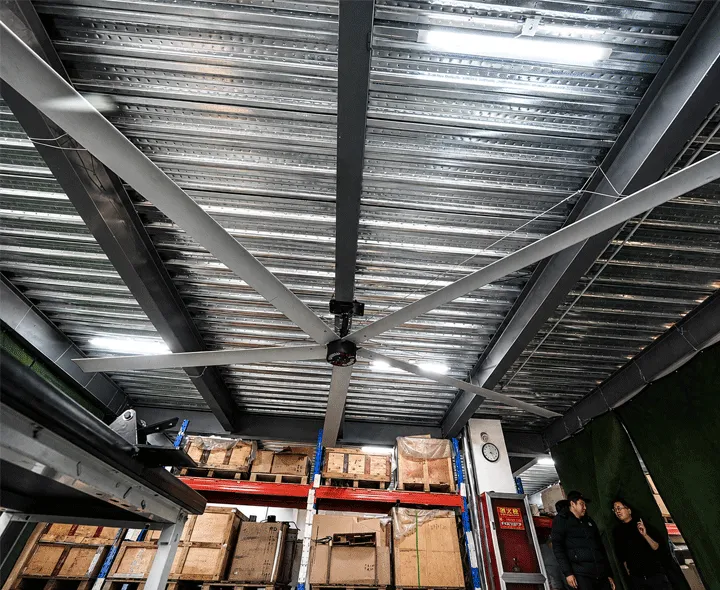
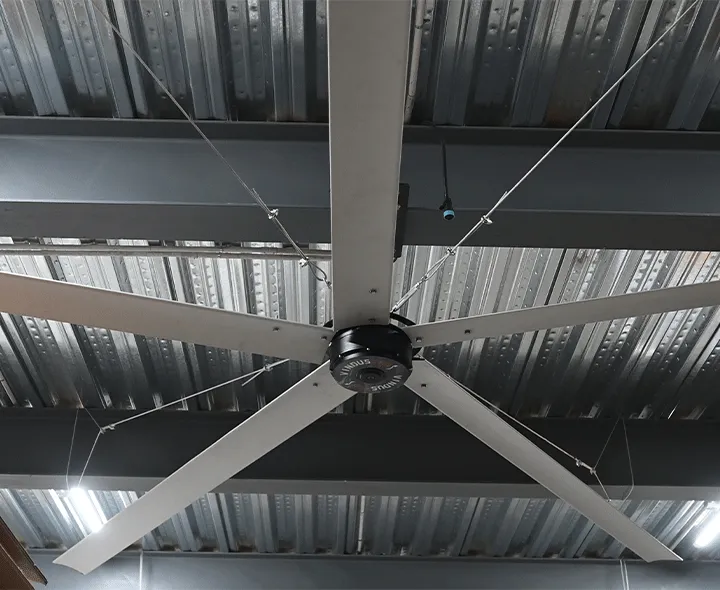
Hot barns, poor air quality, and uneven airflow can reduce livestock performance and increase operating costs. Many dairy farms struggle with heat stress, ammonia buildup, and uncomfortable barn conditions during warm seasons. A properly designed HVLS fan system creates consistent airflow, improves ventilation, and provides a healthier environment for livestock.
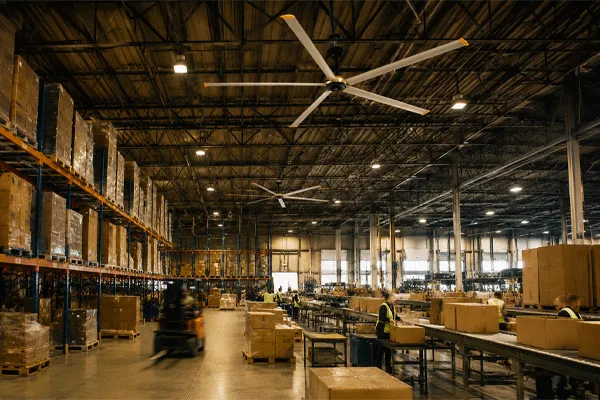
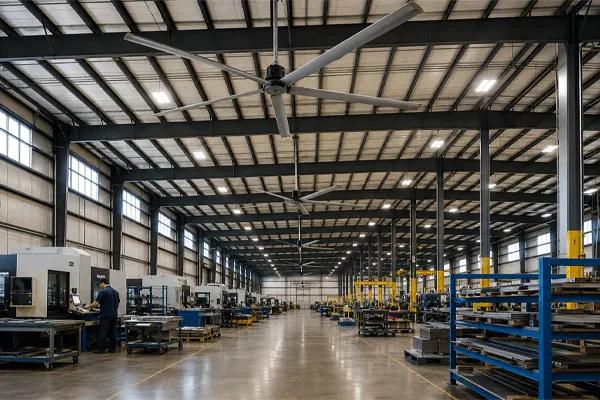
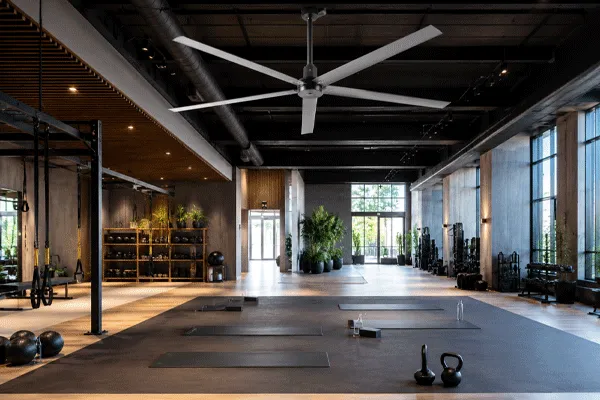
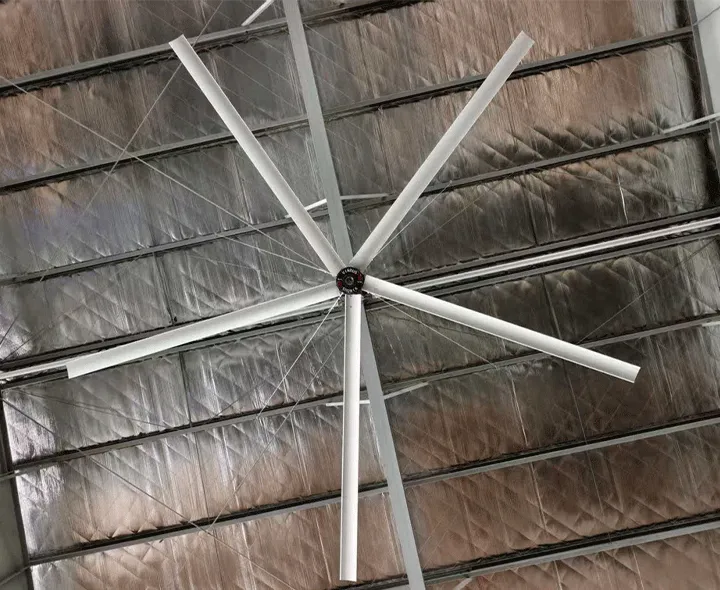
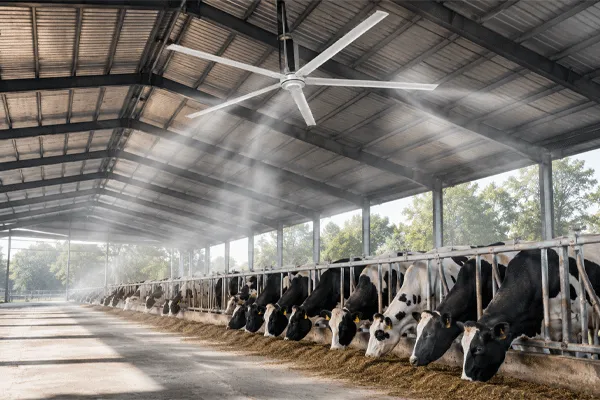
An HVLS fan for livestock barns is a large-diameter ceiling fan designed to move high volumes of air at low speed. It improves air circulation, reduces heat stress in cattle, controls humidity and ammonia levels, and supports better animal comfort in dairy barns, cattle facilities, and modern livestock facilities.
Article Outline
-
Why Are HVLS Fans Important for Livestock Barn Ventilation?
-
How Does an HVLS Fan Improve Airflow in Dairy Barns?
-
What Are the Main Barn Fan Benefits for Livestock Farms?
-
How Do HVLS Ceiling Fans Help Reduce Heat Stress in Cattle?
-
Why Choose a Barn Ceiling Fan Instead of Traditional Fans?
-
How Do HVLS Industrial Fans Improve Air Quality and Productivity?
-
What Size HVLS Fan Does Your Dairy Farm Need?
-
How Do AmeriWind HVLS Industrial Ceiling Fans Work in Large Barns?
-
How Should Farmers Install and Maintain Barn Fans for Livestock?
-
Frequently Asked Questions About HVLS Fans for Livestock Barns
Why Are HVLS Fans Important for Livestock Barn Ventilation?
Livestock farms face a constant challenge: animals generate heat, moisture, and gases every day. In enclosed barns, poor ventilation can quickly create uncomfortable conditions. Dairy cows, cattle, and other livestock need fresh air movement to maintain health, feeding behavior, and productivity.
Traditional ventilation methods often depend on small high-speed fans or panel fans. These systems may create strong airflow in limited areas but cannot move enough air across large barn spaces. As a result, some areas remain hot while others receive excessive airflow.
A large HVLS fan solves this problem by creating a wide column of air movement. Instead of pushing air in a narrow direction, the fan distributes airflow across the entire barn floor.
For dairy farmers, this means:
- Better temperature control
- Reduced humidity
- Lower ammonia concentration
- Improved animal comfort
- More consistent airflow throughout the barn
- Reduced dependence on air conditioning or cooling systems
Our Sino-US joint venture company specializes in HVLS fans, industrial ceiling fans, commercial ceiling fans, and intelligent airflow control systems. We design energy-saving ventilation solutions for agricultural buildings, warehouses, factories, sports facilities, and other large spaces.
How Does an HVLS Fan Improve Airflow in Dairy Barns?
An HVLS fan works by rotating large fan blades at a low-speed operation. The blades move large volumes of air downward and outward, creating natural air circulation throughout the barn.
Unlike conventional fans that only affect nearby areas, HVLS ceiling fans create a continuous airflow pattern that covers large spaces.
In dairy barns, airflow affects several important factors:
| Barn Environment Factor |
Impact of HVLS Fan |
| Temperature |
Helps remove accumulated heat around animals |
| Humidity |
Supports moisture control |
| Ammonia |
Helps reduce stagnant air zones |
| Bedding condition |
Improves drying around bedding areas |
| Feed alleys |
Creates comfortable working areas |
| Animal comfort |
Provides cooling airflow at animal level |
Cows are especially sensitive to heat. When temperatures rise, cattle reduce feed intake and spend more energy trying to cool themselves. This can directly influence milk production and farm profitability.
A properly positioned barn fan improves airflow where animals actually live — near the floor level — rather than only moving air near the ceiling.
What Are the Main Barn Fan Benefits for Livestock Farms?
Installing barn fans for livestock provides more than simple cooling. Modern farms use airflow management as part of their overall production strategy.
The biggest barn fan benefits include improved animal welfare, better working conditions, and lower energy consumption.
1. Reduce Heat Stress in Cattle
Heat stress is one of the biggest challenges for dairy operations.
When cows experience excessive heat, common signs include:
- Reduced feed intake
- Lower milk production
- Increased water consumption
- More standing behavior
- Reduced reproduction performance
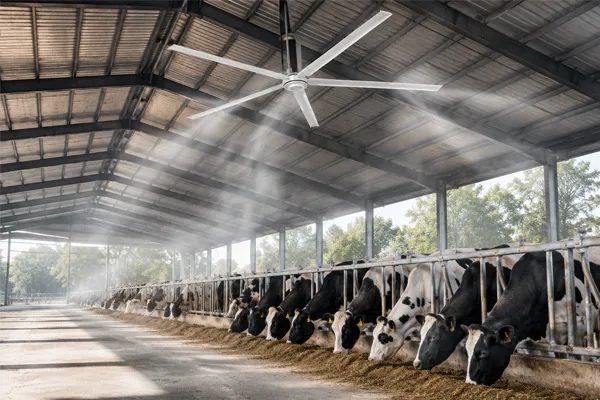
A high-volume HVLS fan creates cooling airflow over cattle, helping animals release body heat naturally.
Compared with high-speed fans, an HVLS fan provides gentle but powerful airflow without creating uncomfortable drafts.
2. Improve Barn Air Quality
Poor air quality is often caused by:
- High humidity
- Manure gases
- Ammonia accumulation
- Limited fresh air exchange
A barn fan improves ventilation by continuously moving stale air away from animal areas.
Better air movement helps maintain healthier barn conditions and supports a cleaner environment for livestock.
3. Support Dairy Farm Productivity
Comfortable cows usually show better feeding behavior and improved daily performance.
Studies from agricultural extension organizations have shown that heat stress can negatively affect dairy cattle productivity. Proper ventilation and cooling strategies are widely recommended management practices.
For modern dairy farms, airflow is not just a comfort feature. It is a productivity investment.
How Do HVLS Ceiling Fans Help Reduce Heat Stress in Cattle?
Heat stress management has become a major priority for dairy farms worldwide.
Cattle naturally produce significant body heat. In hot climates, especially during summer, barns can develop hot spots where animals experience uncomfortable temperatures.
A large HVLS big fan reduces these problems by creating continuous airflow.
The working principle is simple:
- Large fan blades rotate slowly.
- The fan moves high-volume air downward.
- Air spreads across the barn floor.
- Moving air increases evaporation from the animal surface.
- Cattle experience a natural cooling effect.
This process is similar to wind cooling. The actual air temperature may not change dramatically, but animals feel cooler because heat leaves their bodies faster.
For farms using evaporative cooling systems, HVLS fans can improve cooling efficiency by distributing cooled air more evenly.
Why Airflow at Animal Level Matters
Many farmers focus only on ceiling height and ventilation openings. However, the most important airflow measurement is the airflow experienced by animals.
A good barn ceiling fan installation considers:
- Ceiling height
- Mounting height
- Barn dimensions
- Cow resting areas
- Feed alleys
- Bedding locations
The goal is not simply moving air near the ceiling. The goal is creating comfortable airflow where cattle spend their time.
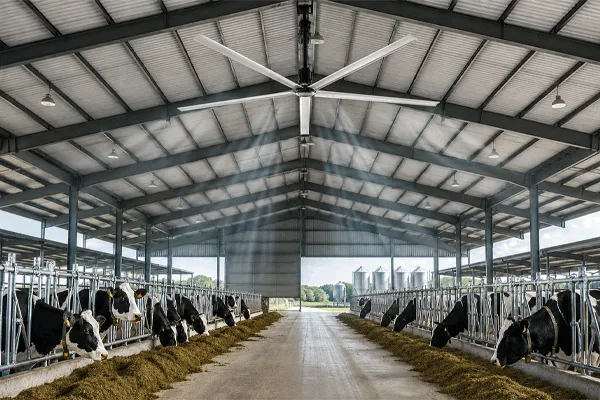
A properly designed system provides:
- Consistent air movement
- Stable temperature conditions
- Reduced moisture accumulation
- Improved animal comfort
Why Choose a Barn Ceiling Fan Instead of Traditional Fans?