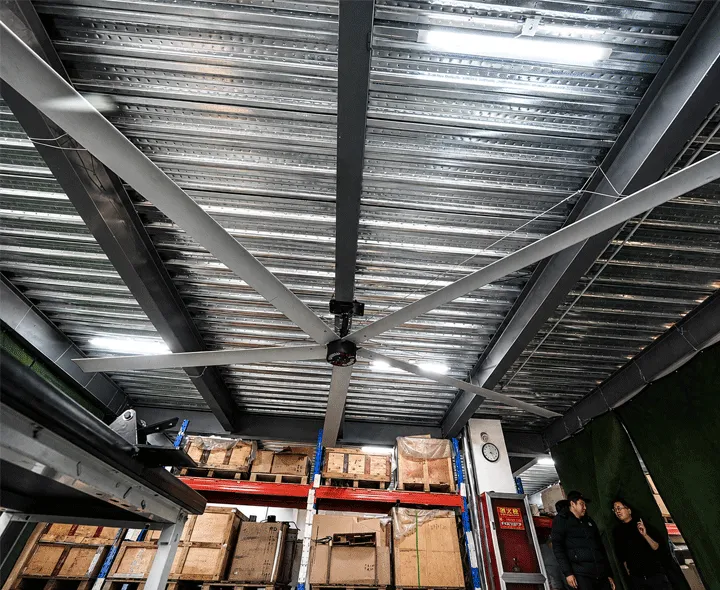
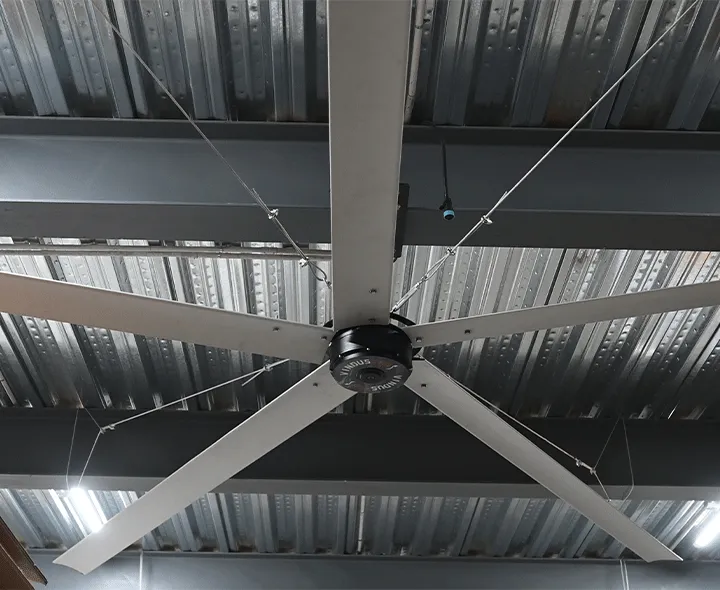
A failed industrial fan can stop comfort, production, ventilation, and safety fast. If the bearing wears, vibration rises, or maintenance is ignored, repair costs grow. The solution is choosing the right fan and protecting it with a clear maintenance plan.
Industrial fans usually last 10 to 20 years in many normal applications, but the real lifespan depends on fan type, bearing quality, operating hours, environment, vibration control, lubrication, and maintenance. Harsh exhaust fans or blowers may wear faster, while well-designed Fãs HVLS can last longer with proper care.
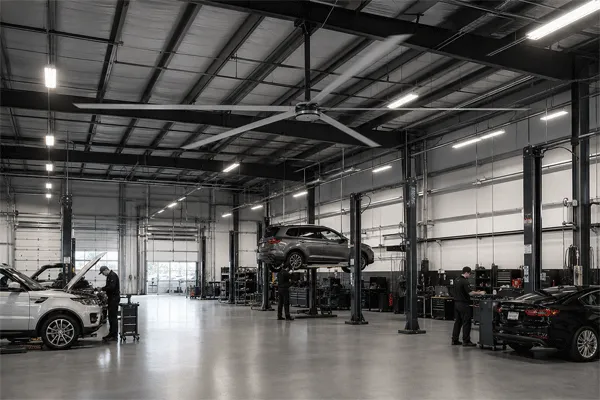
How Long Do Industrial Fans Last? Industrial Fan Lifespan, Blower, Bearing, and HVLS Fan Guide
Esboço do artigo
- Quanto tempo duram os ventiladores industriais?
- What factors affect industrial fan lifespan?
- Why do bearings decide the life of your fan?
- How do vibration, balance, and fan blades affect fan life?
- Do axial fans, centrifugal fans, blowers, and HVLS fans last differently?
- How long do ceiling fans, exhaust fans, and outdoor fans typically last?
- How can regular maintenance extend the lifespan of industrial fans?
- What are the signs an industrial fan is near the end of its life?
- How should industrial cooling and ventilation buyers choose the right fan?
- How can B2B buyers work with a reliable industrial fan manufacturer?
- FAQs about fan lifespan, blowers, and industrial fans
How Long Do Industrial Fans Last?
In many industrial settings, a quality industrial fan can last about 10 to 20 years with proper maintenance. Some light-duty or harsh-duty fans may have a shorter operational life. A well-built HVLS fan in a clean warehouse may run for many years. A blower in a dusty, hot, corrosive exhaust process may wear faster.
So, how long does a fan last? The honest answer is: it depends on the job. A fan used 8 hours per day in a clean logistics center has a very different life from a fan running 24/7 in a food processing exhaust area, livestock building, or high-dust manufacturing plant.
For global B2B buyers, this matters because the fan is not just equipment. It protects worker comfort, airflow, ventilation, cooling, and building performance. As a Sino-US joint venture HVLS fan and intelligent airflow solution provider, we always suggest looking at the full use case before choosing fan options.
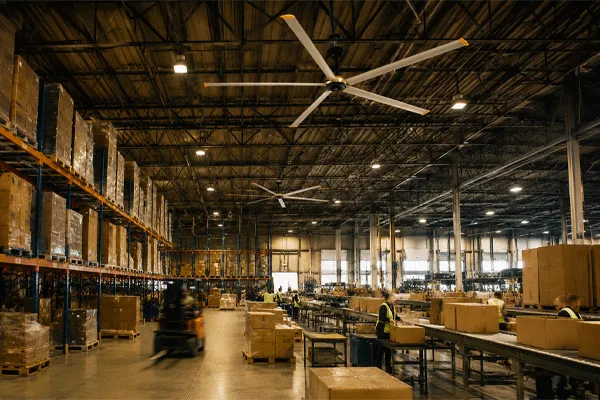
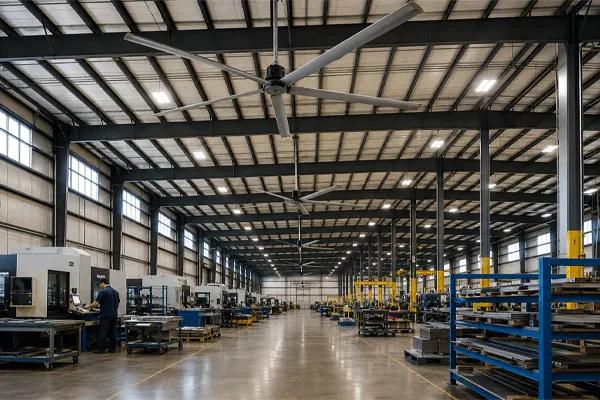
For large-space projects, our HVLS fan solutions for warehouses, factories, and commercial buildings are designed to move large volumes of air with stable, low-speed performance.
What Factors Affect Industrial Fan Lifespan?
The lifespan of an industrial fan depends on several factors: fan type, motor design, bearing system, duty cycle, air quality, temperature, humidity, installation quality, and maintenance practices. A fan built for the specific application will almost always last longer than a cheap general fan forced into a harsh job.
Major factors that affect fan life include:
| Fator |
How It Affects Lifespan |
| Fan type |
Axial fans, centrifugal fans, exhaust fans, blowers, and HVLS fans face different loads |
| Bearing quality |
Poor bearing selection can cause early failure |
| Vibração |
High vibration can damage bearings, motor, housing, and mounts |
| Ambiente |
Dust, heat, moisture, chemicals, and outdoor exposure increase wear |
| Maintenance schedule |
Inspection, cleaning, and lubrication protect performance |
| Instalação |
Poor mounting or alignment shortens service life |
| Operating hours |
Continuous fans operating 24/7 wear faster |
| Airflow restriction |
Blocked inlets or outlets increase stress |
Plant Engineering notes that fans and blowers require significant maintenance, especially around bearings, and higher-speed fans tend to face more bearing problems.
That is why a good fan supplier should ask about the building, airflow goal, operating time, temperature, dust, humidity, and installation location before quoting.
Why Do Bearings Decide the Life of Your Fan?
The bearing is one of the most important parts of an industrial fan. It supports rotation. It carries load. It helps the fan run smoothly. When bearings fail, the fan may become noisy, hot, unstable, and unsafe.
Proper lubrication is essential. Twin City Fan’s bearing maintenance guide states that proper lubrication and maintenance are essential for long bearing life. If the grease is dirty, missing, too much, or too little, the bearing may heat up and fail early.
Common bearing problems include:
- Lack of lubrication
- Over-lubrication
- Contaminated grease
- Misalignment
- Excessive vibration
- High temperature
- Dust or moisture entering the bearing
- Overloaded fan wheel or blades
A simple rule works well: clean bearing + correct grease + correct interval + low vibration = longer fan lifespan.
For project buyers, our intelligent airflow control systems for large industrial buildings help reduce unnecessary runtime, which can support longer operational life.
How Do Vibration, Balance, and Fan Blades Affect Fan Life?
Vibration is one of the biggest enemies of fan life. A little vibration may look harmless at first. It is not. Over time, it can loosen bolts, damage bearings, crack mounts, and reduce fan performance.
Plant Engineering explains that imbalance and vibration are not the same, and dirt, temperature, and loose fits can cause imbalance. It also notes that detecting imbalance early can reduce damage and repair cost.
Fan blades also matter. Dirty, bent, cracked, or uneven fan blades can throw the fan out of balance. In industrial cooling and ventilation projects, even small buildup on blades can become a big issue because the fan rotates for many hours.
A practical inspection checklist should include:
| Area |
What to Check |
| Lâminas do ventilador |
Dirt, cracks, deformation, loose fasteners |
| Fan housing |
Corrosion, rubbing, loose panels |
| Motor |
Heat, noise, current draw |
| Bearing |
Temperature, noise, grease condition |
| Montagem |
Bolts, safety cables, structure |
| Vibração |
New noise, shaking, imbalance |
| Fluxo de ar |
Reduced air movement or blockage |
Do not wait until the fan sounds angry. Angry machines are expensive machines.
Do Axial Fans, Centrifugal Fans, Blowers, and HVLS Fans Last Differently?
Yes. Different fan types have different lifespans because they work in different ways.
Axial fans move air in a straight path along the fan shaft. They are often used for ventilation, cooling, and general airflow. Centrifugal fans move air by spinning it outward through a wheel, making them useful when pressure is needed. A blower often handles higher pressure or process airflow.
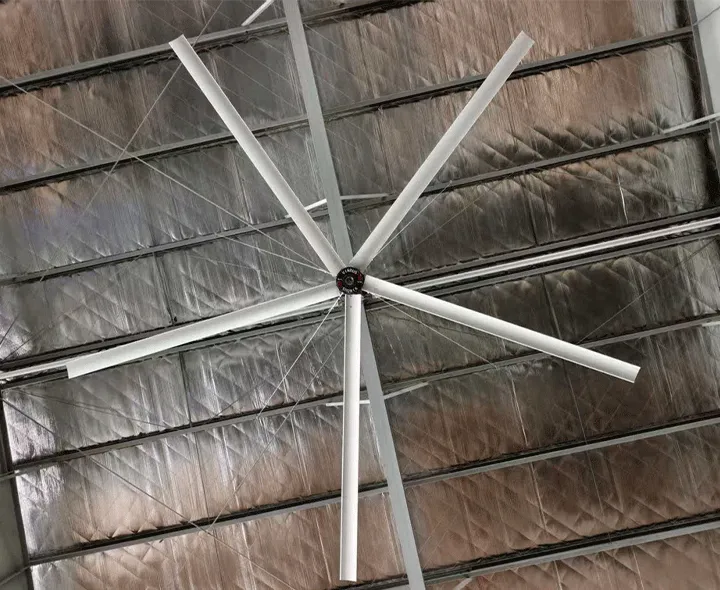
HVLS fans are different. They use large blades and low speed to move large volumes of air across a wide area. AMCA describes HVLS ceiling fans as equipment used to destratify indoor spaces, mitigate heat stress, and improve occupant comfort
.
| Tipo de ventilador |
Utilização comum |
Lifespan Risk |
| Ventiladores axiais |
General ventilation and cooling |
Dust, motor wear, blade imbalance |
| Ventiladores centrífugos |
Exhaust, process air, pressure airflow |
Bearing load, wheel buildup, vibration |
| Blowers |
Process air and material handling support |
Heat, pressure, dust, bearing stress |
| Fãs HVLS |
Large-space comfort and destratification |
Mounting, controls, blade balance |
| Exaustores |
Removing hot, humid, dirty air |
Corrosion, grease, dust, moisture |
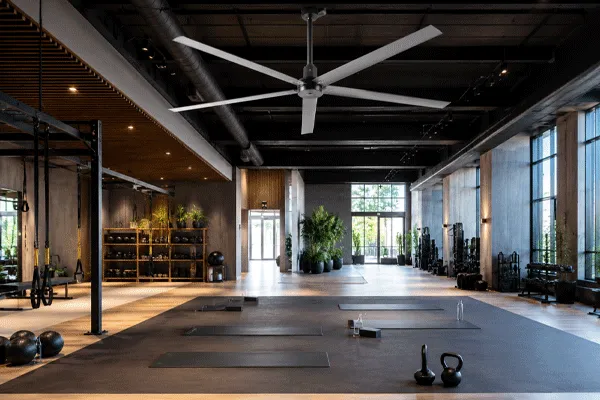
For warehouses, gyms, malls, farms, and factories, large industrial fans for energy-saving air circulation can be selected based on space size, ceiling height, and airflow target.
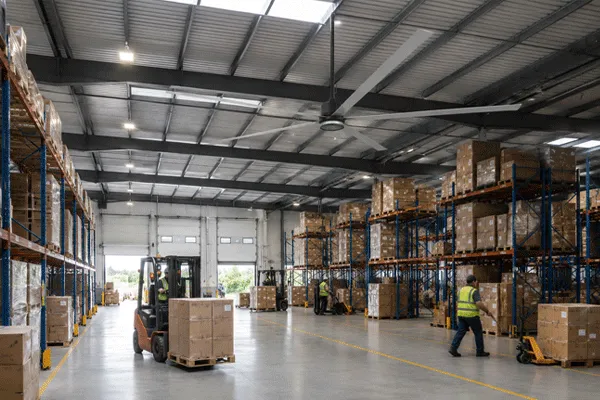
How Long Do Industrial Fans Last? Industrial Fan Lifespan, Blower, Bearing, and HVLS Fan Guide
How Long Do Ceiling Fans, Exhaust Fans, and Outdoor Fans Typically Last?
Ceiling fans in clean indoor spaces tend to last longer than fans exposed to dust, moisture, heat, or chemicals. Large industrial ceiling fans can run for many years when the mounting, motor, controller, and blades are properly designed.
Exhaust fans often wear faster because they remove hot air, moisture, smoke, fumes, grease, dust, or process air. Exhaust fan maintenance should include cleaning, belt checks if applicable, bearing checks, and corrosion inspection.
Outdoor fans also face rain, sun, humidity, dust, temperature swings, and UV exposure. Fans exposed to these conditions need proper materials, coating, motor protection, and regular inspection.
A realistic planning table:
| Fan Category |
Typical Planning Range |
Notas |
| Indoor industrial ceiling fans |
10-20 anos |
Longer with clean air and proper care |
| Fãs HVLS |
15 to 20 years or more |
Depends on motor, bearings, controls, and maintenance |
| Exaustores |
10 to 15 years |
Harsh air may shorten life |
| Outdoor fans |
5–15 years |
Weather protection matters |
| Process blowers |
5–15 years |
Depends on pressure, heat, dust, and duty cycle |
These ranges are planning estimates, not guarantees. The real fan lifespan depends on site conditions and maintenance.
For commercial and public spaces, our commercial ceiling fans for malls, halls, and sports centers help improve comfort while supporting long-term air movement.
How Can Regular Maintenance Extend the Lifespan of Industrial Fans?
Regular maintenance is the most practical way to extend the lifespan of industrial fans. It protects bearings, motors, fan blades, belts, mounts, controls, and safety components.
A good maintenance schedule should include:
- Clean fan blades and guards
- Check bearing temperature and noise
- Lubricate bearings when required
- Inspect belt tension and alignment on belt-driven fans
- Tighten fasteners
- Check vibration
- Inspect electrical connections
- Confirm airflow is not blocked
- Clean fan housing
- Record maintenance history
Hartzell Air Movement recommends tightening bolts and fasteners, inspecting belt tension and alignment, replacing cracked or worn belts, and rechecking belt tension after new installation.
Maintenance does not need to be complicated. It needs to be consistent. A fan can last longer when small problems are fixed before they become shutdowns.
What Are the Signs an Industrial Fan Is Near the End of Its Life?
A fan near the end of its life usually gives warning signs. Do not ignore them.
Common signs of wear include:
| Warning Sign |
Possible Problem |
| New vibration |
Imbalance, bearing wear, loose mount |
| Loud noise |
Bearing, motor, belt, or blade issue |
| Reduced airflow |
Dirty blades, blocked inlet, motor weakness |
| Sobreaquecimento |
Bearing friction, motor overload, poor ventilation |
| Cracked blades |
Fatigue or impact damage |
| Rust or corrosion |
Outdoor or chemical exposure |
| Frequent repairs |
Fan may be beyond economic repair |
| High energy use |
Poor efficiency or mechanical drag |
| Controller faults |
Electrical or system aging |
If repair cost is rising and fan performance is falling, replacement may be smarter than another repair. That is especially true in mission-critical industrial applications where downtime affects production.
For HVAC engineering contractors and facility managers, warehouse ventilation solutions with Fãs HVLS can help improve airflow planning before old fans fail.
How Should Industrial Cooling and Ventilation Buyers Choose the Right Fan?
The right fan depends on the building and application. A warehouse needs different airflow from a livestock barn. A food processing facility needs different hygiene and exhaust control from a sports center. A factory with hot machinery needs a different plan than a shopping mall.
Antes de comprar, verifique:
| Buyer Question |
Porque é que é importante |
| What is the space size? |
Determines fan diameter and quantity |
| What is the ceiling height? |
Affects HVLS fan selection |
| What is the heat source? |
Machines, sun, people, livestock, ovens |
| Is the air dusty or corrosive? |
Affects material and motor protection |
| Is the fan indoor or outdoor? |
Impacts protection level |
| Is noise important? |
Critical for commercial and public spaces |
| Is the fan for comfort or exhaust? |
Changes fan type |
| Is intelligent control needed? |
Reduces unnecessary runtime |
For a factory manager, the best industrial fan may be a ceiling-mounted HVLS fan. For a process line, it may be a blower. For a livestock house, it may be a mix of circulation and exhaust fans. For a mall, it may be a low-noise commercial ceiling fan.
That is why we design solutions, not just sell equipment.
Why Are HVLS Fans a Long-Term Choice for Large Spaces?
HVLS fans can be a strong long-term choice because they move large volumes of air at low speed. This reduces the need for many small high-speed fans and supports more even air movement across large spaces.
ASHRAE reports that HVLS fans can reduce floor-to-ceiling temperature differences and lower average space temperature by minimizing excess heat at the ceiling, helping reduce HVAC system use in large hangar-type spaces.
In summer, HVLS fans improve comfort by moving air across occupied zones. In winter, they can help destratify warm air near the ceiling and bring it down toward people and working areas.
HVLS fans are useful for:
- Armazéns
- Logistics centers
- Instalações de fabrico
- Sports halls
- Shopping malls
- Agricultural greenhouses
- Livestock barns
- Food processing facilities
- Industrial workshops
- High-ceiling public buildings
For agricultural and livestock users, our agricultural HVLS fans for barns and greenhouse airflow support air circulation, heat stress reduction, and humidity control.
How Can B2B Buyers Work With a Reliable Industrial Fan Manufacturer?
A good fan manufacturer should help you choose the right industrial fan, not just push a standard model. For B2B buyers, the best solution starts with airflow needs, building dimensions, mounting conditions, electrical supply, control method, and maintenance access.
As a Sino-US joint venture manufacturer and solution provider, we specialize in HVLS fans, industrial ceiling fans, commercial ceiling fans, large industrial fans, and intelligent airflow control systems. We provide energy-saving ventilation, cooling, destratification, and air circulation solutions for industrial, commercial, agricultural, logistics, sports, and large-space building applications.
B2B buyers should ask for:
- Building airflow evaluation
- Fan layout recommendation
- Product model selection
- Motor and bearing specification
- Installation guidance
- Control system options
- Safety design details
- Maintenance instructions
- After-sales support
- Distributor cooperation
For global B2B buyers and equipment distributors, a quality fan is not only a machine. It is a long-term comfort and energy-saving asset.
How Long Do Industrial Fans Last? Industrial Fan Lifespan, Blower, Bearing, and HVLS Fan Guide
Practical Case Study: Extending Fan Life in a Manufacturing Plant
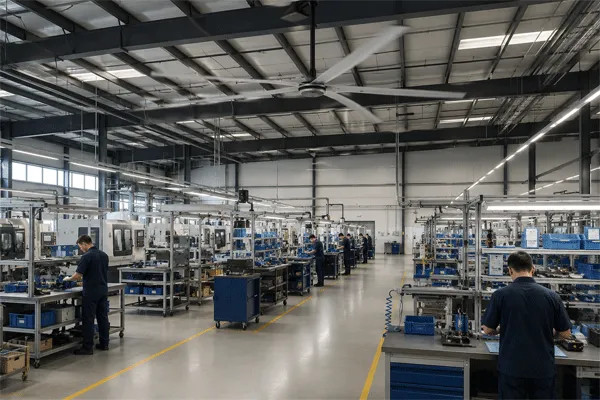
A manufacturing plant used several small fans to cool workers and move air around machines. The fans ran all day. Some had worn bearings. Others vibrated. Maintenance workers kept replacing units, but the airflow was still uneven.
The plant upgraded to a better layout with large industrial ceiling fans in key areas, improved inspection routines, and scheduled cleaning. The goal was not only more airflow. It was better airflow with fewer small units to maintain.
| Problem |
Solution |
| Too many small fans |
Use fewer large-volume fans |
| Uneven airflow |
Improve layout |
| Frequent bearing noise |
Add inspection schedule |
| Dust on blades |
Clean regularly |
| High heat zones |
Target airflow near work areas |
| Poor comfort |
Use low-speed air movement |
The result was a cleaner maintenance plan and more stable comfort. A quality fan and a smart layout can make daily operations easier.
FAQs About Industrial Fan Lifespan
Quanto tempo duram os ventiladores industriais?
Industrial fans usually last about 10 to 20 years in many normal applications. Harsh-duty exhaust fans or process blowers may have a shorter life, while well-maintained HVLS fans may last longer.
What affects fan lifespan the most?
The biggest factors include bearing quality, vibration, lubrication, operating hours, dust, heat, moisture, corrosion, installation quality, and maintenance schedule.
How often should industrial fans be maintained?
Maintenance frequency depends on the fan type and working environment. Many facilities inspect fans monthly or quarterly, with deeper service done annually or based on operating hours and manufacturer guidance.
Do HVLS fans last longer than small high-speed fans?
HVLS fans can last longer in large-space comfort applications because they run at low speed and replace many small fans. Their life still depends on motor quality, bearings, mounting, controls, and maintenance.
When should I replace an industrial fan?
Replace a fan when it has serious vibration, repeated bearing failure, cracked blades, poor airflow, overheating, corrosion, unsafe mounting, or repair costs that are higher than replacement value.
Do outdoor fans wear faster?
Yes. Outdoor fans may wear faster because of sun, rain, humidity, dust, wind, and temperature changes. Proper material selection, weather protection, and maintenance help extend the life.
Principais conclusões
- Industrial fans usually last 10 to 20 years, depending on fan type, environment, operation, and maintenance.
- Bearings, vibration, fan blades, motor quality, and installation strongly affect fan lifespan.
- Exhaust fans and blowers in harsh air may wear faster than clean indoor ceiling fans.
- HVLS fans are a strong long-term option for warehouses, factories, malls, farms, sports centers, and large spaces.
- Regular maintenance helps extend the life of industrial fans and protects performance.
- Warning signs include vibration, noise, overheating, reduced airflow, corrosion, and frequent repairs.
- The right industrial fan depends on space size, ceiling height, airflow goal, heat load, environment, and control needs.
- A reliable fan manufacturer should provide product selection, layout support, installation guidance, maintenance advice, and long-term after-sales service.