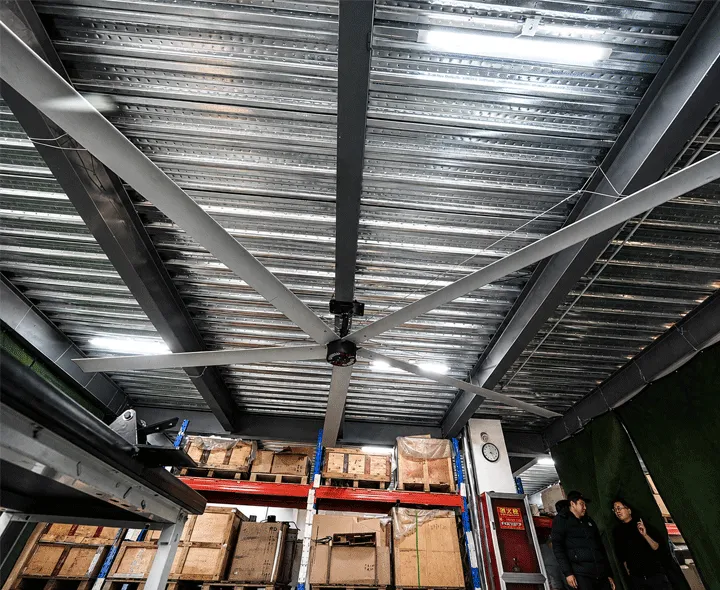
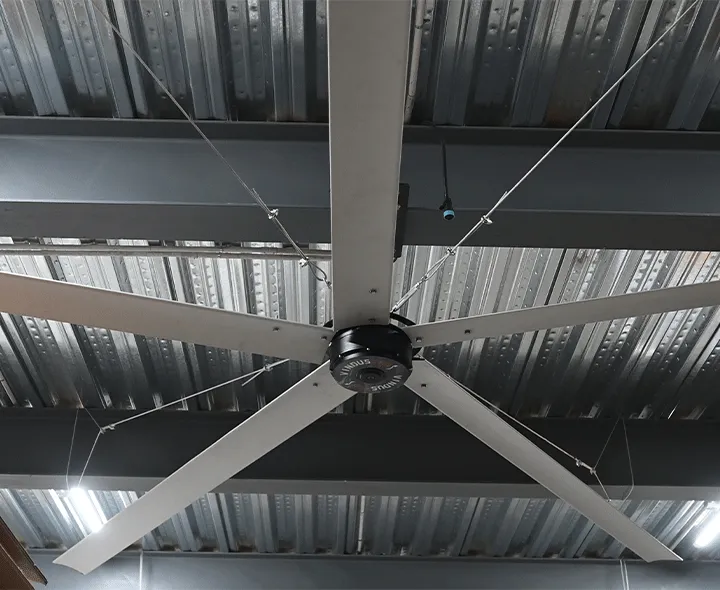
High cooling bills can hurt a warehouse, factory, mall, or sports center fast. Run the AC too hard, and costs rise. Use the wrong fan, and people still feel hot. The smart answer is not “fan or AC.” It is airflow plus efficient cooling.
Fans usually use much less electricity than air conditioning because fans move air while an air conditioner removes heat from the air and often dehumidifies it. Fans do not truly cool the air, but they can make people feel cooler, improve air circulation, and help reduce AC runtime when used correctly.
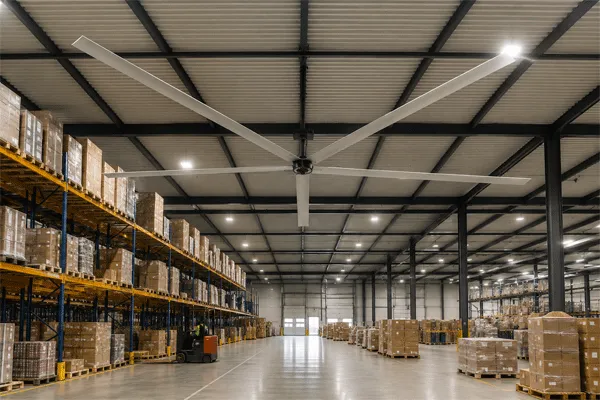
Do Fans Use More Electricity Than Air Conditioning? Fan vs AC Power Consumption Guide for Large Spaces
Esboço do artigo
- Do fans use more electricity than air conditioning?
- Why does fan vs AC power consumption differ so much?
- Does a fan actually cool the air?
- Is it cheaper to run fans than an air conditioner?
- What is the difference between a ceiling fan, box fan, whole house fan, and Ventilador HVLS?
- When is it better to use a fan or AC?
- How can fan and AC work together to reduce energy consumption?
- Why are HVLS fans useful for warehouses, factories, and large spaces?
- How do fans improve comfort, air circulation, and indoor air quality?
- How should B2B buyers choose an energy-saving fan solution?
- FAQs about fans vs air conditioning
Do Fans Use More Electricity Than Air Conditioning?
No. In most cases, fans do not use more electricity than air conditioning. A fan usually uses far less power because it only needs a motor to move air. An air conditioner needs a compressor, refrigerant cycle, condenser fan, evaporator fan, and controls to remove heat from the air.
That is the big difference. A fan simply moves air around. An AC unit changes the air temperature by moving heat from the indoor air to the outside. The U.S. Department of Energy explains that central air conditioners circulate cool air through supply and return ducts, and that they cool and dehumidify air for comfort. It also notes that central air conditioning can consume more than 2,000 kWh of electricity per year in an average-sized home.
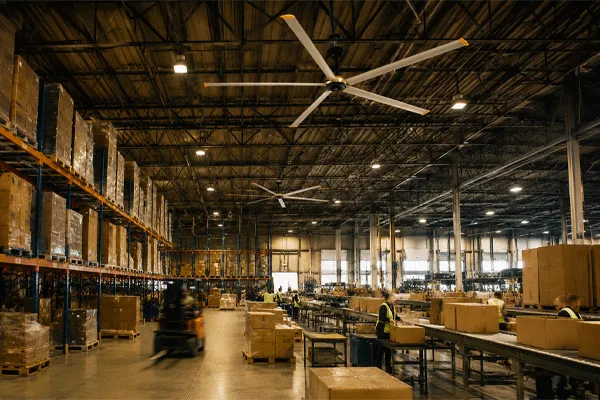
For B2B buyers, the lesson is clear. If a warehouse, factory, gym, greenhouse, or logistics building relies only on AC to solve every heat problem, operating cost can become painful. A well-designed HVLS fan solution for large-space air circulation can help move air more efficiently and reduce the pressure on the HVAC system.
Why Does Fan vs AC Power Consumption Differ So Much?
The gap in fan vs AC power consumption comes from the work each machine does. Fans move air. Air conditioners cool the air by removing heat. Removing heat takes much more energy than moving air.
A small ceiling fan may use little electricity per hour compared with a window AC, portable AC, or central air system. A large industrial HVLS fan uses more power than a small home ceiling fan, of course, but it can move a massive amount of air throughout a large building. That is why comparing only watts can be misleading. You must compare coverage area, comfort effect, and operating hours.
Here is a simple buyer view:
| Equipment Type |
Main Job |
Typical Energy Logic |
| Ventilador de teto |
Move air over people |
Low power consumption |
| Box fan |
Move local air |
Low cost, limited coverage |
| Window AC |
Cool one room or zone |
Higher power use than a fan |
| Portable AC |
Cool a small area |
Can use more energy than expected |
| Central air |
Cool a whole building zone |
High total energy use |
| Ventilador HVLS |
Move large volumes of air slowly |
Efficient for large spaces |
In large facilities, the question is not only “How many watts does the fan use per hour?” The better question is, how much comfort and air circulation do we get per watt?
Does a Fan Actually Cool the Air?
A fan does not actually cool the air in the way an air conditioner does. Fans move air over your skin, which helps sweat evaporate and makes you feel cooler. The Department of Energy says circulating fans create a wind chill effect that makes people feel more comfortable, and ceiling fans can let users raise the thermostat by about 4°F without reducing comfort.
That is why a fan works best when people are in the space. If a room is empty, leaving a fan running may waste electricity because the fan is not lowering air temperature. It is improving comfort for occupants, not producing cool air like an AC.
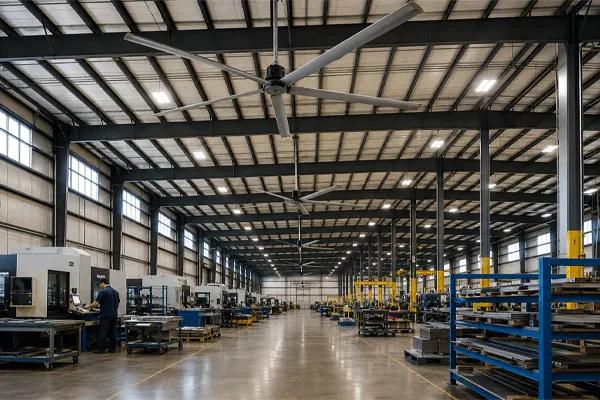
In industrial buildings, this comfort effect is powerful. Workers in a hot warehouse may not need the entire building chilled like a data center. They often need steady air movement, less stagnant hot air, and fewer heat pockets. A properly selected industrial ceiling fan for factory cooling and ventilation can help create that comfort without forcing the AC system to do all the work.
Is It Cheaper to Run Fans Than an Air Conditioner?
Yes, it is usually cheaper to run fans than an air conditioner. Fans use less electricity because they do not have a compressor. AC costs more because it must remove heat from the air and often remove humidity too.
But the right answer depends on the goal. If the indoor air is extremely hot, humid, or unsafe, a fan alone may not be enough. In that case, you need air conditioning, evaporative cooling where suitable, ventilation, shading, insulation, or a full HVAC system. Fans and air conditioners solve different problems.
Use this simple comparison:
| Situation |
Better to Use |
| Mild heat and occupied area |
Ventilador |
| High heat with workers present |
Fan plus ventilation or AC |
| Need lower air temperature |
AC |
| Need humidity control |
AC or dehumidification |
| Large warehouse with heat pockets |
Ventilador HVLS |
| Tall building with stratified air |
HVLS fan plus HVAC strategy |
| Empty room |
Turn fan off unless ventilation is needed |
Fans are cheaper, but they are not magic. AC cools. Fans move air. When you understand that difference, your cooling strategy becomes much smarter.
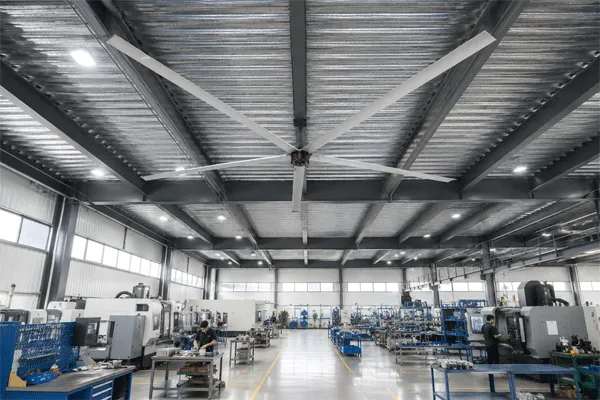
Do Fans Use More Electricity Than Air Conditioning? Fan vs AC Power Consumption Guide for Large Spaces
What Is the Difference Between a Ceiling Fan, Box Fan, Whole House Fan, and HVLS Fan?
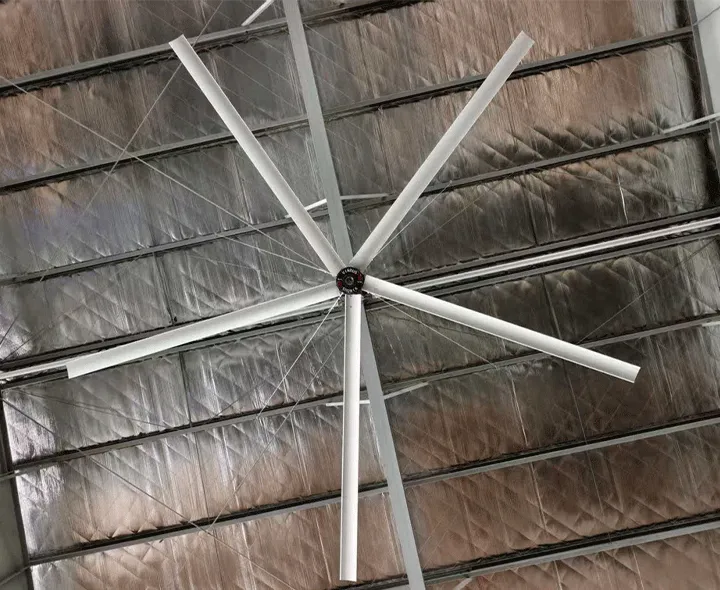
Different fans do different jobs. A ceiling fan improves comfort in a room. A box fan pushes air in one direction. A whole house fan pulls outdoor air through a building when outside air is cooler. An HVLS fan moves a very large volume of air at low speed across a big space.
The Department of Energy explains that whole house fans pull outdoor air through open windows and exhaust it through attic and roof vents. Their cooling effect comes from air circulation, not from cooling or heating parts, and they work best when outdoor temperatures are lower than indoor temperatures.
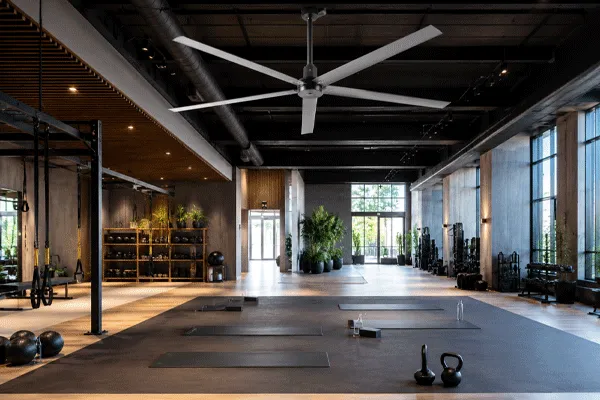
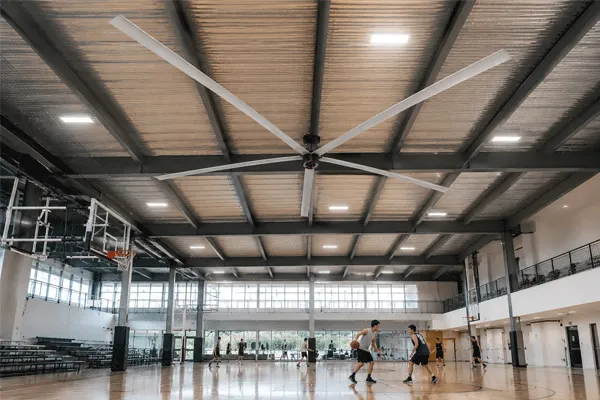
For large commercial and industrial sites, the HVLS fan is the serious player. It is designed for wide coverage, lower air speed, lower noise, and steady airflow. A shopping mall, livestock barn, logistics center, or sports hall does not need a tiny fan screaming in the corner. It needs controlled air movement across the space.
| Tipo de ventilador |
Melhor uso |
Limitation |
| Ventilador de teto |
Rooms, offices, shops |
Cobertura limitada |
| Box fan |
Local airflow |
Less durable for industrial use |
| Whole house fan |
Residential ventilation in cool climates |
Not good for high humidity or pollution |
| Ventilador HVLS |
Warehouse, factory, gym, greenhouse, farm |
Needs proper layout and mounting |
| Blower fan |
Targeted air movement |
Can be noisy and directional |
For project buyers, commercial ceiling fans for malls, halls, and public buildings can provide a better balance between comfort, design, and energy efficiency.
When Is It Better to Use a Fan or AC?
It is better to use a fan when the building temperature is acceptable but people feel uncomfortable because air is still. It is better to use AC when you must lower air temperature, remove humidity, or maintain a strict indoor condition.
A fan or AC decision should consider:
- Outdoor temperature
- Indoor air temperature
- Humidity
- Number of people
- Heat from machines
- Altura do teto
- Building insulation
- Airflow paths
- Safety rules
- Working hours
- Energy cost
In a factory, a fan can help workers feel cooler while also moving hot air away from occupied zones. In a food processing facility, AC or refrigeration may still be needed for temperature control, but fans can improve circulation. In a livestock farm, fans may reduce heat stress and humidity problems. In a greenhouse, air movement helps balance temperature and moisture around plants.
The best answer is often not “fan vs AC.” It is fan and AC, used with a clear control strategy.
How Can Fan and AC Work Together to Reduce Energy Consumption?
A fan and AC can work together when the fan helps distribute air and improve comfort, allowing the AC thermostat to be set slightly higher. The DOE guidance that ceiling fans can allow a thermostat setting about 4°F higher without reducing comfort is a practical example for homes and smaller spaces.
In large buildings, the same idea becomes more valuable. If a fan can circulate air throughout a zone, reduce hot spots, and mix cooler air, the AC system may run less often or work under less pressure. This is especially important for high-ceiling buildings where cool air and warm air separate.
A practical strategy:
| Etapa |
Ação |
Resultado |
| 1 |
Measure heat zones |
Find problem areas |
| 2 |
Install proper fan layout |
Move air across occupied zones |
| 3 |
Adjust AC setpoint carefully |
Reduce cooling load |
| 4 |
Use smart controls |
Avoid unnecessary runtime |
| 5 |
Monitor comfort and energy |
Prove savings |
| 6 |
Maintain fan and AC system |
Keep performance stable |
As a Sino-US joint venture manufacturer and solution provider, we design intelligent airflow control systems for fan and HVAC coordination so buyers can manage airflow, comfort, and energy use in a more predictable way.
Why Are HVLS Fans Useful for Warehouses, Factories, and Large Spaces?
HVLS fans are useful because they move large volumes of air slowly and evenly. They are designed for large spaces where small high-speed fans cannot create balanced airflow. In warehouses, logistics centers, factories, and sports halls, they help reduce stagnant air and make workers feel cooler.
HVLS fans also help in winter. Warm air rises and can collect near the ceiling. This is called stratification. ASHRAE notes that high-volume, low-speed fans are a practical way to reduce floor-to-ceiling temperature gradients in large spaces, and they can mix warm air at the ceiling with cooler air near the floor during winter.
This matters because many large buildings have tall roofs. Without air circulation, the heater may work hard while warm air sits uselessly above people’s heads. That is wasteful. A well-designed warehouse ventilation solution with HVLS fans can help improve comfort in summer and destratification in winter.
How Do Fans Improve Comfort, Air Circulation, and Indoor Air Quality?
Fans improve comfort by moving air around people. They help break up hot pockets, reduce still air, and improve evaporation from skin. They can also help move fresh air when combined with ventilation systems.
However, fans do not clean air by themselves. Indoor air quality depends on ventilation, filtration, humidity control, source control, and maintenance. If a fan only moves dusty or polluted air around, comfort may improve but air quality may not.
For industrial and commercial projects, proper airflow design should include:
- Fresh air strategy
- Exhaust points
- Posicionamento do ventilador
- Air path planning
- Heat source locations
- Controlo da humidade
- Dust or odor control
- Worker comfort zones
- Maintenance access
In agricultural buildings, fans can also help reduce humidity and improve animal comfort. For livestock and greenhouse buyers, agricultural HVLS fans for barns and greenhouse airflow can be part of a more stable environment control plan.
How Much Does Fan Power Consumption Cost Per Hour?
To estimate fan costs, use this simple formula:
Power in kW × electricity price × hours = cost
For example, if a fan uses 0.5 kW and electricity costs $0.12 per kWh, running it for 10 hours costs:
0.5 × 0.12 × 10 = $0.60
A large AC system may use much more power, but exact costs depend on equipment size, efficiency, runtime, climate, insulation, and cooling load. That is why buyers should compare actual site conditions, not just nameplate power.
A simple example table:
| Equipamento |
Example Power |
10-Hour Cost at $0.12/kWh |
| Small ceiling fan |
0.075 kW |
$0.09 |
| Larger industrial fan |
0.5 kW |
$0.60 |
| Small window AC |
1.0 kW |
$1.20 |
| Larger AC unit |
3.0 kW |
$3.60 |
| Multiple-zone AC system |
10.0 kW |
$12.00 |
This table is only an example, not a promise. Real fan costs and air conditioner costs must be calculated from actual equipment data.
What About Central Air, Window AC, and Portable AC?
Central air, window AC, and portable AC all cool the air, but they serve different needs. A window AC unit is often used for one room. A portable AC serves a local area. Central air conditioning serves a larger zone or whole building through ducts.
The Department of Energy says central air conditioners are more efficient than room air conditioners and convenient to operate, but it also stresses the need for correct sizing, duct design, refrigerant charge, and airflow for efficiency.
A portable AC can help in temporary spaces, but it may not be the best choice for large industrial areas. A central air conditioning system can cool large areas, but it may be expensive if the building is tall, poorly insulated, or has large doors opening often.
That is why many B2B buyers use mixed solutions:
- AC for offices and temperature-controlled zones
- HVLS fans for warehouse and production zones
- Exhaust fans for heat and fumes
- Spot cooling for special workstations
- Smart controls for scheduling and energy savings
Cooling a large building is not one button. It is a system.
Do Fans Use More Electricity Than Air Conditioning? Fan vs AC Power Consumption Guide for Large Spaces
Case Study: Reducing Heat Stress in a Logistics Warehouse
A logistics company had a large warehouse with loading doors, high ceilings, and workers moving all day. The AC system could not keep up because doors opened often. The building had hot air near the roof, still air in packing zones, and complaints from workers.
Instead of adding more AC capacity immediately, the project team installed Fãs HVLS in key zones. The goal was to move air through the occupied area, reduce hot spots, and improve comfort. The team also adjusted work-zone airflow and reviewed door-opening patterns.
The final plan included:
| Problem |
Airflow Solution |
| Still air in packing area |
HVLS fans over occupied zones |
| Heat trapped near ceiling |
Destratification airflow |
| High AC runtime |
Fan and AC coordination |
| Desconforto dos trabalhadores |
Lower perceived temperature |
| Uneven air distribution |
Better fan placement |
| Energy waste |
Smarter operating schedule |
The result was a more comfortable warehouse and a clearer path to HVAC energy management. This is the kind of practical project where a reliable large industrial fan manufacturer for global B2B projects can provide real value.
How Should B2B Buyers Choose an Energy-Saving Fan Solution?
B2B buyers should choose a fan solution by building size, ceiling height, heat load, airflow needs, installation conditions, and control requirements. Do not choose only by blade diameter or price. A cheap fan in the wrong place is still expensive.
Antes de comprar, verifique:
| Buying Factor |
Porque é que é importante |
| Building size |
Defines coverage needs |
| Altura do teto |
Affects fan diameter and mounting |
| Occupied zones |
Shows where comfort matters |
| AC system |
Helps coordinate fan and AC use |
| Heat sources |
Machines, people, ovens, animals, sunlight |
| Humidity |
Impacts comfort and air quality |
| Controlos |
Avoid unnecessary fan running |
| Segurança |
Mounting, structure, clearance |
| Barulho |
Important for commercial and public spaces |
| Manutenção |
Reduces long-term cost |
As a Sino-US joint venture manufacturer and solution provider specializing in HVLS fans, industrial ceiling fans, commercial ceiling fans, large industrial fans, and intelligent airflow control systems, we help global buyers design energy-saving ventilation, cooling, destratification, and air circulation solutions for industrial, commercial, agricultural, logistics, sports, and large-space buildings.
A good solution should not only move air. It should solve the customer’s real problem.
FAQs About Fans vs Air Conditioning
Do fans use more electricity than air conditioning?
No. Fans usually use less electricity than air conditioning because they move air instead of removing heat from the air. AC uses more power because it cools and often dehumidifies the indoor air.
Is it cheaper to run fans or AC?
It is usually cheaper to run fans. However, fans do not lower air temperature. When the space is very hot or humid, AC may still be needed for safe and comfortable conditions.
Does a ceiling fan cool the room?
A ceiling fan does not truly cool the room. It cools people by moving air over skin. This creates a wind chill effect and helps people feel cooler.
Can I run fans with AC?
Yes. Running fans with AC can improve air circulation and comfort. In some cases, it allows a higher thermostat setting while maintaining comfort, which can reduce energy consumption.
What is better to use: fan or air conditioner?
Use a fan when the space is occupied and air movement can improve comfort. Use an air conditioner when you need to lower air temperature, reduce humidity, or maintain controlled indoor conditions.
Are HVLS fans good for warehouses?
Yes. HVLS fans are very useful for warehouses because they move large volumes of air at low speed, improve comfort, reduce stagnant air, and support destratification in high-ceiling spaces.
Does a whole house fan use less electricity than AC?
A whole house fan can be an energy-efficient alternative in some climates, especially when outdoor air is cooler than indoor air. It does not dehumidify like AC, so it is less suitable for humid climates.
Principais conclusões
- Fans usually use much less electricity than air conditioning.
- Fans move air; AC removes heat from the air and can dehumidify it.
- A fan does not truly lower air temperature, but it can make people feel cooler.
- Ceiling fans can allow higher thermostat settings without reducing comfort in many cases.
- Whole house fans work best when outdoor air is cooler and humidity is not a major issue.
- HVLS fans are highly useful for warehouses, factories, gyms, malls, farms, and other large spaces.
- Fan and AC systems can work together to reduce cooling pressure and improve comfort.
- B2B buyers should choose fan solutions based on building size, ceiling height, heat load, occupied zones, controls, safety, and maintenance.
- A professional HVLS fan manufacturer can help design energy-saving ventilation, cooling, destratification, and intelligent airflow control systems for large industrial and commercial projects.