A wrong fan size can leave hot zones, waste power, and disappoint workers or customers. Bigger is not always better. Smaller fans are not always cheaper in the long run. The solution is to match the HVLS fan to your ceiling, layout, and comfort goal.
To choose the right HVLS fan size, check your ceiling height, room size, floor layout, heat source, airflow target, mounting structure, and number of fans required. A proper HVLS fan sizing guide helps you select the right fan diameter, avoid dead zones, and improve comfort, ventilation, and energy efficiency in large spaces.
Esboço do artigo
- What Is an HVLS Fan and Why Does Fan Size Matter?
- How Does Ceiling Height Affect HVLS Fan Size?
- What Is the Best HVLS Ceiling Fan Size Guide for Large Spaces?
- How Do You Match Fan Diameter with Room Size?
- How Many HVLS Fans Are Needed for Your Facility?
- What Type of Fan Works Best for Commercial and Industrial Spaces?
- How Do HVLS Fans Help with Cooling, Destratification, and Energy Savings?
- What Should You Check Before HVLS Fan Installation?
- What Is the Cost of an HVLS Fan and What Affects ROI?
- How Can You Choose the Right HVLS Fan Supplier or Manufacturer?
- FAQs About Choosing an HVLS Fan
- Principais conclusões
How to Choose the Right HVLS Fan Size for Your Ceiling, Facility, and Airflow Needs
What Is an HVLS Fan and Why Does Fan Size Matter?
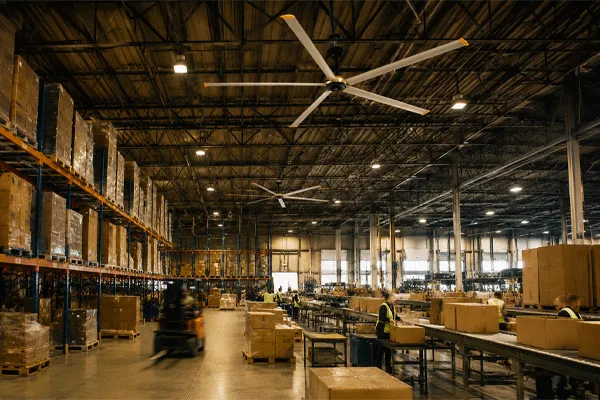
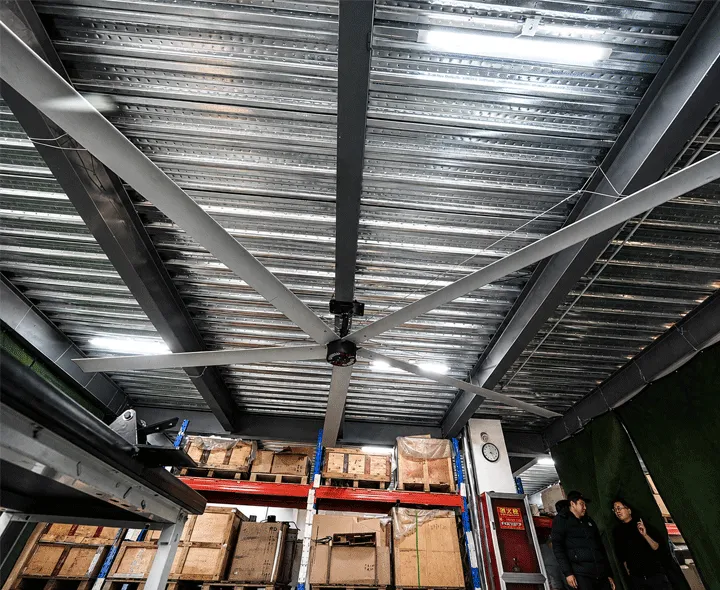
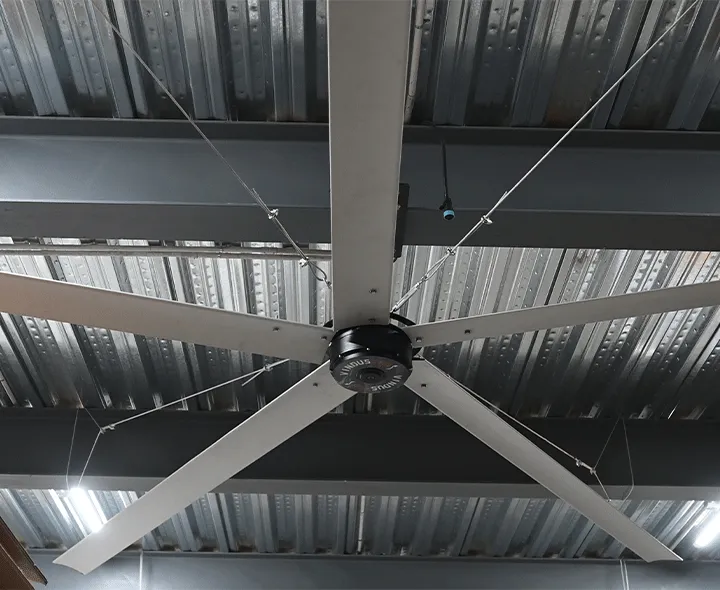
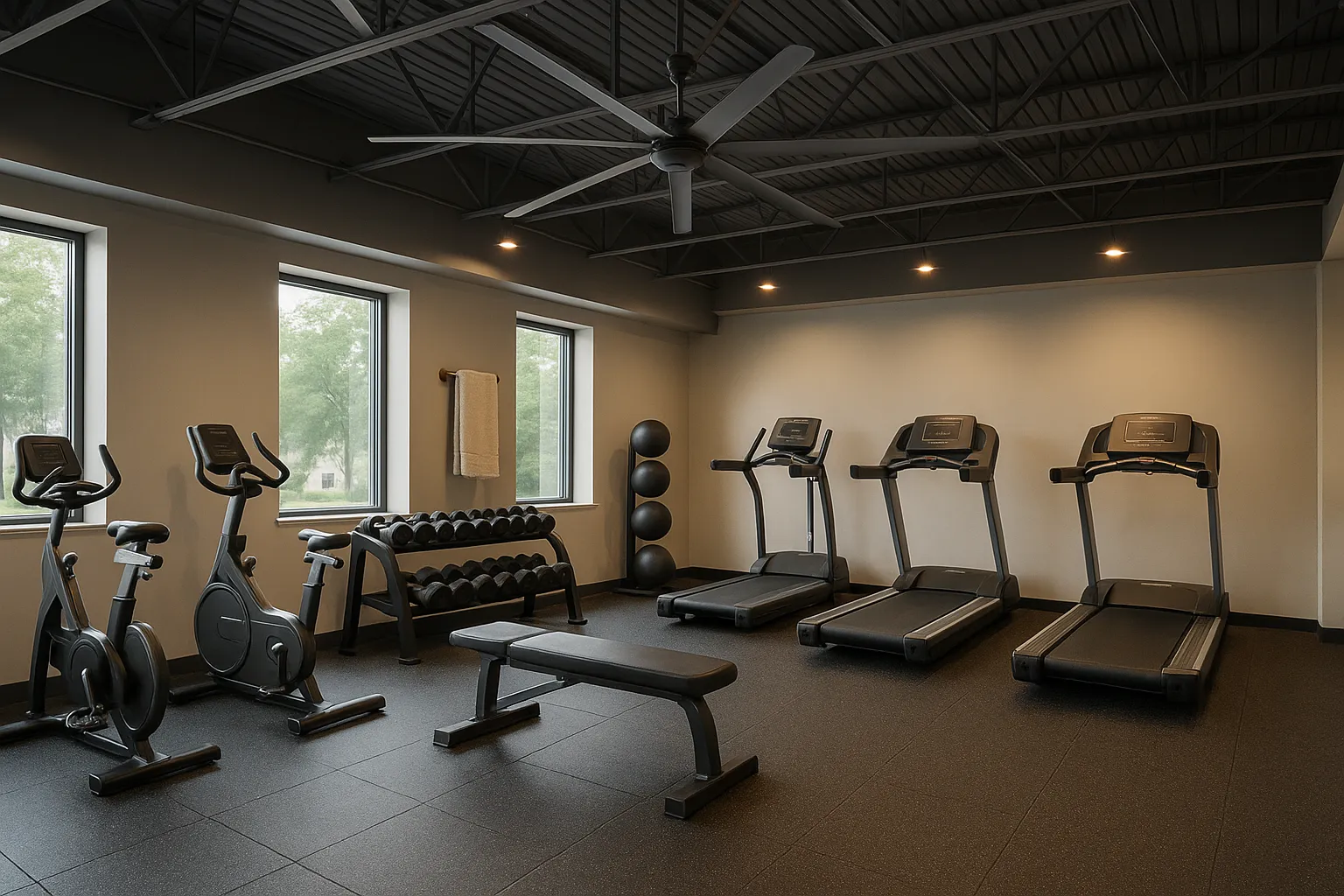
An HVLS fan means “high volume, low speed fan.” It is a large-diameter ceiling fan that moves a large amount of air at slow speed. Unlike small ceiling fans, HVLS ceiling fans are designed for warehouses, factories, logistics centers, gyms, farms, shopping malls, and other large spaces.
AMCA explains that large-diameter ceiling fans provide air mixing, destratification, and cooling effects in residential, commercial, industrial, and agricultural settings. It also notes that the U.S. Department of Energy defines large-diameter ceiling fans as fans with a blade span greater than 7 feet, or 2.1 meters.
Fan size matters because airflow must reach people, animals, products, and working zones. A fan too small may create weak airflow. A fan too low or too large for the space may create comfort issues or installation problems. To choose the right solution, you need a fan for your space, not just the biggest fan in the catalog.
How Does Ceiling Height Affect HVLS Fan Size?
Ceiling height is one of the first things to check when choosing an HVLS fan. A higher ceiling can often support a larger fan diameter because the airflow has room to spread. A lower ceiling may need a smaller HVLS ceiling fan or special installation planning.
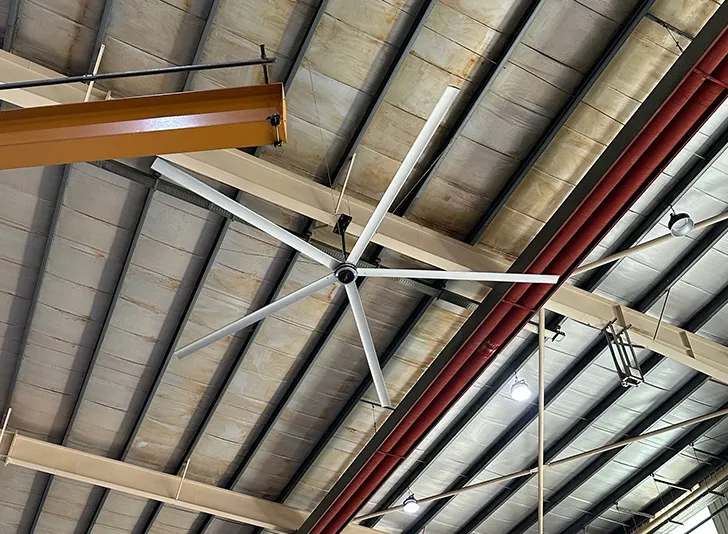
The height for HVLS installation should also leave safe clearance between the fan blade and people, equipment, lights, sprinklers, racks, cranes, doors, and other building systems. A ceiling fan must be placed where it can move air without hitting obstacles or creating maintenance risk.
A basic rule is simple: the larger the fan, the more carefully you must check ceiling height, mounting strength, and nearby structures. For accurate HVLS fan selection, we ask buyers to share building height, roof type, beam structure, racking plan, and working area drawings before we recommend a model.
What Is the Best HVLS Ceiling Fan Size Guide for Large Spaces?
A good HVLS ceiling fan size guide does not only look at square meters or square feet. It also looks at ceiling height, use of the space, heat load, worker density, airflow barriers, and installation limits. The ideal fan size for one warehouse may not fit another warehouse of the same floor area.
Here is a simple fan sizing guide for early planning:
| Tipo de instalação |
Common Ceiling Height |
Suggested HVLS Fan Direction |
Key Selection Point |
| Armazém |
6–12 m |
Medium to large HVLS fan |
Racking and loading zones |
| Factory |
5–15 m |
Industrial HVLS fan |
Heat source and worker comfort |
| Logistics center |
8–14 m |
Large HVLS fan system |
Wide air coverage |
| Centro esportivo |
6–12 m |
Quiet HVLS ceiling fan |
Comfort and noise control |
| Livestock farm |
4–8 m |
Lower-speed airflow |
Animal comfort and humidity |
| Shopping mall |
5–10 m |
Decorative commercial fan |
Design and low noise |
This chart is only a starting point. The correct fan size depends on site drawings and airflow goals. When selecting a fan, buyers should not rely only on a simple fan size chart. They should also confirm the number of fans required and the best fan placement.
How Do You Match Fan Diameter with Room Size?
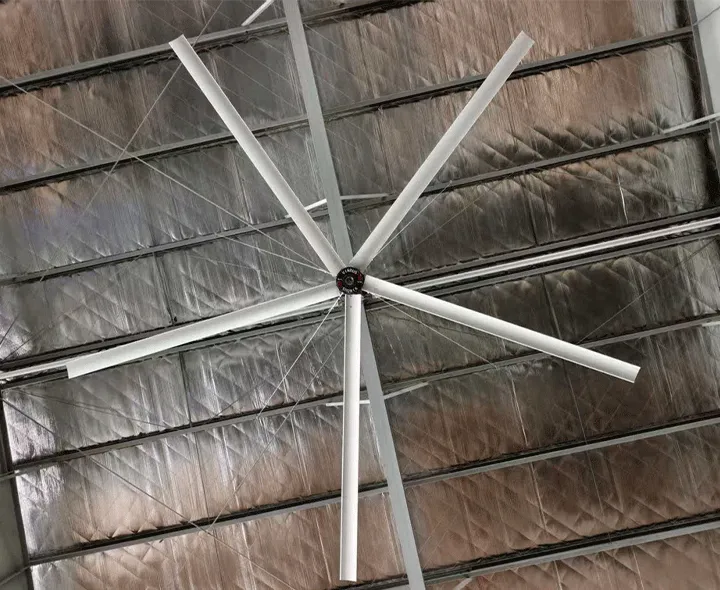
Fan diameter is the width of the moving air system. The diameter of a fan affects how far the airflow can spread across the floor. A larger fan usually moves more air across a wider area at a lower speed. This is why industrial Fãs HVLS can often replace many smaller fans in large open spaces.
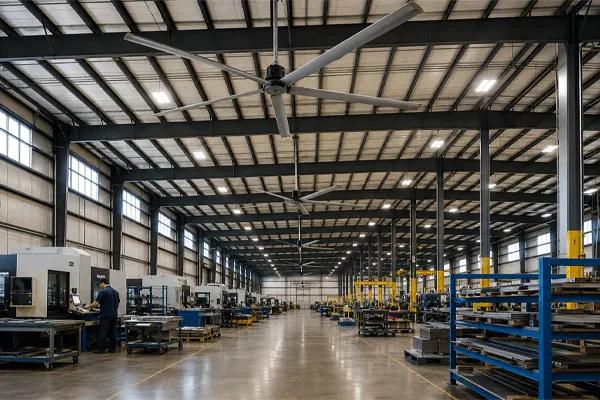
However, room size is not the only factor. A tall warehouse with open floor space may benefit from one single HVLS fan in a central zone. A factory with machines, partitions, mezzanines, or heat sources may need several fans to get the right fan performance.
To determine the size, check these points:
- Total floor area and working area
- Ceiling height and beam position
- Rack height and aisle width
- Heat sources such as ovens, machines, or loading doors
- Worker positions and comfort zones
- Existing HVAC or ventilation system
- Doors, cranes, lighting, sprinklers, and safety clearance
The right HVLS fan size is the one that moves air through the useful space, not just through empty ceiling volume.
How to Choose the Right HVLS Fan Size for Your Ceiling, Facility, and Airflow Needs
How Many HVLS Fans Are Needed for Your Facility?
The number of fans required depends on coverage area, room shape, obstacles, airflow target, and fan diameter. In a clear open warehouse, fewer large fans may work. In a busy factory with production lines, several smaller fans may perform better than one very large fan.
A single HVLS fan can often improve comfort in a large zone. But if your building has multiple separated work areas, a single fan may not cover all users. This is where professional layout planning matters.
For commercial and industrial projects, we usually suggest a site-based plan. We review the size of the space, ceiling height, roof structure, and airflow demand. Then we recommend fan size, fan placement, and installation position. This helps buyers avoid the wrong size and get the right fan size before purchase.
What Type of Fan Works Best for Commercial and Industrial Spaces?
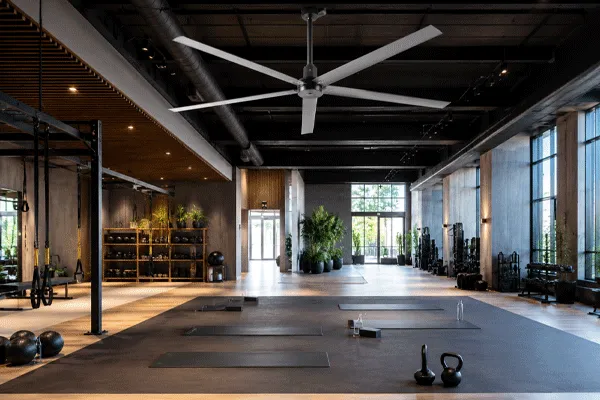
The best type of fan depends on the site. Warehouses often need large-diameter HVLS ceiling fans for wide airflow. Factories may need industrial fan models with stronger motors, safety controls, and durable blades. Sports centers may need quiet operation. Livestock farms may need steady airflow that supports animal comfort without high wind stress.
HVLS fans are used in many large-space applications, including:
- Warehouses and logistics centers
- Manufacturing plants and workshops
- Food processing facilities
- Shopping malls and commercial halls
- Sports centers and gyms
- Agricultural greenhouses
- Dairy farms and livestock houses
- Bus stations, terminals, and public buildings
As a Sino-US joint venture manufacturer and solution provider, we specialize in HVLS fans, industrial ceiling fans, commercial ceiling fans, large industrial fans, and intelligent airflow control systems. Our goal is not only to sell one fan. We help customers choose the right HVLS fan system for energy-saving ventilation, cooling, destratification, and air circulation.
How Do HVLS Fans Help with Cooling, Destratification, and Energy Savings?
HVLS fans help by moving large volumes of air slowly and evenly. In summer, air movement across the skin creates a cooling effect. In winter, the fan can help move warm air from the ceiling down toward the occupied zone. This process is called destratification.
ASHRAE explains that thermal stratification happens when heated air rises and stays near the ceiling in large buildings. It also notes that HVLS fans are a practical way to reduce the floor-to-ceiling temperature gradient in large spaces, helping reduce HVAC system use.
AMCA also describes large-diameter ceiling fans as part of modern HVAC strategies and notes that airspeed can support thermal comfort and allow higher thermostat setpoints while maintaining comfort. For facility managers, this can mean better comfort and lower energy cost when the fan system is designed correctly.
What Should You Check Before HVLS Fan Installation?
HVLS fã installation should start with safety and structure. A large fan must be mounted to a strong support point. The installer must check beams, roof trusses, electrical supply, fire protection systems, and the clear distance from obstacles.
OSHA guidance on fan blade guarding states that fans within 7 feet of the floor or working level must be guarded, and guards should prevent contact with fan blades. While HVLS ceiling fans are usually installed much higher than this, the rule shows why safe clearance and correct installation matter in industrial settings.
Before installing HVLS fans, check:
- Mounting beam strength
- Ceiling height and blade clearance
- Electrical supply and control panel
- Distance from lights and sprinklers
- Door height and crane movement
- Racking and storage layout
- Maintenance access
- Local safety rules and project standards
Installing an HVLS fan is not like hanging a small room fan. A professional plan protects people, equipment, and the fan purchase.
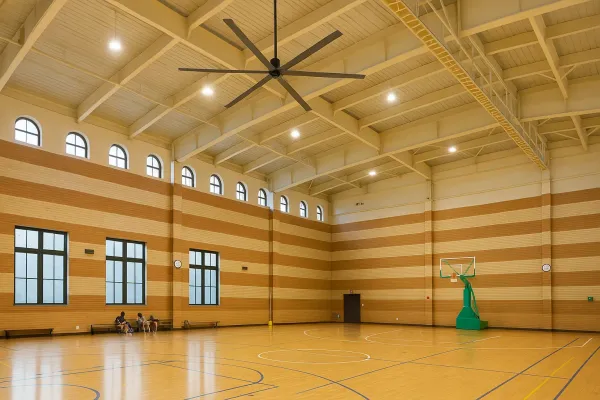
How to Choose the Right HVLS Fan Size for Your Ceiling, Facility, and Airflow Needs
What Is the Cost of an HVLS Fan and What Affects ROI?
The cost of an HVLS fan depends on fan diameter, motor type, control system, blade design, installation height, project quantity, and customization. A small commercial fan costs less than a large industrial HVLS fan, but price should not be the only decision factor.
A low-cost fan that performs poorly can cost more over time. It may need more units, more power, more maintenance, or earlier replacement. A higher-quality fan can improve air circulation, worker comfort, and HVAC support. That can bring better long-term value.
For B2B buyers, the true ROI includes:
| ROI Factor |
Porque é que é importante |
| Energy support |
Fans may reduce HVAC load when used correctly |
| Worker comfort |
Better airflow can reduce heat stress complaints |
| Proteção do produto |
Air movement can reduce humidity pockets |
| Maintenance cost |
Better components reduce downtime |
| Coverage efficiency |
Right fan size reduces the need for extra units |
| Brand support |
Good supplier support reduces project risk |
The ideal HVLS fan is not always the cheapest. It is the fan that meets the building need, runs reliably, and supports the customer’s operating goal.
How Can You Choose the Right HVLS Fan Supplier or Manufacturer?
A reliable HVLS fan supplier should provide more than a product list. You need sizing advice, technical drawings, motor options, controller details, installation guidance, warranty terms, and project support. For global B2B buyers, communication and delivery control also matter.
Ao selecionar um Fabricante de ventiladores HVLS, ask these questions:
- Can the supplier recommend the right HVLS fan size based on ceiling height?
- Can they provide a clear HVLS ceiling fan size guide?
- Do they offer industrial and commercial fan options?
- Can they support fan installation planning?
- Do they provide drawings, manuals, and technical support?
- Can they handle bulk orders for distributors and contractors?
- Do they offer intelligent airflow control systems?
- Do they understand HVAC energy-saving goals?
Some buyers compare global brands such as MacroAir fans, Big Ass Fans, and other HVLS suppliers. That is a normal step. But your final choice should depend on performance, support, customization, price, delivery, and after-sales response.
For more project planning, buyers can review industrial HVLS fans for factories and warehouses, commercial ceiling fans for large public spaces, HVLS ceiling fan size guide for facility planning, intelligent airflow control systems, energy-saving ventilation solutions, and custom HVLS fan solutions for global B2B buyers.
Which HVLS Fan Size Fits Common Building Types?
Different spaces benefit from HVLS in different ways. A warehouse owner wants to improve airflow between racks. A logistics company wants comfort at packing stations. A factory manager wants to reduce hot zones. A greenhouse operator wants air movement for plant health. A livestock farm owner wants steady air circulation for animal comfort.
Here is a practical reference:
| Building Type |
Common Problem |
HVLS Fan Benefit |
| Armazém |
Hot zones and still air |
Wide air circulation |
| Factory |
Heat from machines |
Worker comfort support |
| Logistics hub |
Loading door temperature swing |
More even airflow |
| Gym or sports hall |
Stuffy air |
Quiet comfort airflow |
| Greenhouse |
Uneven humidity |
Better circulation |
| Livestock farm |
Heat and moisture stress |
Comfort and air movement |
| Mall or public hall |
High ceiling air stratification |
Destratification and comfort |
HVLS fans can be used in both new buildings and retrofit projects. The key is choosing the right size HVLS fan and placing it where airflow has room to move.
What Happens If You Choose the Wrong Size HVLS Fan?
Choosing the wrong size can create several problems. A fan that is too small may not move enough air. A fan that is too large may not fit the structure or may create uncomfortable airflow near people. Bad placement can leave dead zones.
Wrong sizing can also increase cost. You may buy more fans to get the same coverage. You may pay for rework during installation. You may also miss energy-saving benefits because the fan system does not work with HVAC zones.
A correct fan size helps ensure your lawn—no, your facility—gets the airflow it needs. In industrial airflow planning, details matter. The right fan for your facility should match ceiling height, floor plan, heat load, and daily operation.
Case Study: Choosing an HVLS Fan for a Logistics Warehouse
A logistics warehouse had high ceiling space, wide loading zones, and workers at packing stations. The customer first asked for the largest fan available. But after reviewing the layout, we found that one large fan would not solve airflow near the side work zones.
The better plan used multiple HVLS ceiling fans with suitable fan diameter and balanced fan placement. This created more even airflow across the operating area. It also helped reduce heat discomfort during busy loading hours.
The project showed a simple lesson: bigger is not always the best fan. The right HVLS fan is the one that matches the building. Good selection saves money before installation starts.
Project note: In HVLS fan selection, airflow path matters as much as fan diameter. A large blade cannot help if racks, walls, or machines block the air.
Why Work with a Sino-US Joint Venture HVLS Fan Solution Provider?
Large-space airflow projects need engineering support. A buyer may know the floor area, but not the correct fan size. A contractor may know the ceiling height, but not the ideal fan placement. A distributor may need product range, documents, packaging, and fast delivery for different markets.
As a Sino-US joint venture manufacturer and solution provider, we provide HVLS fans, industrial ceiling fans, commercial ceiling fans, large industrial fans, and intelligent airflow control systems. Our solutions support industrial, commercial, agricultural, logistics, sports, and large-space building applications.
We help customers reduce HVAC energy costs, improve worker comfort, solve heat and humidity problems, and enhance indoor air circulation. If you need to choose the right HVLS fan for a warehouse, factory, farm, gym, mall, or public space, we can support sizing, selection, project planning, and long-term supply.
FAQs About Choosing an HVLS Fan
How do I choose the right HVLS fan size?
Choose the right HVLS fan size by checking floor area, ceiling height, fan diameter, airflow target, obstacles, mounting structure, and number of fans required. A professional fan sizing guide is better than guessing by floor area alone.
What ceiling height is best for HVLS fans?
HVLS fans are typically used in spaces with higher ceilings, such as warehouses, factories, gyms, farms, and logistics centers. The exact height depends on fan diameter, blade clearance, and building structure.
Can one HVLS fan cool an entire warehouse?
One HVLS fan can often improve airflow in a large open zone, but it may not cover the entire warehouse if racks, partitions, machines, or multiple work areas block airflow. Large buildings may need several fans.
Are HVLS fans used with air conditioning?
Yes. HVLS fans work well with HVAC systems. They help mix air, improve comfort, reduce hot and cold spots, and may support higher thermostat setpoints when designed correctly.
What is the difference between HVLS ceiling fans and normal ceiling fans?
HVLS ceiling fans have much larger blades and move high volumes of air at low speed. Normal ceiling fans are designed for small rooms. HVLS fans are designed for large commercial and industrial spaces.
Who should install an HVLS fan?
A trained installer or qualified contractor should install the fan. HVLS fan installation requires structural checks, electrical work, clearance planning, and safety review.
Principais conclusões
- An HVLS fan moves high volumes of air at low speed for large spaces.
- To choose the right HVLS fan, check ceiling height, floor area, obstacles, airflow goal, and mounting structure.
- Bigger is not always better; the right fan size depends on the facility layout.
- Ceiling height affects fan diameter, blade clearance, and airflow spread.
- HVLS fans help with cooling effect, air circulation, destratification, and HVAC support.
- Warehouses, factories, gyms, farms, logistics hubs, malls, and public halls can benefit from HVLS fan systems.
- Proper fan installation is critical for safety and long-term performance.
- A reliable HVLS fan manufacturer should provide sizing support, technical drawings, product options, and after-sales service.
- As a Sino-US joint venture HVLS fan solution provider, we help global B2B buyers choose the right fan for their facility, comfort goals, and energy-saving plan.