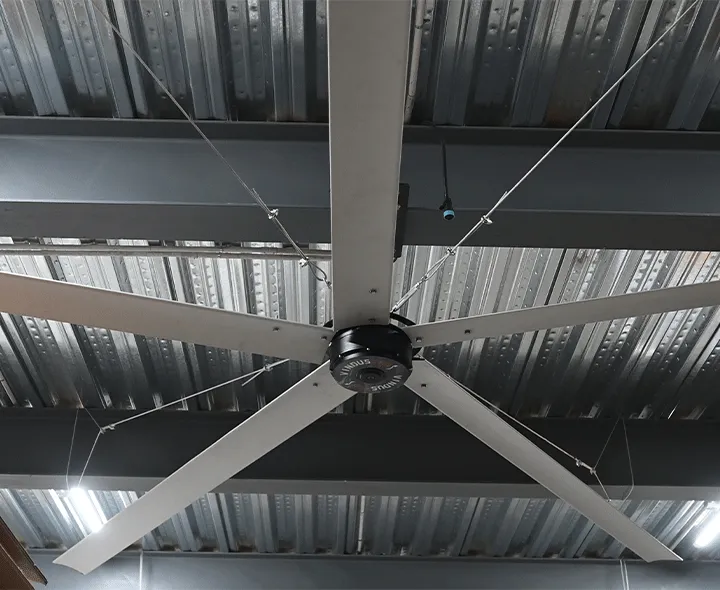
Hot garages, warehouses, and factories can feel heavy, still, and hard to work in. When air does not move, people get tired faster and HVAC costs rise. A well-chosen high velocity fan, industrial fan, or HVLS fan can make the space feel cooler and more comfortable.
High velocity fans can cool people quickly by creating strong airflow, but they do not truly cool the temperature of the air like an air conditioner. For a garage or small work area, a high velocity fan may feel stronger. For a large space, HVLS fans often cool better by moving large volumes of air at low speed with better coverage and energy efficiency.
Esboço do artigo
- Do high velocity fans really cool the air?
- What is a high velocity fan?
- How does airflow make people feel cool?
- Is a high velocity fan good for a garage?
- High velocity fan vs industrial fan: what is the difference?
- High velocity fan vs HVLS fans: which cool better in large spaces?
- How do HVLS fans support air circulation and energy efficiency?
- What fan speed should you choose?
- Where should you place a cooling fan?
- How do you choose the right fan for your space?
- FAQs about high velocity fans and industrial cooling
Do High Velocity Fans Cool Better? High Velocity Fan vs Industrial Fan, HVLS Fans, and Garage Cooling
Do High Velocity Fans Really Cool the Air?
A high velocity fan does not lower the real temperature of the air. It makes people feel cool by moving air across the skin. This is why a strong fan feels good on a hot day, even when the room temperature stays the same.
In simple words, fans cool people more than they cool rooms. A fan helps sweat evaporate faster. It also moves hot air away from your body. That steady air movement can make workers, drivers, shoppers, athletes, and animals feel significantly cooler.
This matters for B2B buyers. A warehouse owner does not only need “cold air.” They need comfort, airflow, better circulation, lower heat stress, and lower HVAC pressure. A fan can be a smart cooling solution when it is sized and placed correctly.
What Is a High Velocity Fan?
A high velocity fan is designed to move air quickly. It usually has a compact body, strong motor, and smaller fan blades compared with large ceiling systems. Many models are floor fan, pedestal fans, wall-mounted fans, or mobile fans.
A high-velocity fan often runs at high speeds. It can push air at high speeds toward a focused zone. That makes it useful for a garage, workshop, loading area, gym corner, or repair bay where people need fast local airflow.
However, ventiladores de alta velocidade are not always the best answer for every project. A powerful fan can feel strong near the unit, but the effect may drop as distance increases. It may also create more noise than low speed large-diameter fans.
How Does Airflow Make a Space Feel Cool?
Airflow helps cool the human body. When fans move air, they help remove warm air around the skin and support evaporation. This creates a cooling effect even if the temperature of the air does not change.
For example, a floor fan in a garage can quickly cool a person standing nearby. But if the garage is closed and full of hot air, the fan will not create cooler air by itself. It only moves the air that already exists.
That is why ventilation and air circulation work together. Fresh air removes trapped heat. Circulation spreads air across the room. In large buildings, the right industrial fan can help reduce hot spots, stale zones, and uneven comfort.
Is a High Velocity Fan Good for a Garage?
Yes, a high velocity fan can be a good choice for a garage. A garage often has heat from vehicles, tools, doors, concrete floors, and poor airflow. A high-velocity floor fan can quickly cool a work zone by pushing a lot of air across the space.
For better results, try placing the fan near a garage door, side window, or shaded opening. This helps the fan pull in cooler air or push out hot air. If the space has no fresh air path, the fan will still move air, but the comfort improvement may be limited.
Here is a simple garage setup guide:
| Garage Condition |
Best Fan Setup |
| Small garage, one worker |
High velocity floor fan |
| Hot garage with open door |
Place fan near garage door to move air |
| Large repair bay |
Industrial fan or multiple fans |
| High ceiling workshop |
Industrial ceiling fan or HVLS fan |
| Poor exhaust |
Add ventilation before more fan power |
If your buyer mainly serves garages and workshops, a high velocity fan can be easy to sell. If the project is a factory, warehouse, or sports center, the buyer should also consider Ventiladores de teto industriais HVLS.
Do High Velocity Fans Cool Better? High Velocity Fan vs Industrial Fan, HVLS Fans, and Garage Cooling
High Velocity Fan vs Industrial Fan: What Is the Difference?
A high velocity fan focuses on speed. An industrial fan focuses on duty, durability, airflow, and application. Some industrial fans are high-speed industrial fan models. Others are ceiling, wall-mounted, mobile, axial, or HVLS systems.
A high velocity fan may be useful for spot cooling. An industrial fan can help larger zones, tougher work areas, and longer operating hours. The best fan for your space depends on size, ceiling height, heat source, people density, and airflow path.
| Tipo de ventilador |
Main Strength |
Melhor uso |
| High velocity fan |
Fast focused airflow |
Garage, workstation, loading dock |
| Floor fan |
Flexible local cooling |
Small shop, repair area |
| Wall fan |
Saves floor space |
Production line, livestock area |
| Ventilador industrial |
Heavy-duty operation |
Factory, warehouse, workshop |
| Fãs HVLS |
High volume, low speed coverage |
Large space comfort and energy efficiency |
For global B2B projects, choosing the right fan is not only about fan speed. It is about comfort, safety, noise, coverage, control, and return on investment.
High Velocity Fan vs HVLS Fans: Which Cool Better in Large Spaces?
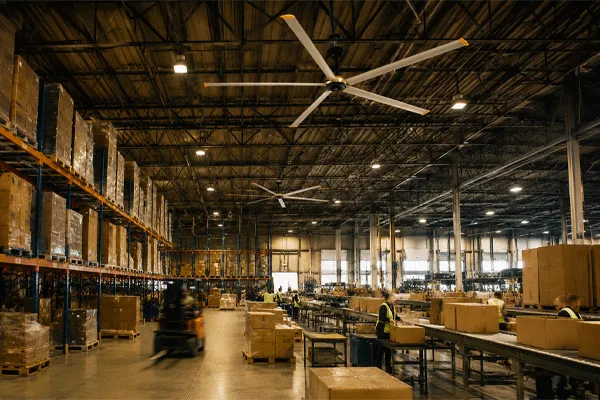
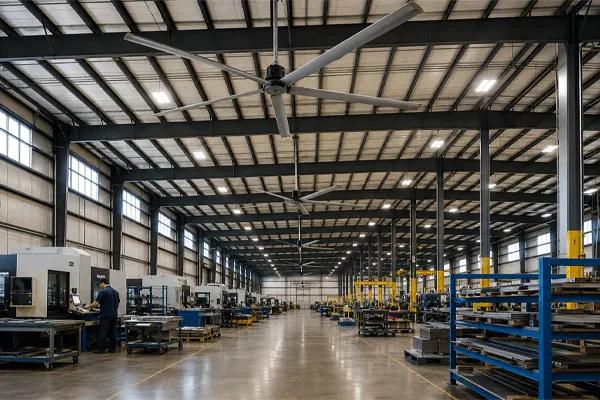
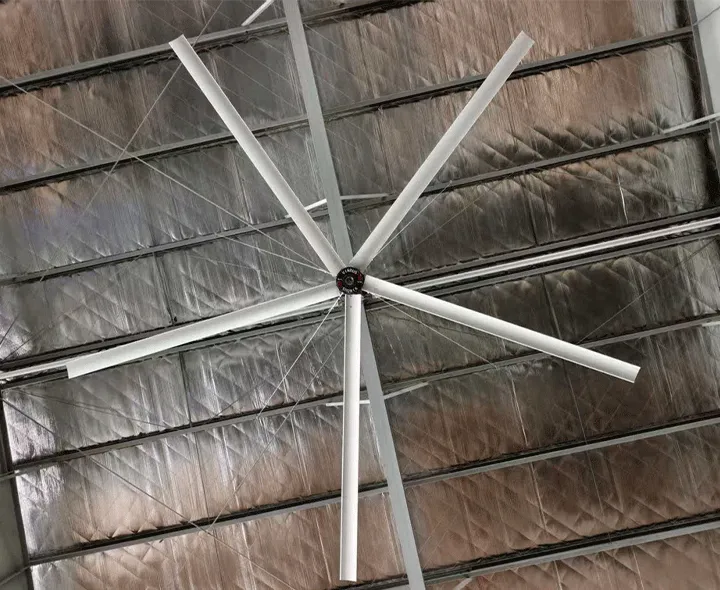
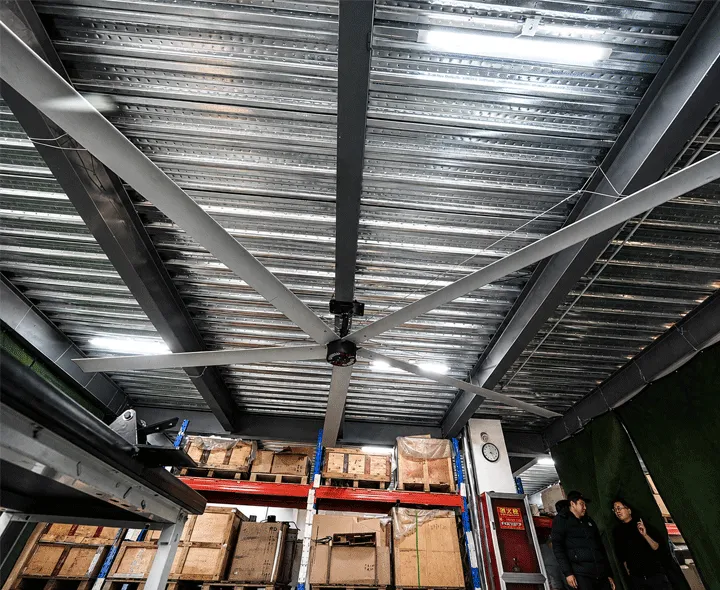
For large spaces, HVLS fans often cool better in a practical sense because they move large volumes of air across a wide area. HVLS means high volume low speed. These fans use large fan blades and low speed rotation to create broad, gentle air movement.
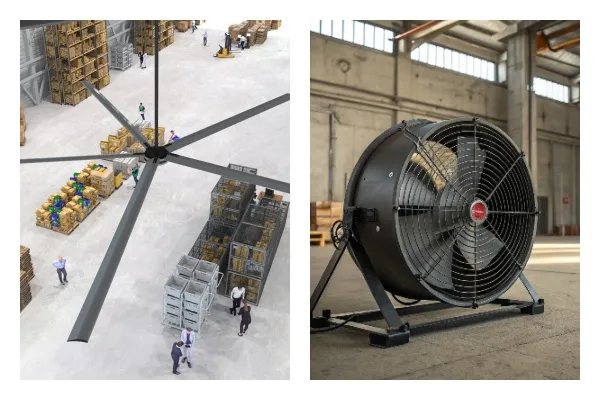
A high velocity fan can quickly cool one person or one workstation. But a large warehouse may need better circulation across thousands of square feet. In that case, a high-volume fan can cover more area with less noise and more even comfort.
This is why many warehouses, logistics centers, manufacturing plants, shopping malls, sports centers, agricultural greenhouses, and livestock buildings use HVLS fans. For large industrial projects, models such as the M750 Series HVLS Fans are designed for large spaces with high ceilings and wide airflow coverage.
How Do HVLS Fans Support Air Circulation and Energy Efficiency?
HVLS fans work by moving a high volume of air at low speed. Instead of blasting one small area, they create a large airflow pattern. The air moves down, spreads across the floor, and then returns upward. This helps circulate air through the occupied zone.
In summer, this air movement helps people feel cooler. In winter, reverse operation can help move warm air from the ceiling back down. This process is called destratification. It can support the HVAC system and reduce wasted heat near the roof.
As a Sino-US joint venture manufacturer and solution provider, we design HVLS fans, industrial ceiling fan systems, commercial ceiling fans, large industrial fans, and intelligent airflow control systems for large-space projects. Our goal is simple: help customers improve comfort while reducing energy waste.
For medium commercial areas, the M650 Series HVLS Fans can be a practical fit. For larger warehouses and factories, higher-diameter systems are often more suitable.
What Fan Speed Should You Escolher?
Many buyers think higher fan speed always means better cooling. Not always. Higher fan speed creates stronger airflow, but it can also increase noise, energy use, and discomfort if air hits people too hard.
For a garage, you may set the fan speed high when people need fast relief. For a warehouse, factory, or shopping mall, a lower speed with steady airflow often feels better. Comfort in large spaces depends on smooth air movement, not just strong wind.
A good rule is this:
- Use high speed for quick spot cooling.
- Use medium speed for daily worker comfort.
- Use low speed for destratification and quiet operation.
- Use smart controls when several fans must work together.
Advanced projects can use intelligent fan control to set the fan by zone, schedule, temperature, or building operation. This is where systems like FanBrain™ intelligent HVLS control help buyers move from simple fan operation to smart airflow management.
Where Should You Place a Cooling Fan?
Placement changes fan performance. A cooling fan placed in the wrong position may move air but fail to cool the space. A fan placed in the right position can create better circulation and comfort.
For a garage, placing the fan near an open garage door can help bring in cooler air or push warm air out. For a factory, fans should support process zones, worker areas, machine heat sources, and ventilation routes. For a warehouse, fan layout should match racks, aisles, doors, docks, and ceiling height.
Common placement ideas include:
- Put a high-velocity floor fan near fresh air openings.
- Avoid blowing dust into work areas or food zones.
- Do not block airflow with racks or equipment.
- Use multiple fans only when airflow patterns support each other.
- Use HVLS fans in open high-ceiling areas for wide coverage.
For warehouse owners, a dedicated warehouse HVLS fans solution can help reduce hot spots, improve comfort, and protect temperature-sensitive goods.
Can Fans Work With an Air Conditioner?
Yes. Fans and an air conditioner can work together. The fan does not make cool air like AC, but it helps distribute cool air and makes people feel cooler. This can allow the facility to raise the thermostat while keeping comfort stable.
In commercial buildings, malls, showrooms, and public spaces, air circulation helps reduce uneven temperatures. Without circulation, cool air may stay in one zone while warm air collects in another. Fans help mix the air and reduce this imbalance.
This is important for commercial developers and HVAC contractors. A fan is not always a replacement for AC. But a fan can help the HVAC system work better.

Do High Velocity Fans Cool Better? High Velocity Fan vs Industrial Fan, HVLS Fans, and Garage Cooling
How Do High-velocity Industrial Fans Help Logistics and Warehouses?
A high-velocity industrial fan is used when fast air movement is needed in a focused zone, such as a loading dock, packing line, or repair area. It can move air quickly and help workers feel cooler during busy shifts.
But logistics centers often need more than spot cooling. They need comfort across dock doors, staging zones, inventory areas, and forklift routes. In these buildings, large quantities of air must move in a controlled way.
That is why many logistics projects combine types of fans. A high velocity fan may cool a dock area. HVLS fans may improve full-building air circulation. In some cases, a mobile big fan can support temporary hot zones.
How Do You Choose the Right Fan for Your Space?
Choosing the right fan starts with the space, not the fan. Ask these questions first: How big is the area? How high is the ceiling? Where are people working? Is there an HVAC system? Is humidity a problem? Are there doors, racks, machines, or animals?
For small spaces, a floor fan or high velocity fan may be enough. For large space comfort, HVLS fans often provide better circulation. For industrial ceiling projects, check blade diameter, motor type, power use, noise level, control method, safety design, and installation conditions.
Here is a quick selection table:
| Project Type |
Recommended Fan Direction |
| Home garage or small workshop |
High velocity fan or floor fan |
| Repair bay or loading dock |
High-speed fans or mobile industrial fan |
| Armazém |
HVLS fans plus ventilation planning |
| Factory |
Industrial fan or HVLS fan by zone |
| Shopping mall |
Commercial ceiling fan or HVLS system |
| Livestock farm |
Air circulation plus heat stress control |
| Centro esportivo |
Large ceiling fan for comfort in large areas |
In real projects, we often tell buyers: do not buy only by diameter, price, or motor wattage. Buy by airflow result. A good fan for your space should improve comfort, reduce hot spots, and support energy efficiency.
Practical Case Study: Cooling a Hot Warehouse Without Overloading HVAC
A logistics warehouse has a high roof, open loading doors, long aisles, and heat buildup in summer. The owner first considers multiple high velocity fans. They work well near the doors, but workers in the center still feel hot.
After airflow review, the project uses HVLS fans for the main warehouse zone and smaller high-speed fans near dock areas. The HVLS fans move large volumes of air slowly across the occupied area. The dock fans provide direct cooling where doors open and close often.
The result is a more balanced cooling plan:
- Better circulation in the central warehouse
- Faster local cooling near loading docks
- Less dependence on the HVAC system
- Better worker comfort
- Lower noise than using many small high-speed units
This is the real answer to “Do high velocity fans cool better?” They cool better for local comfort. HVLS fans usually cool better for large spaces.
FAQs About High Velocity Fans, Industrial Fans, and HVLS Cooling
Do high velocity fans actually cool a room?
No, a high velocity fan does not truly cool the room temperature. It moves air across people and surfaces, which makes people feel cooler. To remove heat, you need ventilation, exhaust, natural air exchange, or an air conditioner.
Is a high velocity fan good for a garage?
Yes. A high velocity fan is useful for a garage because it provides strong local airflow. For better results, place it near a garage door or window so it can help move hot air out or bring cooler air in.
Are HVLS fans better than high-speed fans?
For large spaces, HVLS fans are often better because they move large volumes of air at low speed. For small work zones, high-speed fans may feel stronger and more direct. The best choice depends on the space.
Can an industrial fan help reduce HVAC costs?
Yes. An industrial fan can help distribute cool air, reduce hot spots, and improve comfort. When used with an HVAC system, fans may allow higher thermostat settings while keeping people comfortable.
What does cubic feet per minute mean?
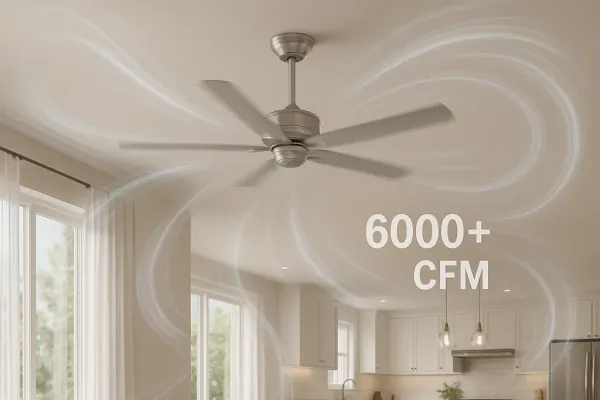
Cubic feet per minute, or CFM, measures how much air a fan moves each minute. A higher CFM means more air movement, but fan design, coverage area, noise, and placement also matter.
Should I use multiple fans in a large space?
Sometimes. Multiple fans can help if the space has separate zones or blocked airflow. But in open large spaces, one or several correctly sized HVLS fans may work better than many small fans fighting each other.
Principais conclusões
- High velocity fans cool people quickly, but they do not lower air temperature like an air conditioner.
- A high velocity fan is a strong choice for a garage, workshop, dock, or local work zone.
- Industrial fan selection should consider airflow, space size, fan speed, noise, safety, and duty cycle.
- HVLS fans often cool better in large spaces because they move high volume air at low speed.
- Fans and HVAC systems can work together to improve comfort and energy efficiency.
- Fan placement matters as much as fan power.
- For warehouses, factories, logistics centers, commercial buildings, farms, and sports centers, a custom airflow plan is better than guessing.
- As a Sino-US joint venture HVLS fan manufacturer and solution provider, we help global B2B buyers choose reliable fan systems for energy-saving ventilation, cooling, destratification, and air circulation.