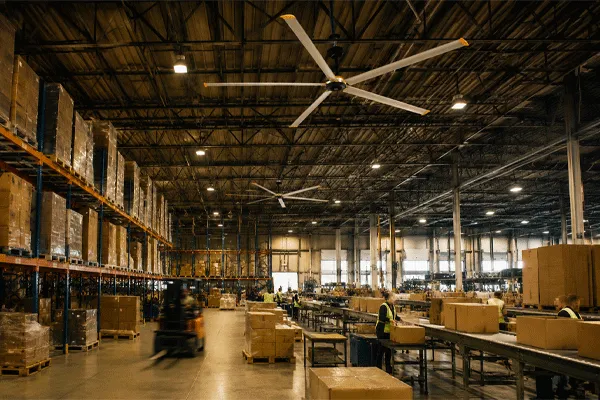
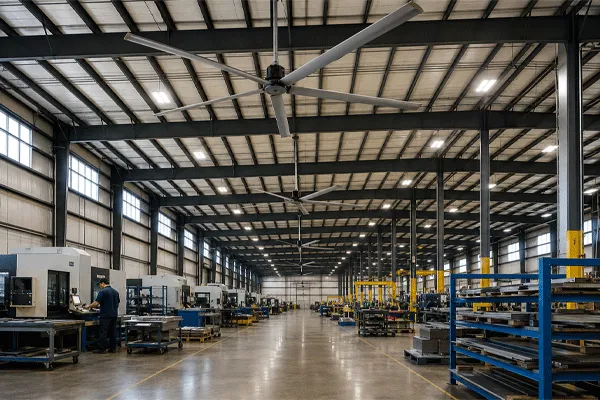
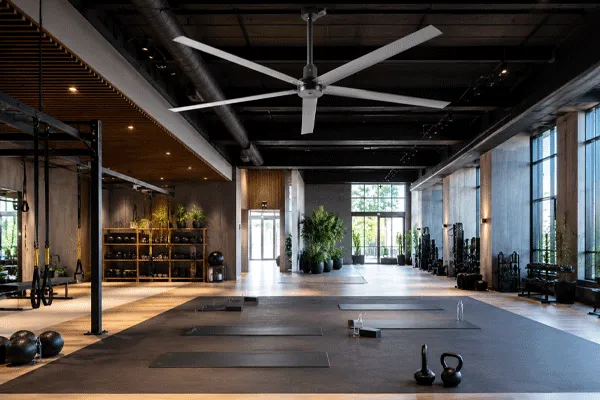
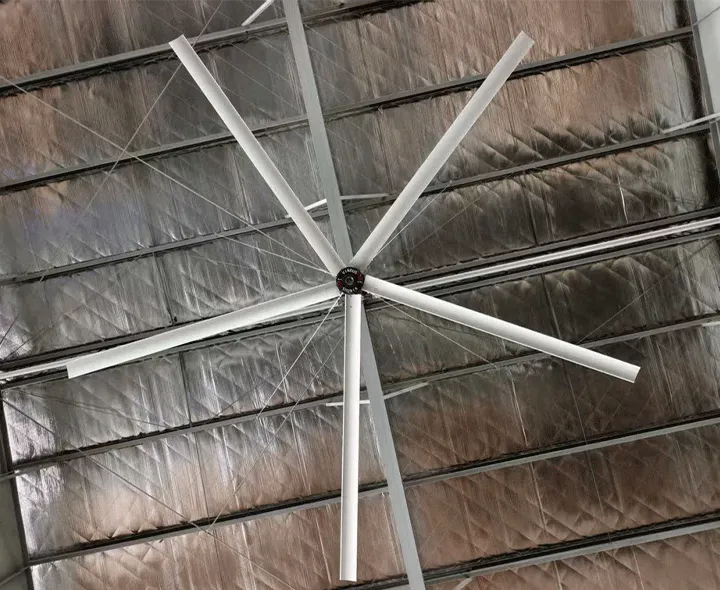
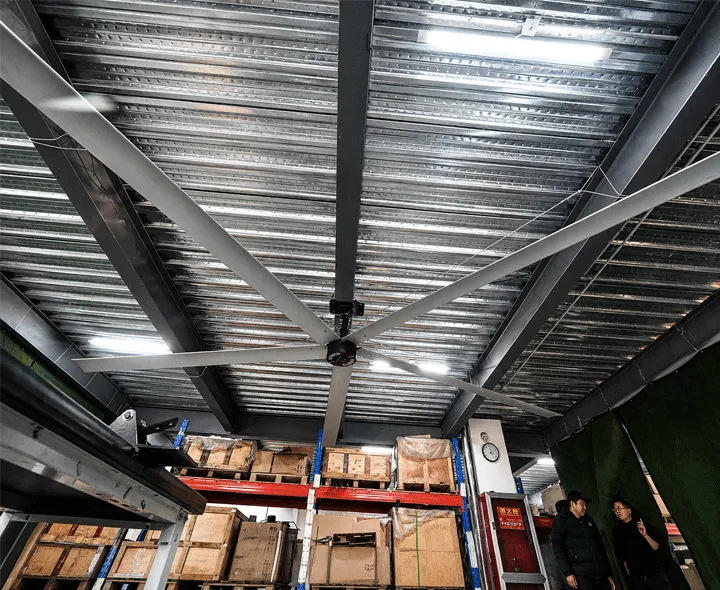
If your team is sweating, your products are warming up, and your energy bill keeps climbing, you have a heat problem—not just a comfort problem. In many facilities, trapped heat hurts safety, slows work, and raises costs. The fix is a practical cooling plan built for your building.
Cooling a large warehouse usually requires a mix of strategies: reduce heat gain (roof/insulation), improve ventilation and airflow, use fans (especially HVLS for wide coverage), apply spot cooling where people work, and add targeted air conditioning only where it delivers the best ROI. The best approach depends on layout, climate, operations, and budget.
As an HVLS fan manufacturing plant, we work with factories, gyms, schools, warehouses, and commercial buildings that need better temperature control without wasting money. In this guide, I’ll break down the best ways to cool a warehouse efficiently—step by step, with practical options and a buyer-focused decision framework.
Schema dell'articolo
- Why does a warehouse get so hot in the first place?
- What is the first step to cool a warehouse efficiently?
- Quanto aiutano davvero l'isolamento e un cool roof?
- Are HVLS and warehouse fans enough without AC?
- When do you need air conditioning units in a warehouse?
- What are the best warehouse cooling solutions for staff work zones?
- How do ventilation systems remove hot air and improve airflow throughout the facility?
- How can you reduce heat from machinery and other heat sources?
- What cooling options work best for different warehouse types?
- How do warehouse owners build a practical cooling plan and control energy costs?
Why does a warehouse get so hot in the first place?
A warehouse heats up fast because it is usually a big shell with a large roof, high walls, heat-generating equipment, and frequent door openings. In summer, solar gain through the roof and walls can turn a normal building into a heat trap. Then hot air rises and collects under the warehouse ceiling, creating layers of heat.
It gets worse when forklifts, charging stations, compressors, process lines, and machinery run all day. That adds internal heat on top of outdoor weather. If your ventilation is weak, warm air stays trapped, and your team feels the heat even more on the floor.
In many facilities, the issue is not just temperature—it is poor air movement. Even when the reading is moderate, stagnant air makes people feel hotter. That is why many managers say, “We need to keep warehouse employees cool,” before they say, “We need AC.”
Key point: In most buildings, heat comes from both outside (sun/roof/walls) and inside (operations/people/equipment). A good plan must manage heat from both directions.
What is the first step to cool a warehouse efficiently?
Prima di acquistare nuove attrezzature, inizia con un audit termico. È il modo più rapido per raffrescare un magazzino senza spese eccessive. Consiglio sempre di mappare tre elementi:
- Heat source locations (roof zones, process equipment, dock doors)
- Worker occupancy zones (packing, sorting, staging, QC)
- Existing fan, vent, and hvac coverage
This helps you see where heat builds, where workers need relief, and where your current setup wastes power. Many sites jump straight to air conditioning units for the entire building. That often costs too much and still misses the real problem areas.
Quick warehouse heat audit checklist
- Measure temperature at floor level and near the roof
- Monitorare le condizioni in momenti diversi (mattina / pomeriggio / notte)
- Individuare prese d'aria ostruite e zone con aria stagnante
- Check door opening patterns and traffic
- Verificare la tipologia di tetto e l'isolamento delle pareti
- Note moisture/humidity sources
- Mark where employees report the most discomfort
A simple audit makes your cooling system strategy smarter. It also helps you compare cooling options by impact, not guesswork.
Quanto aiutano davvero l'isolamento e un cool roof?
A lot—especially in hot climates. If you want to warehouse cool in the summer, start by reducing heat entering the building. This lowers the total load on every other system, from fans to hvac systems.
1) Insulation and sealing
Good insulation helps minimize heat transfer through the roof and walls. It also helps prevent cool air from escaping if you already run conditioned zones. In older buildings, even basic improvements—roof insulation upgrades, dock seals, weather stripping—can make a noticeable difference.
If your team plans to insulate later, prioritize:
- Prima il tetto
- Sun-facing walls second
- Doors/openings third
Questa è spesso la base per isolare adeguatamente un magazzino.
2) Cool roof strategy
A cool roof reflects more sunlight and absorbs less heat, which can lower roof surface temperature and reduce building heat gain. The U.S. DOE and EPA both describe cool roofs as a practical way to reduce solar heat gain and improve indoor comfort. ENERGY STAR also notes cool roofs can reduce cooling costs and improve comfort in hot conditions.
Comparison table: Heat reduction measures
| Misura |
Vantaggio principale |
Il migliore per |
Cost Level |
Typical ROI Driver |
| Miglioramento dell'isolamento del tetto |
Cuts heat transfer |
Older metal-roof buildings |
$$–$$$ |
Lower cooling load |
| Door seals / dock curtains |
Reduce heat leakage |
Aree delle banchine ad alto transito |
$–$$ |
Minore infiltrazione di aria calda |
| Cool roof rivestimento/sistema |
Reflects sun, lowers roof heat |
Hot/sunny regions |
$$–$$$ |
Lower indoor heat + lower HVAC runtime |
| Shade canopies at docks |
Riduce il calore radiante in corrispondenza delle aperture |
Baie di carico |
$$ |
Worker comfort + lower heat gain |
Se l'obiettivo è mantenere fresco il magazzino senza enormi costi operativi, ridurre l'apporto di calore è una delle prime mosse più efficaci.
Are HVLS and warehouse fans enough without AC?
In many cases, yes—especially for general comfort cooling, not precision cooling. If your goal is worker comfort in a warehouse during the summer, fans can deliver a strong cooling effect by increasing evaporation from the skin and improving convection.
L'OSHA sottolinea che un maggiore flusso d'aria può contribuire a rinfrescare i lavoratori, in particolare quando le condizioni sono idonee, e che misure di controllo tecnico come un aumento della circolazione dell'aria e l'aria raffrescata possono rendere i luoghi di lavoro più sicuri.
Perché i ventilatori HVLS funzionano nei grandi spazi
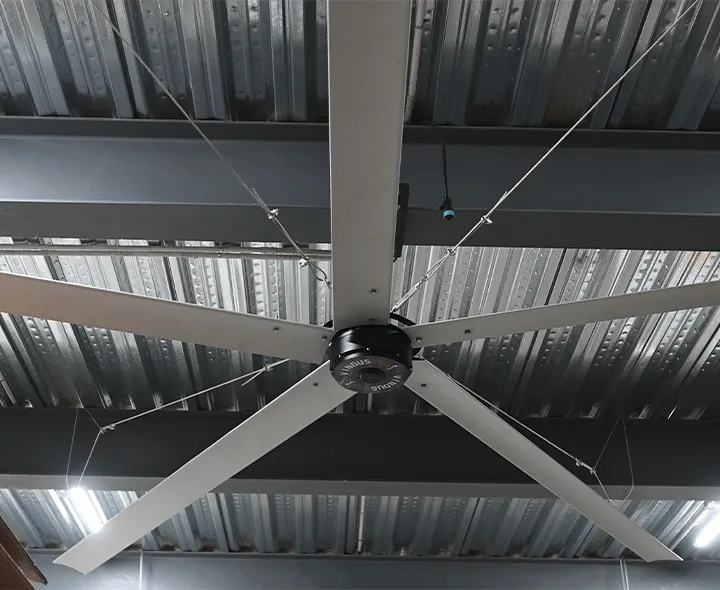
Alto livello di voltura (high-volume, low-speed) fans move a lot of air gently across a wide area. A single ventilatore hvl può favorire un ampio la circolazione dell'aria in tutta una zona e ridurre le sacche d'aria stagnante. Per grandi spazi, questo approccio è solitamente più efficiente rispetto all'affidarsi solo a numerosi piccoli ventilatori ad alta velocità.
In qualità di produttori di ventilatori HVLS, consigliamo generalmente la tecnologia HVLS quando una struttura necessita di:
- Whole-zone comfort across a large area
- Meglio il flusso d'aria in tutta la struttura
- Lower noise than many smaller fan units
- Less obstruction on the floor (vs too many portable units)
È inoltre possibile utilizzare ventilatori da magazzino, grandi fan, O ventilatori industriali portatili in problem zones, but HVLS is often the backbone for cooling warehouse spaces efficiently.
Fans vs. AC (practical view)
- I fan creano perceived cooling by moving air
- AC lowers air temperature (actual cooling)
- Il risultato migliore si ottiene spesso con fans + targeted AC, not AC everywhere
Se la domanda è: “Posso raffrescare un magazzino without ac?” the answer is often yes for comfort-focused applications—if the building has decent ventilation, manageable humidity, and good fan design.
When do you need air conditioning units in a warehouse?
Utilizzo una climatizzazione adeguata quando le attività richiedono un controllo rigoroso della temperatura o dell'umidità, non solo il comfort degli operatori. La climatizzazione dell'intero immobile può risultare costosa in un intero edificio con soffitti alti e frequenti aperture delle porte, pertanto è solitamente meglio riservarla a condizioni specifiche.
You likely need air conditioning if:
- Products are heat-sensitive
- La qualità di componenti elettronici e imballaggi risente del calore
- La conformità richiede condizioni stabili
- Offices or enclosed process rooms need consistent cooling
- Il controllo dell'umidità conta tanto quanto la temperatura
In many projects, we recommend zoning:
- Il condizionamento dell'aria per uffici, laboratori di controllo qualità, sale di controllo
- Fans + ventilation for open aisles and staging zones
- Raffrescamento localizzato for fixed workstations
This hybrid setup improves comfort while controlling costi energetici.
Soluzioni di climatizzazione comuni nei magazzini
- Unità rooftop monoblocco
- Canalizzato hvac cooling and ventilation
- Mini-splits for enclosed rooms
- Portable air conditioners / unità di raffrescamento portatili per aree temporanee o variabili
Portable air conditioners can work well for seasonal demand, but they should not replace a long-term plan in high-load areas. They are best for short-term relief or shifting production zones.
What are the best warehouse cooling solutions for staff work zones?
Se il problema principale riguarda le persone — e non i prodotti —, concentratevi sui punti in cui il personale staziona e lavora. In genere è la via più rapida per migliorare il comfort e aumentare produttività.
L'OSHA e le linee guida sul calore nei luoghi di lavoro sottolineano costantemente l'importanza dei controlli tecnici (flusso d'aria, ventilatori, raffrescamento, ventilazione) come strumenti pratici per ridurre il rischio legato al calore.
Le migliori soluzioni di raffrescamento del magazzino per le zone di lavoro
- HVLS + flusso d'aria direzionale
- Utilizzare un ventilatore HVLS per un'ampia copertura
- Aggiungi ventilatori direzionali dove scaffalature o pareti creano ostacoli flusso d'aria
- Raffrescamento localizzato nelle postazioni fisse
- Banchi da imballaggio
- Postazioni di controllo qualità
- Scrivanie per la documentazione di carico
È qui che raffreddamento spot garantisce un elevato ROI.
- Evaporative cooling (climate-dependent)
- Evaporative coolers possono essere efficaci nei climi secchi
- Possono spingere aria più fresca e migliorare il comfort in edifici aperti o semi-aperti
- In humid climates, performance drops
- Miglioramenti per aree ombreggiate/banchine di carico
- Ridurre l'irraggiamento solare diretto e l'infiltrazione di calore dalle porte aperte
- Aiuta a mantenere i dipendenti al fresco nei punti ad alto transito
Esempio semplice di progettazione a zone
| Zona |
Obiettivo di raffreddamento |
Best Option |
| Picking aisles |
Comfort generale |
HVLS + ventilazione bilanciata |
| Linea di imballaggio |
Sollievo per i lavoratori |
Spot cooling + fans |
| Banchine di spedizione |
Heat infiltration control |
Sigillanti per baie di carico + ventilatori + ombreggiamento |
| QC room |
Condizioni stabili |
AC / dedicated HVAC |
| Area di manutenzione |
Flexible cooling |
Portable cooling units + fans |
Questo approccio aiuta a effectively cool le persone dove percepiscono maggiormente il calore, senza raffrescare eccessivamente gli spazi inutilizzati spazio a pavimento.
How do ventilation systems remove hot air and improve airflow throughout the facility?
A fan alone is not a full solution if the building cannot exhaust heat. A good sistema di ventilazione should bring fresh air in and move heat out. Think of it this way: you want air into the warehouse, and you want trapped heat to leave.
Core ventilation principles
- Espellere l'aria in alto, dove aria calda accumulates
- Bring intake air low and strategically
- Avoid short-circuiting (air in and out too close together)
- Support fan placement so airflow reaches occupied zones
This is how you improve la circolazione dell'aria in tutta e mantenere il flusso d'aria in tutta la struttura rather than just spinning hot air in one area.
For some buildings, roof vents + wall louvers + fan layout can dramatically improve comfort. In others, a mechanical ventilation upgrade is needed—especially if process heat, fumes, or dust are present. OSHA ventilation standards also stress proper exhaust design for hazardous contaminants.
Practical tip
Do not place fans where they push hot inside air with cool intake streams in a way that cancels your ventilation path. Fan direction and vent placement must work together.
How can you reduce heat from machinery and other heat sources?
One of the most overlooked ways to cool una struttura consiste nel ridurre il calore generato al suo interno. Se ci si limita ad aggiungere il raffrescamento ignorando il calore di processo, i sistemi lavoreranno più del necessario.
Idee per ridurre il calore interno
- Isolate high-heat equipment
- Add local exhaust over heat-generating processes
- Pianificare le attività che generano più calore nelle ore più fresche
- Maintain motors, bearings, and compressors (inefficiency = extra heat)
- Schermare le fonti di calore radiante laddove vi siano persone al lavoro nelle vicinanze
If you can reduce heat at the source, you need less cooling capacity to keep warehouse employees cool. California indoor heat guidance also points to isolating workers from heat sources and local ventilation as useful controls. (dir.ca.gov)
This matters in factories and manufacturing warehouses where process heat can create a constant accumulo di calore effect even on mild days.
What cooling options work best for different warehouse types?
Non tutti magazzino has the same needs. A food distribution center, sports goods warehouse, and metal fabrication facility will not use the same cooling strategy.
Cooling options by warehouse type
1) General storage warehouse
- HVLS + ventilation
- Sigillatura delle baie di carico
- Roof/insulation upgrades
- Climatizzazione localizzata opzionale negli uffici
This is often enough to maintain a warehouse cooler ambiente.
2) Manufacturing warehouse
- HVLS + local exhaust + process isolation
- Additional fan coverage around hot lines
- Targeted AC in precision areas
- Evaporative sistemi nei climi secchi (se opportuno)
3) Gym / sports facility (warehouse-style building)
- Forte flusso d'aria
- HVLS over activity zones
- Dehumidification / AC depending on climate and occupancy
4) Schools or multipurpose halls in warehouse-style structures
- Comfort + noise + safety balance
- Ventilazione a zone e posizionamento dei ventilatori
- Limited AC for high-occupancy rooms
5) Cold storage
This is different. In cella frigorifera, the focus is maintaining low temperatures and reducing infiltration. Here, fan strategy and door management are about preserving aria fredda, not comfort cooling. High-speed doors, sealing, and minimizing openings matter far more than general warehouse fan cooling.
How do warehouse owners build a practical cooling plan and control energy costs?
This is where strategy beats equipment shopping. Smart warehouse owners sviluppare per fasi un cooling plan based on risk, comfort, and ROI.
A practical phased cooling plan
Phase 1: Low-cost fixes (fast wins)
- Seal leaks and dock gaps
- Rebalance existing fans
- Improve vent operation
- Aggiungere ventilatori nelle zone di lavoro
- Measure temperature/humidity regularly
Phase 2: Heat-load reduction
- Roof upgrades / tetto freddo
- Miglioramenti dell'isolamento
- Shade for loading areas
- Process heat management
Fase 3: Sistema di ventilazione principale
- Installare ventilatori HVLS o ottimizzati ventilatori da magazzino
- Improve ventilation path
- Validate movimento dell'aria and worker comfort
Phase 4: Targeted conditioning
- Add AC to enclosed rooms or critical zones
- Utilizzo portable air conditioners come supporto temporaneo
- Regolare i controlli per controllo della temperatura
Cost-control reminders
- Non sovradimensionare un cooling system
- Raffrescare prima le zone occupate
- Match technology to climate (e.g., evaporative coolers nelle regioni aride)
- Verify performance after installation
A good system should aiutare a rinfrescare l'edificio e al contempo improve the efficiency of existing HVAC operation (where present) by reducing stratification and hot spots.
Esempio pratico: un percorso concreto per migliorare il raffrescamento di un magazzino
A mid-sized distribution facility in a hot climate asked how to raffrescare il tuo magazzino senza sostituire tutto. Le lamentele principali riguardavano il forte summer heat, low comfort at packing stations, and rising bills.
Cosa è cambiato
- Added roof reflective coating (tetto freddo) e sigillanti per baie di carico
- Repositioned exhaust and intake to improve ventilation path
- Installed HVLS for broad flusso d'aria
- Added localized fan + portable cooling at packing stations
- Mantenuta l'aria condizionata solo negli uffici e nella sala controllo qualità
Outcome (operational impact)
- Maggiore comfort nell'area operativa
- Meno segnalazioni di caldo
- Ritmo di prelievo e imballaggio più stabile
- Minori tempi di funzionamento dell'aria condizionata nelle zone climatizzate
Questo è uno schema comune: non sempre serve l’aria condizionata per l’intero edificio per rinfrescare il magazzino in modo efficace. È necessaria la giusta combinazione di soluzioni di raffrescamento per magazzini per il tuo edificio e il tuo processo.
Common mistakes that make a warehouse stay hot
- Installing fans without ventilation planning
- Utilizzare l’aria condizionata per l’intero edificio quando ne hanno bisogno solo alcune zone
- Ignoring roof heat gain
- Modifiche alla disposizione dei rack che bloccano il flusso d'aria
- Forgetting maintenance on existing impianti HVAC
- Scegliere le apparecchiature prima di valutare le condizioni
Se vuoi un cool warehouse, inizia dall’edificio, poi passa al flusso d’aria e infine al raffrescamento delle zone.
Domande frequenti
L'aria condizionata è l'unico modo per raffrescare un magazzino?
No. Molte strutture possono migliorare il comfort con ventilatori, interventi sull'impianto di ventilazione, la riduzione del calore proveniente dal tetto e il raffrescamento mirato delle zone in cui operano gli addetti. L'aria condizionata si adatta spesso meglio ad ambienti chiusi o aree critiche, piuttosto che all'intero magazzino aperto.
I ventilatori HVLS abbassano davvero la temperatura?
HVLS fans usually do not reduce the measured air temperature much on their own. They improve comfort by increasing air speed and evaporation on the skin, which creates a stronger perceived cooling effect.
Qual è l'opzione migliore per raffrescare gli spazi di un magazzino in un clima caldo e secco?
A combination of ventilation, fan-driven airflow, and evaporative coolers can work very well in dry climates. In humid climates, evaporative cooling is less effective, so a different mix is usually better.
Come posso mantenere freschi i dipendenti del magazzino vicino alle baie di carico?
Focus on dock seals, shade, airflow direction, and spot cooling at fixed stations. Docks often have high heat gain and frequent air exchange, so local improvements can make a big difference.
Can portable air conditioners cool a large warehouse?
Not efficiently by themselves. Portable air conditioners sono utili per il raffrescamento temporaneo o localizzato, ma di solito non sono la soluzione migliore per l’intera area aperta di un grande magazzino.
Cosa è opportuno verificare prima di scegliere gli impianti di raffrescamento per un magazzino?
Verifica l'accumulo di calore dal tetto, lo stato dell'isolamento, i punti ciechi del flusso d'aria, la posizione dei lavoratori, il percorso di ventilazione, le fonti di calore legate ai processi e le ore di attività. Una breve analisi preventiva evita errori costosi.
Final takeaway summary
- Inizia con un audit del calore prima di acquistare le attrezzature.
- Reduce heat gain first (roof, insulation, dock sealing) to cut cooling load.
- Utilizzo HVLS/ventilatori + ventilazione per migliorare il comfort su ampie superfici.
- Apply raffreddamento spot where people actually work.
- Utilizzo aria condizionata strategically for enclosed or temperature-sensitive zones.
- Adatta i metodi di raffrescamento al tuo clima (soprattutto per i sistemi evaporativi).
- Build a phased plan to improve comfort, safety, and costs over time.
- The best results usually come from a sistema combinato, non un solo prodotto.
Se vuoi, posso anche generare una conversion-focused version of this article for your website (with a stronger factory CTA, internal links, and product section for your HVLS fans).