Industrial Ventilation Fans: Exhaust, Supply, and HVLS Fan Roles Explained
2026-08-19
Updated August 19, 2026 | Michael Danielsson, CEO, Vindus Fans
Industrial ventilation fans do three different jobs: exhaust fans remove air from a building, supply fans bring replacement air in, and HVLS fans recirculate air within the occupied space. A safe design may use all three. Selecting one category without defining contaminants, heat, pressure, and airflow paths can leave the actual problem unresolved.
A large-diameter HVLS fan supports broad indoor circulation; it does not replace required exhaust or outdoor-air supply.
Industrial ventilation fans are not interchangeable
An exhaust fan creates an outward airflow path. It may remove heat, moisture, odors, dust, fumes, or process emissions when paired with suitable capture points, ducts, filtration, discharge locations, and make-up air. The required design depends on the hazard and local rules.
A supply fan moves outdoor or conditioned air into the building. It can replace exhausted air, support pressure control, and distribute fresh air to selected zones. Supply air must be located and conditioned so that it does not short-circuit directly to an exhaust opening or create uncontrolled drafts.
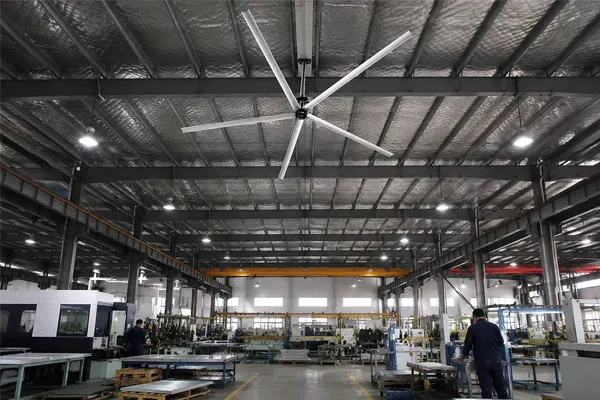
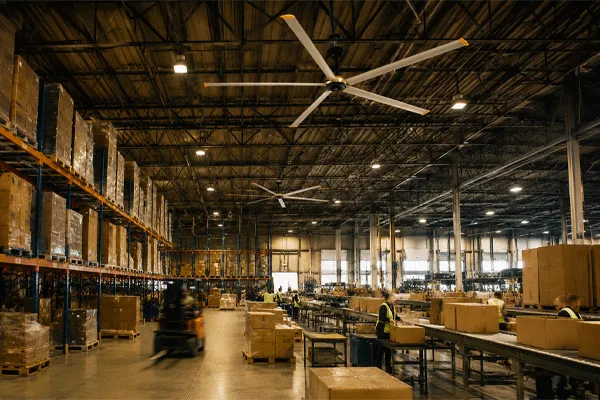
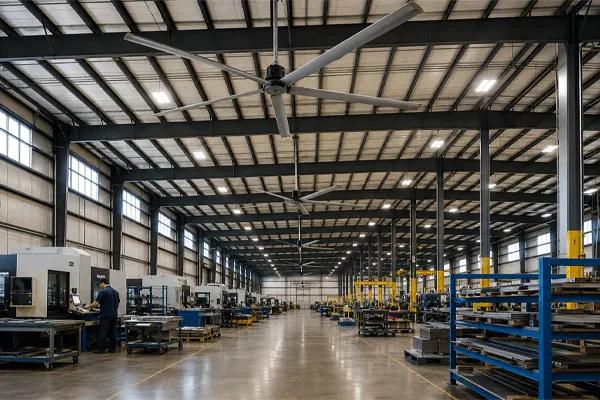
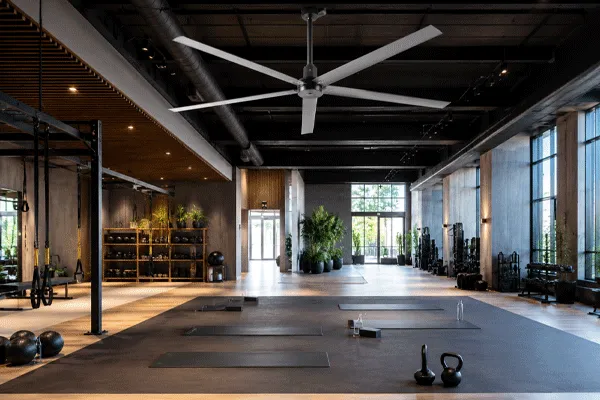
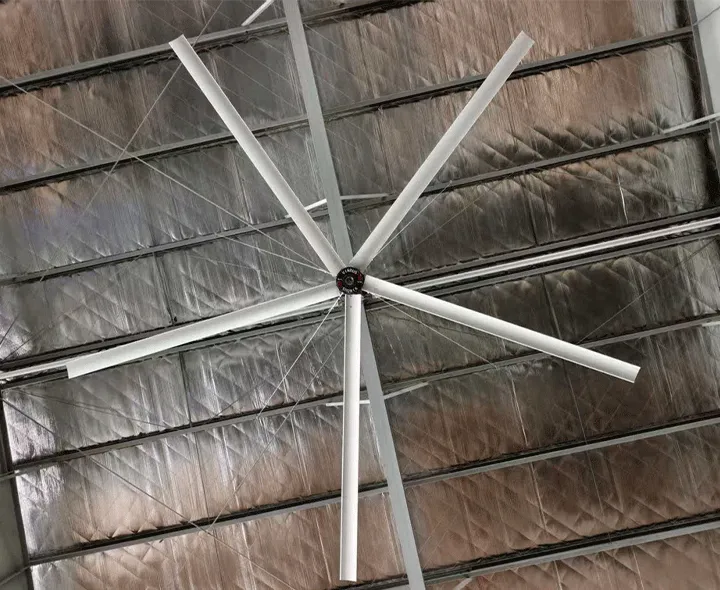
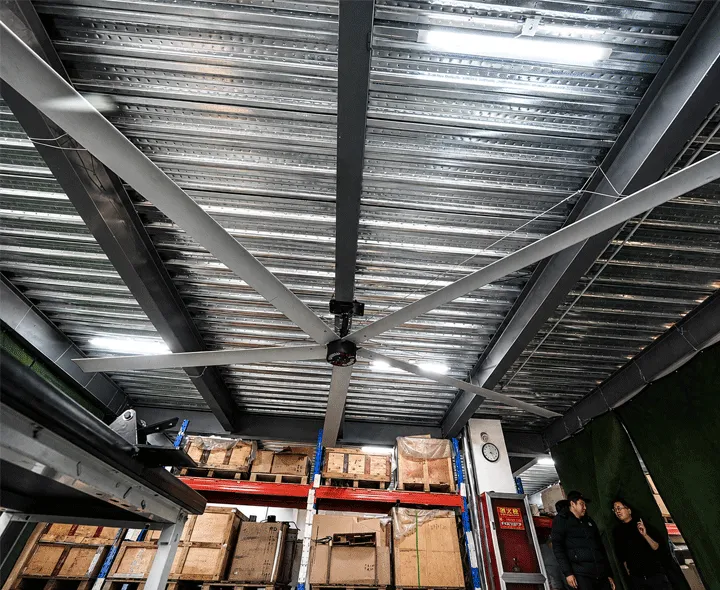
An HVLS fan moves a large volume of indoor air at low rotational speed. It is used for air mixing, thermal comfort, destratification, and reducing stagnant zones. Because it primarily recirculates existing air, it should not be presented as contaminant extraction or as proof that an outdoor-air requirement has been met.
Fan role
Main airflow action
Typical design question
Important limitation
Exhaust
Moves indoor air out
What must be captured, treated, and discharged?
Needs replacement air and a safe discharge path
Supply
Moves outdoor or conditioned air in
Where should incoming air enter and how should it be tempered?
Supply alone does not capture a source
HVLS circulation
Recirculates air through a broad indoor zone
How should occupied zones be mixed without excessive draft?
Does not create outdoor-air exchange or remove contaminants
Directional fan
Projects a narrower air stream
Which workstation or aisle needs targeted movement?
Coverage is localized and may disturb a capture hood
Start with the problem, not the fan diameter
Heat discomfort, airborne contamination, condensation, and uneven temperature are different problems. A hot building may need outdoor-air exchange, source heat removal, roof insulation, spot cooling, or circulation. Dust and fumes require a hazard review and source-capture strategy. A large ceiling fan can improve mixing while still leaving an exposure risk in place.
The U.S. Occupational Safety and Health Administration explains the purpose and types of workplace ventilation. Use applicable regulations, industrial-hygiene measurements, process information, and qualified engineering review for hazardous substances. Do not select industrial ventilation fans from floor area alone.
How exhaust and supply should work together
Every exhausted volume must be replaced. If make-up air is insufficient, the building may become strongly negative, doors can become difficult to open, combustion appliances can backdraft, and air may enter through uncontrolled gaps. If supply exceeds exhaust, positive pressure can push air into adjacent rooms or through the building envelope.
Map the intended path from the supply opening, through the occupied or process zone, to the exhaust point. Check doors, loading bays, internal partitions, roof openings, and seasonal wind. A supply grille beside an exhaust inlet can short-circuit the flow, moving clean air out before it reaches people or the source.
Controls should define normal operation, reduced occupancy, shutdown, alarms, fire or smoke modes, and the response to a failed fan. Interlocks may be required so that exhaust-dependent processes cannot operate without airflow.
Where HVLS circulation fits
HVLS circulation can complement a ventilation system by reducing vertical temperature layers and spreading supplied air across a large floor area. It can also improve perceived comfort when air moves over occupants. The result depends on mounting height, fan diameter, speed, obstructions, supply diffusers, exhaust inlets, doors, and work zones.
The risk is unwanted interaction. A ceiling fan may disrupt a local exhaust hood, move dust from a settled surface, carry an odor across occupied areas, or push conditioned air toward an open loading door. Review the circulation pattern with the exhaust and supply system operating, not as an isolated fan layout.
For heating-season mixing, see the Vindus guide to destratification fans. It explains why measured upper and occupied-level temperatures are more useful than assuming a fixed saving.
P780 Series planning reference
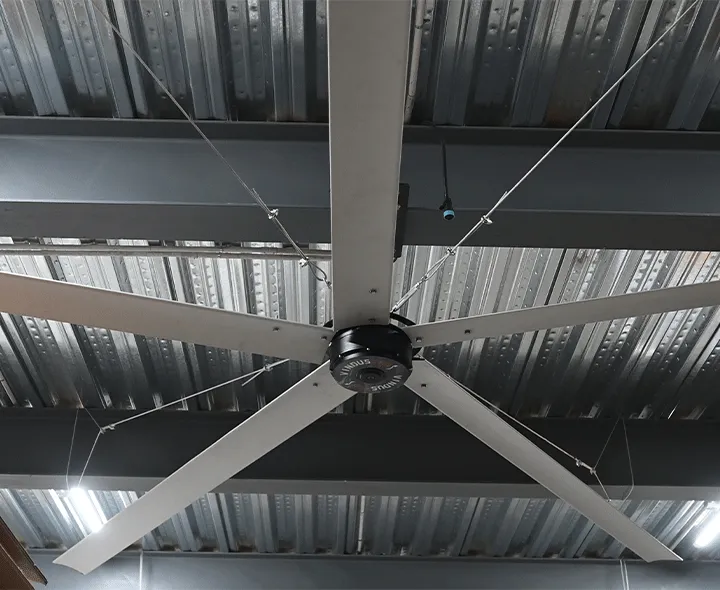
The Vindus P780 Series is a U.S.-market HVLS circulation option for large spaces. Published choices include 20 ft and 24 ft diameters for approximate blade heights of 20-33 ft. The series uses a direct-drive PMSM, lists maximum-speed input below 1,000 W, and includes a floor-level integrated HMI with a single ceiling-to-floor cable.
Published P780 item
Ventilation-design check
20 ft or 24 ft diameter
Clear span, target zones, exhaust inlets, supply outlets, and obstructions
Approximate blade height 20-33 ft
Roof structure, sprinklers, lights, cranes, ducts, and maintenance access
Direct-drive PMSM
Electrical supply, controller position, isolation, and service plan
Input below 1,000 W at maximum speed
Actual speed, schedule, seasonal mode, and total system energy
Floor-level integrated HMI
Operator permissions, documented setpoints, alarms, and coordination with HVAC controls
These specifications support circulation planning, not contaminant-removal sizing. Vindus does not publish a fixed P780 price. A quotation depends on model, quantity, controls, electrical requirements, delivery, and project support.
Six checks before requesting fan proposals
Define the objective: identify heat, humidity, comfort, process emissions, dust, odors, or pressure control as separate requirements.
Document the building: provide dimensions, clear height, roof structure, doors, partitions, racks, equipment, occupied zones, and photographs.
Map sources and airflow: mark contaminant sources, capture hoods, supply outlets, exhaust points, and expected door conditions.
Set operating modes: record shifts, seasonal conditions, process schedules, normal fan speeds, alarms, and shutdown behavior.
Compare complete systems: review airflow performance, controls, sound, service access, safety devices, installation, and measured acceptance criteria.
Verify after commissioning: check direction, balance, pressure, comfort, capture performance, and any unintended movement between zones.
Common mistakes that change the result
Using an HVLS fan as a substitute for source capture or required outdoor air.
Adding exhaust without enough planned make-up air.
Placing supply and exhaust points so close that clean air short-circuits.
Selecting fan quantity from a generic coverage circle without mapping racks, cranes, ducts, and partitions.
Running circulation fans at maximum speed without checking drafts, hood capture, dust movement, and open doors.
FAQ
Can HVLS fans replace industrial exhaust fans?
No. HVLS fans recirculate air. Exhaust systems remove air and may be designed to capture and discharge contaminants. The two roles can complement each other, but they are not substitutes.
Does every exhaust fan need a supply fan?
Exhausted air always needs replacement. That replacement may come from a designed supply system or approved openings, depending on the project. Uncontrolled infiltration can cause pressure, comfort, and safety problems.
How many industrial ventilation fans are required?
Quantity depends on the required airflow function, process, building geometry, pressure targets, heat load, contaminants, obstructions, and operating schedule. Floor area alone is not enough.
Can an HVLS fan improve a warehouse ventilation system?
It can improve indoor mixing and help distribute supplied air, but the layout must be checked against exhaust capture, doors, racks, and occupied zones. Verify the combined system after commissioning.
Prepare one coordinated airflow plan
Send building drawings, process information, fan and duct locations, clear height, electrical supply, operating schedule, control requirements, and any exposure or pressure criteria. Use the Vindus contact page to request a P780 circulation review as one part of the complete ventilation plan.
About the author
Michael Danielsson is CEO of Vindus Fans. His background includes fan product development, production, operations, and customer service for large-space airflow projects.
Updated August 19, 2026 | Michael Danielsson, CEO, Vindus Fans
Industrial ventilation fans do three different jobs: exhaust fans remove air from a building, supply fans bring replacement air in, and HVLS fans recirculate air within the occupied space. A safe design may use all three. Selecting one category without defining contaminants, heat, pressure, and airflow paths can leave the actual problem unresolved.
A large-diameter HVLS fan supports broad indoor circulation; it does not replace required exhaust or outdoor-air supply.
Industrial ventilation fans are not interchangeable
An exhaust fan creates an outward airflow path. It may remove heat, moisture, odors, dust, fumes, or process emissions when paired with suitable capture points, ducts, filtration, discharge locations, and make-up air. The required design depends on the hazard and local rules.
A supply fan moves outdoor or conditioned air into the building. It can replace exhausted air, support pressure control, and distribute fresh air to selected zones. Supply air must be located and conditioned so that it does not short-circuit directly to an exhaust opening or create uncontrolled drafts.
An HVLS fan moves a large volume of indoor air at low rotational speed. It is used for air mixing, thermal comfort, destratification, and reducing stagnant zones. Because it primarily recirculates existing air, it should not be presented as contaminant extraction or as proof that an outdoor-air requirement has been met.
Fan role
Main airflow action
Typical design question
Important limitation
Exhaust
Moves indoor air out
What must be captured, treated, and discharged?
Needs replacement air and a safe discharge path
Supply
Moves outdoor or conditioned air in
Where should incoming air enter and how should it be tempered?
Supply alone does not capture a source
HVLS circulation
Recirculates air through a broad indoor zone
How should occupied zones be mixed without excessive draft?
Does not create outdoor-air exchange or remove contaminants
Directional fan
Projects a narrower air stream
Which workstation or aisle needs targeted movement?
Coverage is localized and may disturb a capture hood
Start with the problem, not the fan diameter
Heat discomfort, airborne contamination, condensation, and uneven temperature are different problems. A hot building may need outdoor-air exchange, source heat removal, roof insulation, spot cooling, or circulation. Dust and fumes require a hazard review and source-capture strategy. A large ceiling fan can improve mixing while still leaving an exposure risk in place.
The U.S. Occupational Safety and Health Administration explains the purpose and types of workplace ventilation. Use applicable regulations, industrial-hygiene measurements, process information, and qualified engineering review for hazardous substances. Do not select industrial ventilation fans from floor area alone.
How exhaust and supply should work together
Every exhausted volume must be replaced. If make-up air is insufficient, the building may become strongly negative, doors can become difficult to open, combustion appliances can backdraft, and air may enter through uncontrolled gaps. If supply exceeds exhaust, positive pressure can push air into adjacent rooms or through the building envelope.
Map the intended path from the supply opening, through the occupied or process zone, to the exhaust point. Check doors, loading bays, internal partitions, roof openings, and seasonal wind. A supply grille beside an exhaust inlet can short-circuit the flow, moving clean air out before it reaches people or the source.
Controls should define normal operation, reduced occupancy, shutdown, alarms, fire or smoke modes, and the response to a failed fan. Interlocks may be required so that exhaust-dependent processes cannot operate without airflow.
Where HVLS circulation fits
HVLS circulation can complement a ventilation system by reducing vertical temperature layers and spreading supplied air across a large floor area. It can also improve perceived comfort when air moves over occupants. The result depends on mounting height, fan diameter, speed, obstructions, supply diffusers, exhaust inlets, doors, and work zones.
The risk is unwanted interaction. A ceiling fan may disrupt a local exhaust hood, move dust from a settled surface, carry an odor across occupied areas, or push conditioned air toward an open loading door. Review the circulation pattern with the exhaust and supply system operating, not as an isolated fan layout.
For heating-season mixing, see the Vindus guide to destratification fans. It explains why measured upper and occupied-level temperatures are more useful than assuming a fixed saving.
P780 Series planning reference
The Vindus P780 Series is a U.S.-market HVLS circulation option for large spaces. Published choices include 20 ft and 24 ft diameters for approximate blade heights of 20-33 ft. The series uses a direct-drive PMSM, lists maximum-speed input below 1,000 W, and includes a floor-level integrated HMI with a single ceiling-to-floor cable.
Published P780 item
Ventilation-design check
20 ft or 24 ft diameter
Clear span, target zones, exhaust inlets, supply outlets, and obstructions
Approximate blade height 20-33 ft
Roof structure, sprinklers, lights, cranes, ducts, and maintenance access
Direct-drive PMSM
Electrical supply, controller position, isolation, and service plan
Input below 1,000 W at maximum speed
Actual speed, schedule, seasonal mode, and total system energy
Floor-level integrated HMI
Operator permissions, documented setpoints, alarms, and coordination with HVAC controls
These specifications support circulation planning, not contaminant-removal sizing. Vindus does not publish a fixed P780 price. A quotation depends on model, quantity, controls, electrical requirements, delivery, and project support.
Six checks before requesting fan proposals
Define the objective: identify heat, humidity, comfort, process emissions, dust, odors, or pressure control as separate requirements.
Document the building: provide dimensions, clear height, roof structure, doors, partitions, racks, equipment, occupied zones, and photographs.
Map sources and airflow: mark contaminant sources, capture hoods, supply outlets, exhaust points, and expected door conditions.
Set operating modes: record shifts, seasonal conditions, process schedules, normal fan speeds, alarms, and shutdown behavior.
Compare complete systems: review airflow performance, controls, sound, service access, safety devices, installation, and measured acceptance criteria.
Verify after commissioning: check direction, balance, pressure, comfort, capture performance, and any unintended movement between zones.
Common mistakes that change the result
Using an HVLS fan as a substitute for source capture or required outdoor air.
Adding exhaust without enough planned make-up air.
Placing supply and exhaust points so close that clean air short-circuits.
Selecting fan quantity from a generic coverage circle without mapping racks, cranes, ducts, and partitions.
Running circulation fans at maximum speed without checking drafts, hood capture, dust movement, and open doors.
FAQ
Can HVLS fans replace industrial exhaust fans?
No. HVLS fans recirculate air. Exhaust systems remove air and may be designed to capture and discharge contaminants. The two roles can complement each other, but they are not substitutes.
Does every exhaust fan need a supply fan?
Exhausted air always needs replacement. That replacement may come from a designed supply system or approved openings, depending on the project. Uncontrolled infiltration can cause pressure, comfort, and safety problems.
How many industrial ventilation fans are required?
Quantity depends on the required airflow function, process, building geometry, pressure targets, heat load, contaminants, obstructions, and operating schedule. Floor area alone is not enough.
Can an HVLS fan improve a warehouse ventilation system?
It can improve indoor mixing and help distribute supplied air, but the layout must be checked against exhaust capture, doors, racks, and occupied zones. Verify the combined system after commissioning.
Prepare one coordinated airflow plan
Send building drawings, process information, fan and duct locations, clear height, electrical supply, operating schedule, control requirements, and any exposure or pressure criteria. Use the Vindus contact page to request a P780 circulation review as one part of the complete ventilation plan.
About the author
Michael Danielsson is CEO of Vindus Fans. His background includes fan product development, production, operations, and customer service for large-space airflow projects.
Hi, I’m Michael Danielsson, CEO of Vindus Fans, with over 15 years of experience in the engineering and design industry. I’m here to share what I’ve learned. If you have any questions, feel free to contact me at any time. Let’s grow together!