Industrial Air Circulation Fans for Large Agricultural Farms: 5 Checks
2026-08-13
Reviewed August 13, 2026 | Michael Danielsson, CEO, Vindus Fans
Industrial air circulation fans for large agricultural farms should be selected around the building’s dimensions, animal or crop zones, obstructions, seasonal airflow goals, and available mounting height. Fan diameter alone is not enough. A workable plan combines measured site data, appropriate placement, controllable air speed, and ventilation equipment designed for the actual moisture and contaminant load.
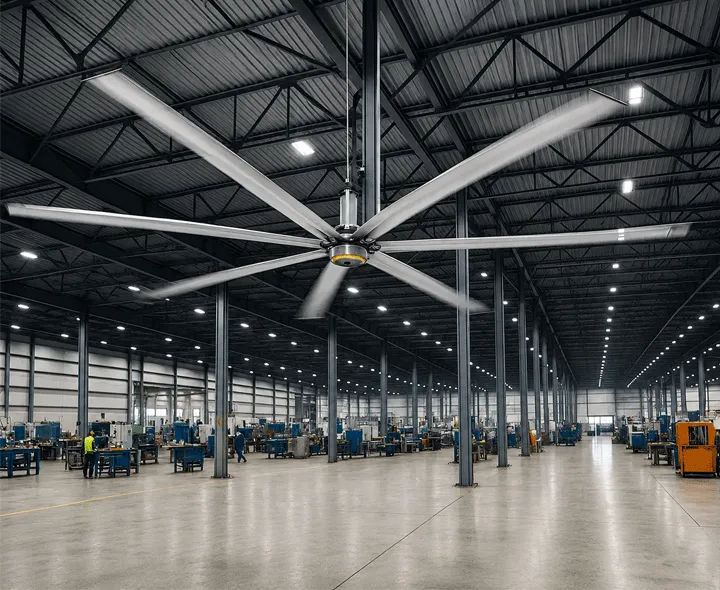
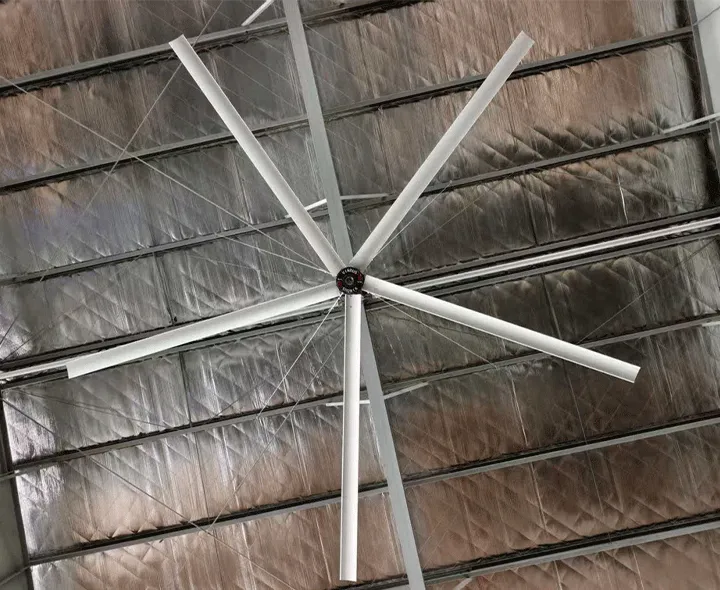
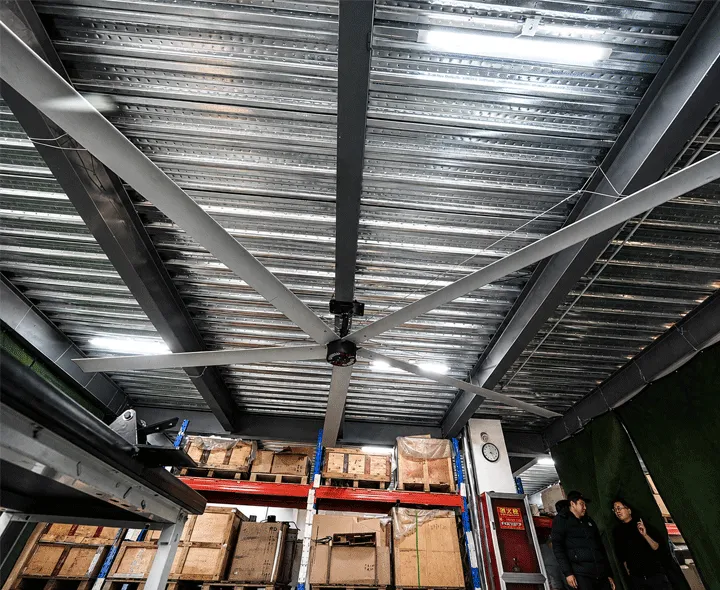
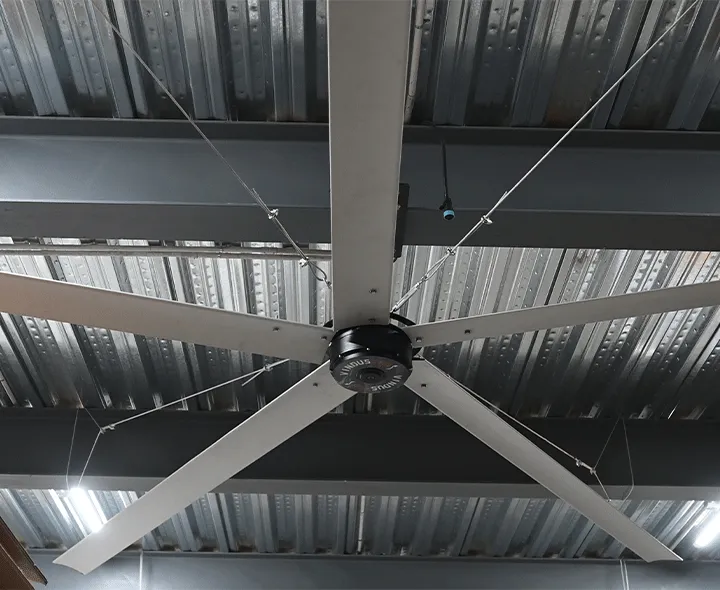
P780 Series HVLS fan used as a reference when planning broad air circulation in a large agricultural building.
Start with the farm building, not a fan catalog
Record the clear length, width, eave height, ridge height, and usable mounting height. Mark stalls, pens, feed alleys, storage racks, doors, curtains, heaters, sprinklers, lighting, roof trusses, and existing ducts. These details define where a large-diameter ceiling fan can operate without conflicts.
The airflow objective also changes the design. A livestock barn may need more consistent air movement across occupied zones during hot weather. A high-roof storage building may need destratification during heating season. A semi-open structure may be strongly affected by wind and large door openings. Treat these as separate operating cases rather than expecting one fixed speed to suit every condition.
Circulation is not the same as ventilation
An HVLS fan recirculates air within a space. It does not introduce a specified amount of outdoor air and does not remove gases, dust, moisture, or process contaminants by itself. Where a farm building requires mechanical exhaust or designed inlet air, circulation fans should work with that system rather than replace it.
This distinction matters in livestock areas. Air movement can improve perceived comfort and reduce stagnant zones, but contaminant control still depends on suitable air exchange. Local regulations, animal type, stocking density, building construction, and manure-management practices can change the required ventilation approach. Engage a qualified agricultural ventilation designer when those requirements are not already documented.
5 checks for industrial air circulation fans for large agricultural farms
1. Define the occupied and working zones
Identify where animals, workers, stored products, and equipment are located. The useful target is air movement in these zones, not simply motion near the ceiling. Note areas that should receive less direct air, including young-animal zones, sensitive processes, and locations where lightweight material could be disturbed.
2. Match diameter to clear mounting space
A larger fan can move air across a broad floor area, but the blade sweep needs adequate clearance from the structure and other equipment. Confirm mounting height and horizontal clearance before choosing a diameter. Irregular buildings may work better with multiple planned air zones than with one fan placed at the geometric center.
3. Review motor and drive architecture
Direct-drive PMSM systems remove the belt or gearbox from the power path. This reduces the number of mechanical transmission components that require inspection and can reduce drive losses. Buyers should still compare the complete system: motor, controller, mounting assembly, blade design, safety provisions, service access, and documented operating range.
Agricultural conditions change through the day and across seasons. Variable speed allows operators to reduce air movement when full output is unnecessary and adjust the system around changing door, curtain, heater, or livestock conditions. Locate controls where staff can reach them and establish documented operating settings instead of relying on informal trial and error.
5. Plan inspection and cleaning access
Dust and airborne material can accumulate on blades and surrounding structures. The purchasing review should cover inspection intervals, cleaning access, fastener checks, cable and mounting checks, controller fault reporting, and the process for obtaining replacement parts. Read the site’s HVLS fan maintenance guide before finalizing service responsibilities.
P780 Series reference for large agricultural spaces
For U.S.-market projects, the Vindus P780 Series is available in 20 ft and 24 ft diameters and is intended for blade heights of approximately 20-33 ft. It uses a direct-drive permanent magnet synchronous motor, consumes less than 1,000 W at maximum speed according to the published product information, and uses a floor-level integrated HMI with a single ceiling-to-floor cable.
Selection item
P780 published reference
Site information still required
Fan diameter
20 ft or 24 ft
Clear span, obstructions, and desired air zones
Blade height
Approximately 20-33 ft
Roof structure and safe mounting point
Drive
Direct-drive PMSM
Electrical supply and control location
Maximum power
Less than 1,000 W
Operating schedule and local energy cost
Control
Floor-level integrated HMI
Staff access and operating procedures
These figures are a screening reference, not a completed design. Final quantity and placement depend on the measured building. Where performance data from different suppliers is compared, ask for test methods and conditions; ANSI/ASHRAE Standard 216 provides a recognized framework for rating ceiling-fan performance.
HVLS fans versus common agricultural fan arrangements
Fan approach
Primary role
Typical planning concern
Large-diameter HVLS ceiling fan
Broad, low-speed circulation across a large floor zone
Mounting height, structural clearance, and obstruction layout
High-speed wall or basket fan
More localized directional airflow
Coverage gaps, higher local air velocity, and multiple mounting points
Exhaust fan with designed inlets
Air exchange and removal of indoor air
Required exhaust rate, inlet distribution, pressure, and code compliance
Compared with an array of small high-speed circulation fans, one HVLS fan may cover a broader zone with lower local velocity. The tradeoff is that a large ceiling fan requires clear overhead space and careful coordination with the structure. Exhaust equipment serves a different purpose and should not be eliminated merely because internal circulation improves.
Placement errors that weaken farm airflow
Choosing by floor area alone: two buildings with the same area can have different heights, roof geometry, partitions, and openings.
Ignoring obstructions: trusses, heaters, stored material, and interior walls can interrupt the intended air path.
Using maximum speed as the only setting: excessive air velocity may be unsuitable in part of the occupied zone.
Treating circulation as contaminant extraction: recirculated air does not replace required outdoor-air exchange.
Leaving maintenance until a fault occurs: agricultural dust makes planned inspection and cleaning part of normal operation.
A preliminary layout should be reviewed against the principles in this HVLS sizing and placement guide. Final mounting approval must come from people qualified to assess the building structure and installation conditions.
Information to send with an agricultural fan inquiry
Prepare dimensioned drawings or a clear sketch, photographs of the roof structure, mounting height, livestock or storage layout, existing ventilation equipment, electrical supply, control preferences, and the main seasonal problem. Include the number and size of major doors and whether sidewalls are open, curtained, or enclosed. These inputs allow industrial air circulation fans for large agricultural farms to be matched to the actual occupied zones instead of floor area alone.
Vindus does not publish a fixed P780 price because configuration, quantity, installation conditions, freight, and project support differ. Use the Vindus contact page to request a project-specific recommendation and quotation after the site information is ready.
FAQ
Can an HVLS fan replace barn exhaust fans?
No. An HVLS fan circulates indoor air. Exhaust fans and planned inlets exchange air and may be required for moisture, heat, gas, or contaminant control.
Is the largest available fan always the best choice?
No. Diameter must fit the clear span, mounting height, obstructions, target air zones, and building structure. Multiple smaller zones may be more practical in an irregular building.
Can agricultural fans run during winter?
They can be used for destratification when the fan and controls support an appropriate low-speed or seasonal operating strategy. The setting should avoid uncomfortable drafts in occupied animal and worker zones.
How many fans does a large farm building need?
Quantity cannot be determined reliably from floor area alone. Provide length, width, height, roof structure, obstructions, openings, occupied zones, and the required airflow objective for a layout review.
Reviewed August 13, 2026 | Michael Danielsson, CEO, Vindus Fans
Industrial air circulation fans for large agricultural farms should be selected around the building’s dimensions, animal or crop zones, obstructions, seasonal airflow goals, and available mounting height. Fan diameter alone is not enough. A workable plan combines measured site data, appropriate placement, controllable air speed, and ventilation equipment designed for the actual moisture and contaminant load.
P780 Series HVLS fan used as a reference when planning broad air circulation in a large agricultural building.
Start with the farm building, not a fan catalog
Record the clear length, width, eave height, ridge height, and usable mounting height. Mark stalls, pens, feed alleys, storage racks, doors, curtains, heaters, sprinklers, lighting, roof trusses, and existing ducts. These details define where a large-diameter ceiling fan can operate without conflicts.
The airflow objective also changes the design. A livestock barn may need more consistent air movement across occupied zones during hot weather. A high-roof storage building may need destratification during heating season. A semi-open structure may be strongly affected by wind and large door openings. Treat these as separate operating cases rather than expecting one fixed speed to suit every condition.
Circulation is not the same as ventilation
An HVLS fan recirculates air within a space. It does not introduce a specified amount of outdoor air and does not remove gases, dust, moisture, or process contaminants by itself. Where a farm building requires mechanical exhaust or designed inlet air, circulation fans should work with that system rather than replace it.
This distinction matters in livestock areas. Air movement can improve perceived comfort and reduce stagnant zones, but contaminant control still depends on suitable air exchange. Local regulations, animal type, stocking density, building construction, and manure-management practices can change the required ventilation approach. Engage a qualified agricultural ventilation designer when those requirements are not already documented.
5 checks for industrial air circulation fans for large agricultural farms
1. Define the occupied and working zones
Identify where animals, workers, stored products, and equipment are located. The useful target is air movement in these zones, not simply motion near the ceiling. Note areas that should receive less direct air, including young-animal zones, sensitive processes, and locations where lightweight material could be disturbed.
2. Match diameter to clear mounting space
A larger fan can move air across a broad floor area, but the blade sweep needs adequate clearance from the structure and other equipment. Confirm mounting height and horizontal clearance before choosing a diameter. Irregular buildings may work better with multiple planned air zones than with one fan placed at the geometric center.
3. Review motor and drive architecture
Direct-drive PMSM systems remove the belt or gearbox from the power path. This reduces the number of mechanical transmission components that require inspection and can reduce drive losses. Buyers should still compare the complete system: motor, controller, mounting assembly, blade design, safety provisions, service access, and documented operating range.
Agricultural conditions change through the day and across seasons. Variable speed allows operators to reduce air movement when full output is unnecessary and adjust the system around changing door, curtain, heater, or livestock conditions. Locate controls where staff can reach them and establish documented operating settings instead of relying on informal trial and error.
5. Plan inspection and cleaning access
Dust and airborne material can accumulate on blades and surrounding structures. The purchasing review should cover inspection intervals, cleaning access, fastener checks, cable and mounting checks, controller fault reporting, and the process for obtaining replacement parts. Read the site’s HVLS fan maintenance guide before finalizing service responsibilities.
P780 Series reference for large agricultural spaces
For U.S.-market projects, the Vindus P780 Series is available in 20 ft and 24 ft diameters and is intended for blade heights of approximately 20-33 ft. It uses a direct-drive permanent magnet synchronous motor, consumes less than 1,000 W at maximum speed according to the published product information, and uses a floor-level integrated HMI with a single ceiling-to-floor cable.
Selection item
P780 published reference
Site information still required
Fan diameter
20 ft or 24 ft
Clear span, obstructions, and desired air zones
Blade height
Approximately 20-33 ft
Roof structure and safe mounting point
Drive
Direct-drive PMSM
Electrical supply and control location
Maximum power
Less than 1,000 W
Operating schedule and local energy cost
Control
Floor-level integrated HMI
Staff access and operating procedures
These figures are a screening reference, not a completed design. Final quantity and placement depend on the measured building. Where performance data from different suppliers is compared, ask for test methods and conditions; ANSI/ASHRAE Standard 216 provides a recognized framework for rating ceiling-fan performance.
HVLS fans versus common agricultural fan arrangements
Fan approach
Primary role
Typical planning concern
Large-diameter HVLS ceiling fan
Broad, low-speed circulation across a large floor zone
Mounting height, structural clearance, and obstruction layout
High-speed wall or basket fan
More localized directional airflow
Coverage gaps, higher local air velocity, and multiple mounting points
Exhaust fan with designed inlets
Air exchange and removal of indoor air
Required exhaust rate, inlet distribution, pressure, and code compliance
Compared with an array of small high-speed circulation fans, one HVLS fan may cover a broader zone with lower local velocity. The tradeoff is that a large ceiling fan requires clear overhead space and careful coordination with the structure. Exhaust equipment serves a different purpose and should not be eliminated merely because internal circulation improves.
Placement errors that weaken farm airflow
Choosing by floor area alone: two buildings with the same area can have different heights, roof geometry, partitions, and openings.
Ignoring obstructions: trusses, heaters, stored material, and interior walls can interrupt the intended air path.
Using maximum speed as the only setting: excessive air velocity may be unsuitable in part of the occupied zone.
Treating circulation as contaminant extraction: recirculated air does not replace required outdoor-air exchange.
Leaving maintenance until a fault occurs: agricultural dust makes planned inspection and cleaning part of normal operation.
A preliminary layout should be reviewed against the principles in this HVLS sizing and placement guide. Final mounting approval must come from people qualified to assess the building structure and installation conditions.
Information to send with an agricultural fan inquiry
Prepare dimensioned drawings or a clear sketch, photographs of the roof structure, mounting height, livestock or storage layout, existing ventilation equipment, electrical supply, control preferences, and the main seasonal problem. Include the number and size of major doors and whether sidewalls are open, curtained, or enclosed. These inputs allow industrial air circulation fans for large agricultural farms to be matched to the actual occupied zones instead of floor area alone.
Vindus does not publish a fixed P780 price because configuration, quantity, installation conditions, freight, and project support differ. Use the Vindus contact page to request a project-specific recommendation and quotation after the site information is ready.
FAQ
Can an HVLS fan replace barn exhaust fans?
No. An HVLS fan circulates indoor air. Exhaust fans and planned inlets exchange air and may be required for moisture, heat, gas, or contaminant control.
Is the largest available fan always the best choice?
No. Diameter must fit the clear span, mounting height, obstructions, target air zones, and building structure. Multiple smaller zones may be more practical in an irregular building.
Can agricultural fans run during winter?
They can be used for destratification when the fan and controls support an appropriate low-speed or seasonal operating strategy. The setting should avoid uncomfortable drafts in occupied animal and worker zones.
How many fans does a large farm building need?
Quantity cannot be determined reliably from floor area alone. Provide length, width, height, roof structure, obstructions, openings, occupied zones, and the required airflow objective for a layout review.
Hi, I’m Michael Danielsson, CEO of Vindus Fans, with over 15 years of experience in the engineering and design industry. I’m here to share what I’ve learned. If you have any questions, feel free to contact me at any time. Let’s grow together!