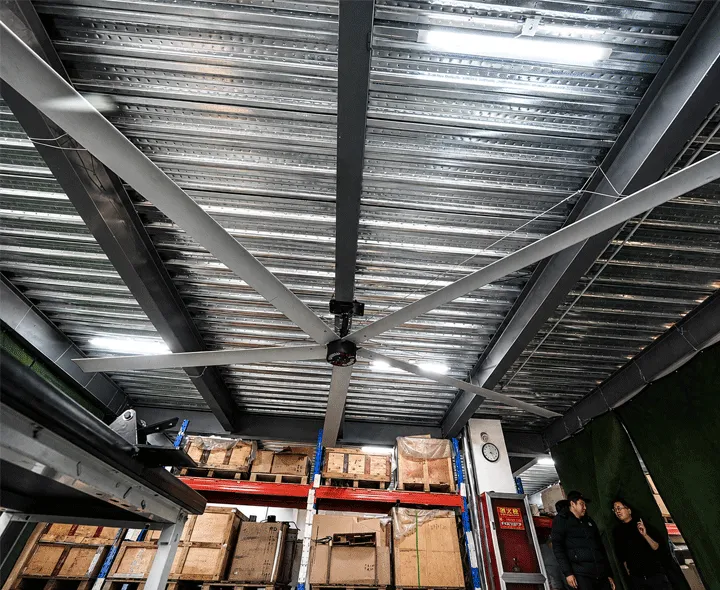
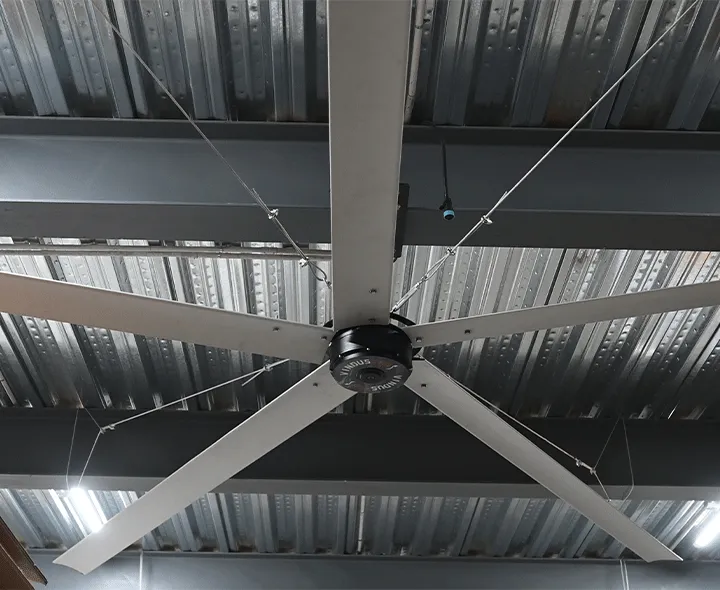
A failed commercial fan can stop airflow, raise indoor heat, and disrupt production. When warning signs go unnoticed, a small bearing or lubrication issue may become a costly shutdown. The solution is to select the right industrial fan and maintain it before performance declines.
A quality commercial or industrial fan may last about 10 to 15 years, while a well-selected heavy-duty system can remain useful for 15 to 20 years or longer. Actual lifespan depends on fan type, operating hours, motor and bearing quality, temperature, dust, humidity, installation, load, and maintenance. L10 bearing life is useful, but it does not equal the guaranteed life of the complete fan.
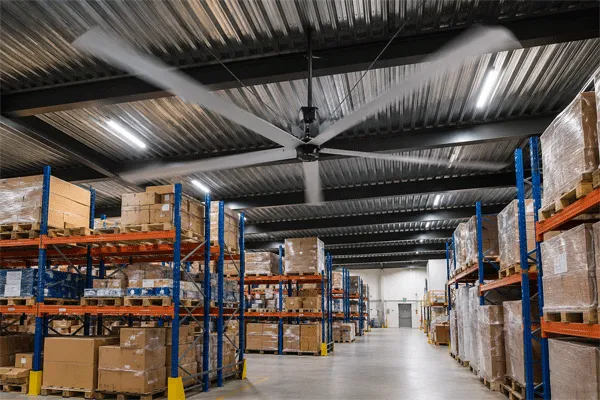
How Long Does a Commercial Fan Last? Industrial Fan Lifespan Explained
Article Outline
- How long commercial and industrial fans typically last
- Why there is no single guaranteed fan lifespan
- Expected life of HVLS, ceiling, exhaust, axial, and centrifugal fans
- What L10 bearing life means
- How motors and bearings affect fan life
- How dust, heat, moisture, and vibration cause early failure
- Which warning signs show that a fan may need replacement
- How preventative maintenance extends equipment life
- When repair makes more sense than replacement
- How to select the right fan for a specific application
- What commercial buyers should ask a fan manufacturer
How Long Does a Commercial or Industrial Fan Typically Last?
Commercial and industrial fans often remain in service for many years, but no single lifespan applies to every fan. As a practical planning range, many standard commercial fans may operate for 10 to 15 years, while high-quality industrial fans built for the specific application may last between 15 to 20 years or longer with proper care.
These figures are not warranties. A fan running eight hours per day in a clean shopping mall has a much easier life than an exhaust fan running continuously above a hot, dusty production line. Two fans of the same age can therefore have very different mechanical conditions.
The expected lifespan depends on several factors:
- Fan type and design
- Daily operating hours
- Motor quality
- Bearing selection
- Lubrication
- Fan speed
- Air temperature
- Dust and chemical exposure
- Humidity and corrosion
- Airflow resistance
- Installation quality
- Vibration
- Maintenance practices
- Availability of replacement parts
A quality fan may last longer than the building owner first expects. Poorly selected equipment may fail in only a few years. The key question is not simply, “How long does an industrial fan last?” It is, “Was this fan selected, installed, and maintained for its real operating environment?”
Why Is There No Single Guaranteed Fan Lifespan?
A fan is a system made of several parts. The complete unit may include a motor, bearings, shaft, hub, blades or impeller, belts, pulleys, controller, fasteners, housing, safety components, and electrical protection. Each part ages at a different rate.
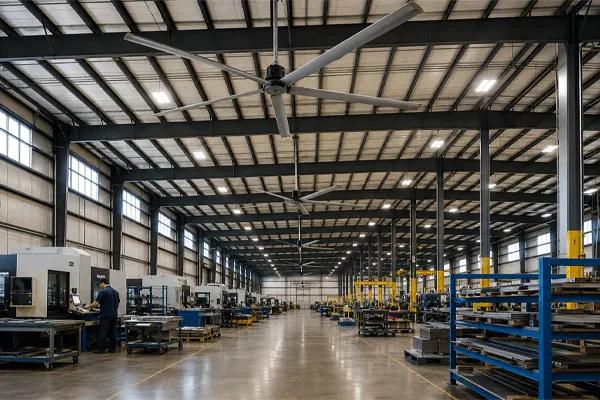
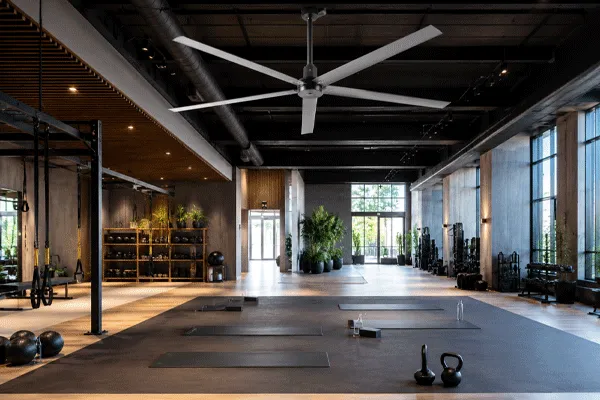
The operating environment also changes fan life. A commercial ceiling fan in a clean gym may face little dust and limited corrosion. An industrial fan in a food processing facility may face moisture and regular washdown. Fans in garages may collect oil mist and dirt. Agricultural fans may operate around ammonia, humidity, and airborne particles.
AMCA guidance for industrial fan specification highlights the importance of process temperature, bearing type, lubrication method, cooling needs, seals, and monitoring for bearing temperature and vibration. These factors must be defined before choosing equipment.
The lifespan of an industrial fan is therefore better viewed as a range rather than a fixed expiration date.
A simple lifespan model
Fan Life
   │
   ├── Product quality
   ├── Correct fan selection
   ├── Installation and alignment
   ├── Operating hours and load
   ├── Temperature and contamination
   ├── Lubrication and cleaning
   └── Inspection and early repair
Even an expensive fan may fail early if it operates outside its design limits. In contrast, a properly selected fan with regular maintenance can continue operating reliably long after its initial payback period.
What Is the Expected Lifespan of Different Fan Types?
Different fan designs serve different purposes. Their life expectancy varies because their speed, load, motor position, bearing arrangement, and exposure conditions differ.
| Fan type |
Practical planning range |
Major life factors |
| Commercial ceiling fan |
8–15 years |
Motor heat, balance, operating hours |
| HVLS fan |
10–20+ years |
Motor, gearbox or direct drive, controller, mounting |
| Commercial exhaust fan |
8–15 years |
Grease, moisture, dust, motor exposure |
| Heavy-duty industrial exhaust fan |
10–20 years |
Air temperature, corrosion, bearings, maintenance |
| Axial fan |
10–20 years |
Blade balance, bearing load, dirty airflow |
| Centrifugal fan |
15–20+ years |
Impeller condition, bearings, belts, system pressure |
| Portable industrial cooling fan |
5–10 years |
Handling damage, motor duty, dust |
| Wall-mounted agricultural fan |
7–15 years |
Humidity, ammonia, corrosion, cleaning |
These ranges are general planning estimates based on application experience. They are not universal product guarantees.
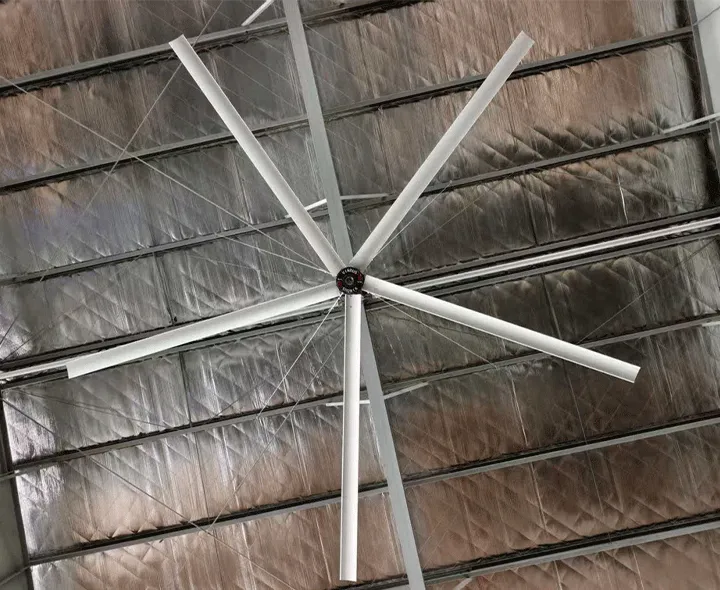
HVLS fans operate at low speed and move large volumes of air with a large-diameter blade system. Their lower rotational speed can reduce some high-speed mechanical stress, but their long blades, mounting system, motor, controller, and safety components still require scheduled inspection.
A direct-drive HVLS fan may have fewer transmission parts than a geared system. However, the complete fan lifespan still depends on motor temperature, electronic control quality, bearing condition, installation, and operating environment.
Exhaust fans
An exhaust fan often operates in a more difficult environment because it handles hot, humid, greasy, dusty, or contaminated air. Kitchen exhaust, industrial process exhaust, and livestock ventilation are very different applications. The fan housing, coatings, motor position, seals, and fan blades must match the actual air stream.
Axial fans move air in a direction parallel to the shaft and often handle large airflow at lower pressure. Centrifugal fans change the direction of airflow and can work against higher system pressure. Centrifugal fans tend to last longer in some demanding systems because they can use strong housings, external bearings, and serviceable drives, but correct selection remains essential.
Buyers can compare our industrial fan options for factories and ventilation projects based on airflow, pressure, environment, and duty cycle.
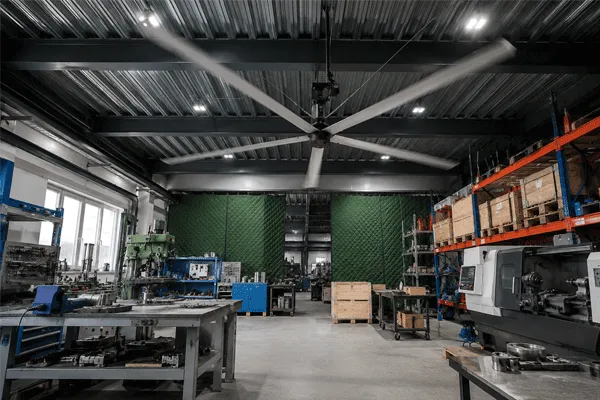
How Long Does a Commercial Fan Last? Industrial Fan Lifespan Explained
What Does L10 Life Mean for an Industrial Fan Bearing?
The term L10 life is often used in industrial fan specifications. It applies to rolling bearings, not automatically to the complete fan.
SKF defines basic rating life, L10, as the fatigue life that 90% of a sufficiently large group of apparently identical bearings can be expected to attain or exceed under identical operating conditions. In other words, the calculation allows a 10% statistical probability that bearings in the group will not reach that life.
For example, a bearing with an L10 life of 80,000 hours does not guarantee that the complete industrial fan will operate for 80,000 hours without service. It also does not mean the bearing will fail immediately after that point.
L10 calculations mainly consider bearing load and speed. Real service life may also be affected by:
- Lubricant condition
- Contamination
- Moisture
- Installation errors
- Shaft alignment
- Operating temperature
- Electrical damage
- Vibration
- Shock loading
- Seal performance
SKF notes that actual bearing service life can differ significantly from calculated basic life because lubrication, contamination, and other operating conditions affect the result.
A fan specification may call for L10 values such as 40,000, 80,000, or 100,000 hours. Greenheck technical material, for example, discusses heavy-duty fan bearings selected for an L10 basic rating life of 80,000 hours.
What does 80,000 hours look like?
| Daily operation |
Theoretical time to 80,000 hours |
| 8 hours per day |
About 27.4 years |
| 12 hours per day |
About 18.3 years |
| 16 hours per day |
About 13.7 years |
| 24 hours per day |
About 9.1 years |
This table is only a conversion of operating hours into calendar years. It does not predict the complete fan’s lifespan or account for shutdowns, contamination, poor lubrication, or changing loads.
How Do the Motor and Bearings Affect Fan Life?
The motor and bearing system often determines whether a commercial fan operates smoothly or develops heat, noise, and vibration.
The motor must match the required power, voltage, frequency, speed, insulation class, temperature, and duty cycle. An undersized motor may run hot. A motor exposed to unsuitable moisture, dust, or chemicals can also experience insulation breakdown or corrosion.
The bearing supports rotating parts and allows the fan shaft or rotor to move with low friction. A bearing may fail early when it receives:
- Too little lubricant
- Too much lubricant
- The wrong grease
- Dirty grease
- Excessive load
- Poor alignment
- High temperature
- Water contamination
- Electrical current
- Repeated vibration
Lubrication is especially important. SKF explains that when relubrication does not occur and the grease film breaks down, bearing damage and failure can follow.
However, not every bearing should be lubricated manually. Some motors and fans use permanently lubricated or sealed bearings. Adding grease to a sealed system can damage it. Other industrial fans use grease fittings and require scheduled lubrication.
Always follow the fan manufacturer’s manual. One Greenheck industrial process fan manual notes that lubrication intervals may be based on 12-hour daily operation and should be reduced for continuous 24-hour service.
That detail matters. A maintenance schedule designed for one shift may not protect a fan running day and night.
What Operating Conditions Shorten an Industrial Fan’s Lifespan?
Industrial fans are essential in many manufacturing plants, warehouses, farms, kitchens, workshops, and commercial buildings. Yet the same operating conditions that make ventilation necessary can also shorten fan life.
Dust and material buildup
Dust can collect on fan blades or an impeller. Uneven buildup creates imbalance, which increases vibration and bearing load. It can also reduce airflow and fan performance.
AMCA troubleshooting guidance identifies uneven dirt loading as a cause of excessive vibration and recommends cleaning the impeller as part of the remedy.
High temperature
Heat affects motor insulation, grease, seals, belts, coatings, and electronic controls. A fan used near an oven or industrial process must be designed for the actual air temperature. AMCA notes that high-temperature fan selection requires careful communication between the user, engineer, and manufacturer.
Moisture and corrosion
Humidity, washdown water, salt, chemicals, and agricultural gases can attack the motor housing, fan housing, blades, fasteners, and electrical connections. Suitable coatings and materials can extend the life of industrial fans in these settings.
Poor airflow system design
A fan may be mechanically sound but connected to a poor duct or inlet arrangement. Sharp turns, blocked inlets, unsuitable transitions, and high resistance can move the fan away from its intended operating point.
AMCA reports that system effect can reduce performance, increase noise and vibration, and contribute to premature impeller or bearing failure.
Excessive starts and stops
Frequent cycling can increase electrical and mechanical stress. A variable frequency drive or intelligent controller may reduce sudden acceleration and allow the fan to match actual airflow demand.
Can Regular Maintenance Make an Industrial Fan Last Longer?
Yes. Regular maintenance is one of the most effective ways to extend the life of a commercial or industrial fan.
A good maintenance program does not mean waiting until the fan becomes noisy. It uses scheduled inspections to find potential issues while they are still small.
Recommended fan maintenance schedule
| Interval |
Suggested checks |
| Daily or weekly |
Unusual sound, smell, heat, airflow, warning codes |
| Monthly |
Dust buildup, guards, visible fasteners, motor housing |
| Quarterly |
Fan blades, mounting, electrical connections, corrosion |
| Every 6 months |
Vibration, bearing condition, controller, safety cables |
| Annually |
Full shutdown inspection, cleaning, alignment, performance |
| As required |
Lubrication according to the manual and operating hours |
The exact interval depends on fan type and environment. A clean commercial space may need less frequent service than a dusty industrial application.
Important maintenance tips include:
- Clean fan blades and the surrounding area.
- Check for loose fasteners.
- Inspect the mounting structure.
- Listen for bearing noise.
- Measure vibration where practical.
- Check belt tension and alignment.
- Inspect electrical terminals.
- Look for corrosion and cracks.
- Verify that controls and safety features work.
- Lubricate only where the manual requires it.
- Record every inspection and repair.
AMCA treats bearings, balance quality, vibration, belts, couplings, drives, and fan-system troubleshooting as core subjects for reliable fan operation.
A clean fan also uses energy more effectively. The U.S. Department of Energy recommends a systems approach that considers how all fan-system components interact rather than judging only the fan itself.
Our HVLS fan maintenance and inspection guidance helps facility teams organize routine checks for motors, blades, mounting systems, controllers, and safety parts.
What Signs Show That a Commercial Fan May Need Replacement?
An old fan does not always need replacement. At the same time, a newer fan can become unsafe or inefficient if it operates under poor conditions.
Watch for these signs of wear:
- New or increasing vibration
- Grinding, scraping, or clicking sounds
- Reduced airflow
- Slow or difficult startup
- Repeated motor overheating
- Frequent electrical trips
- Cracked or deformed fan blades
- Severe corrosion
- Oil or grease leakage
- Loose mounting parts
- Repeated bearing failure
- Burnt wiring or insulation smell
- Controller faults
- Rising fan energy use
- Repairs becoming more frequent
Some problems have simple solutions. Dust can be cleaned. A loose connection can be tightened. A worn bearing or belt can be replaced.
Other problems indicate a deeper issue. Repeated bearing damage may come from imbalance, misalignment, system resistance, or an unsuitable fan. Replacing only the bearing will not solve the root cause.
AMCA Publication 202 covers aerodynamic performance, noise, vibration, and mechanical problems in both new and existing fan installations.
Stop the fan and arrange a qualified inspection when you see structural cracks, severe blade damage, unsafe mounting, abnormal electrical heat, or rapid vibration growth.
Should You Repair an Existing Fan or Replace It with a New Fan?
The repair-or-replace decision should consider safety, cost, efficiency, parts availability, and future operating needs.
Repair may make sense when:
- The fan housing and structure remain sound.
- Damage is limited to a serviceable motor, bearing, belt, or controller.
- Replacement parts remain available.
- The fan still meets airflow requirements.
- Repair costs are reasonable.
- The fan complies with current project needs.
Replacement may be better when:
- The fan has severe corrosion or structural damage.
- Repairs happen repeatedly.
- The original manufacturer no longer supplies parts.
- Airflow is too low for the current building.
- Energy consumption is high.
- Noise or vibration remains after repair.
- Production processes have changed.
- New safety or control functions are needed.
- Several small fans could be replaced by a better system.
Simple lifecycle comparison
| Question |
Repair may be better |
Replacement may be better |
| Is the structure sound? |
Yes |
No |
| Are parts available? |
Yes |
No |
| Does airflow meet demand? |
Yes |
No |
| Are repairs infrequent? |
Yes |
No |
| Is energy use acceptable? |
Yes |
No |
| Can controls be upgraded? |
Yes |
No |
| Is downtime predictable? |
Yes |
No |
Do not compare only the purchase price of a new fan with the immediate repair bill. Include labor, downtime, fan energy, maintenance frequency, safety risk, and expected future service.
Newer fans may offer efficient motors, direct-drive systems, variable-speed control, condition monitoring, group control, and improved blade design. These features can reduce operating complexity when they match the application.
How Long Does a Commercial Fan Last? Industrial Fan Lifespan Explained
How Do You Choose the Right Industrial Fan for a Longer Lifespan?
The best industrial fan is not always the largest, strongest, or most expensive model. It is the fan built for the specific application.
Start by defining:
- Required airflow
- Static pressure
- Air temperature
- Dust or particle content
- Humidity and corrosion risk
- Indoor or outdoor installation
- Daily operating hours
- Noise target
- Voltage and frequency
- Control method
- Mounting structure
- Maintenance access
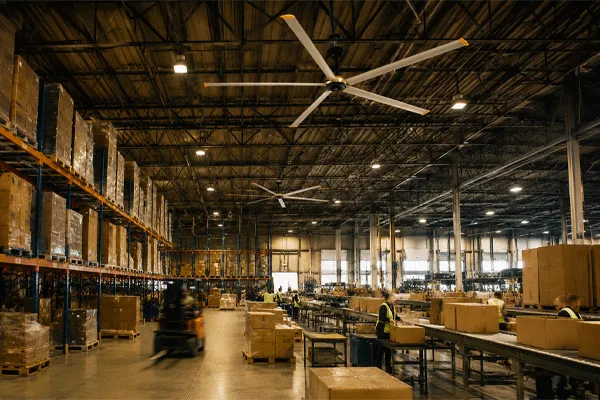
For a large open warehouse, an HVLS ceiling fan may improve air circulation and worker comfort. For process exhaust, a centrifugal fan may be needed to overcome duct pressure. For general wall ventilation, axial fans may provide large volumes of air with a simpler layout.
A right industrial fan should operate near its efficient design point. Oversizing can cause control problems and wasted energy. Undersizing can force the fan to work harder while still failing to deliver the required airflow.
AMCA notes that industrial fan selection should consider bearing arrangements, temperature limits, materials, seals, cooling, monitoring, and process conditions.
Our industrial ceiling fans for manufacturing plants and warehouses are planned according to floor area, ceiling height, obstacles, worker zones, HVAC operation, and environmental conditions.
How Can Preventative Maintenance Maximize Fan Life?
Preventative maintenance uses time-based inspections. Predictive maintenance goes further by using real operating data to identify change.
Useful monitoring points include:
- Bearing temperature
- Motor temperature
- Vibration level
- Motor current
- Fan speed
- Airflow
- Pressure
- Controller alarms
- Operating hours
A gradual increase in vibration may show material buildup, imbalance, looseness, bearing wear, or misalignment. Rising motor current may show added resistance, mechanical drag, or an operating-point problem.
AMCA industrial-fan training identifies motor and bearing temperature, bearing vibration, material buildup, imbalance detection, and preventative maintenance as important monitoring areas.
A simple maintenance record can be very useful:
| Date |
Operating hours |
Vibration |
Motor temperature |
Cleaning |
Lubrication |
Action |
| Jan. 10 |
2,000 |
Normal |
Normal |
Completed |
Not required |
Continue |
| Apr. 12 |
3,800 |
Slight increase |
Normal |
Completed |
Completed |
Recheck |
| Jul. 15 |
5,600 |
High |
Elevated |
Completed |
Checked |
Inspect bearing |
Trends matter more than one isolated reading. Recording values at the same location and operating speed makes the data easier to compare.
As a Sino-US joint venture manufacturer and solution provider, we develop industrial and commercial airflow systems with attention to motor design, blade performance, intelligent control, safety, installation, and long-term service. Our goal is not simply to sell equipment. We help customers protect the investment throughout its operating life.
Illustrative Case: Extending HVLS Fan Life in a Warehouse
Consider a warehouse that operates two shifts per day. Its HVLS fans circulate air above packing, loading, and storage zones. After several years, one fan develops a mild clicking sound and slightly higher vibration.
The facility could ignore the change because airflow still seems normal. Instead, the maintenance team shuts down the fan and performs an inspection.
The team finds:
- Dust buildup near the blades
- One loose mounting fastener
- A connector requiring retightening
- No structural blade damage
- No serious motor fault
The team cleans the fan, secures the mounting parts, checks the safety system, and records the vibration level after restart. The problem does not develop into an emergency repair.
This example shows the value of early action. Regular cleaning and inspection cost far less than replacing a damaged motor, bearing, controller, or complete fan system.
For warehouse owners and facility managers, the main lesson is clear:
Fan lifespan depends less on age alone and more on operating condition, selection quality, and maintenance discipline.
What Should B2B Buyers Ask a Commercial Fan Manufacturer?
Commercial building developers, HVAC contractors, factory managers, distributors, and global buyers should ask for more than a general claim that the fan “lasts a long time.”
Ask the fan manufacturer for:
- Motor brand and efficiency data
- Bearing type and L10 life
- Operating temperature limits
- Maximum daily duty
- Blade and housing materials
- Corrosion protection
- Vibration and balance information
- Noise data
- Controller protection
- Lubrication requirements
- Maintenance schedule
- Spare-parts list
- Warranty coverage
- Installation instructions
- Safety features
- International voltage options
- Technical support process
Also confirm whether the fan is suitable for continuous operation. A product built for short daily use should not automatically be used in a 24-hour industrial cooling application.
As a Sino-US joint venture manufacturer and airflow solution provider, we specialize in:
- HVLS fans
- Industrial ceiling fans
- Commercial ceiling fans
- Large industrial fans
- Intelligent airflow controls
- Cooling and air circulation
- Winter destratification
- Industrial ventilation support
Our commercial ceiling fan solutions for large public spaces serve sports centers, shopping malls, commercial buildings, event venues, and other large indoor areas.
Frequently Asked Questions About Commercial Fan Lifespan
How long do industrial fans last?
Industrial fans typically last around 10 to 20 years, but the real lifespan depends on fan type, operating hours, temperature, contamination, bearing design, installation, and maintenance. Some heavy-duty fans remain useful for longer, while poorly selected equipment may fail much earlier.
Can an HVLS fan last 20 years?
A high-quality HVLS fan may reach a lifespan of 15 to 20 years or longer when it is correctly selected, professionally installed, operated within design limits, and maintained properly. This is not a guarantee for every installation.
How long does an exhaust fan last?
A commercial exhaust fan may last about 8 to 15 years. Heavy-duty industrial exhaust equipment may last longer. Grease, dust, heat, moisture, chemicals, and continuous operation can shorten exhaust fan life.
Does L10 life show how long the entire fan will last?
No. L10 life is a statistical bearing-fatigue rating. It does not include every possible bearing failure and does not represent the guaranteed lifespan of the motor, controller, blades, belts, housing, or complete fan.
How often should an industrial fan be maintained?
Basic visual and sound checks may be performed weekly or monthly, while detailed inspections may occur every three, six, or twelve months. The exact interval should follow the manufacturer’s manual and reflect operating hours and environmental conditions.
When should I replace a commercial fan?
Consider replacement when the fan has structural damage, severe corrosion, repeated failures, unavailable parts, poor airflow, high energy use, unsafe vibration, or maintenance costs that approach the value of a modern system.
Key Points to Remember
- Many commercial fans may provide 10 to 15 years of useful service.
- Heavy-duty industrial fans may last 15 to 20 years or longer with proper maintenance.
- These are planning ranges, not universal guarantees.
- Fan type, daily operating hours, environment, and maintenance strongly affect lifespan.
- A warehouse ceiling fan and a process exhaust fan face very different operating conditions.
- Bearings, motors, controllers, blades, and mounting systems age at different rates.
- L10 is a statistical bearing-fatigue rating, not the guaranteed life of the complete fan.
- Dust buildup can reduce airflow and create vibration.
- Excess heat can damage grease, seals, motor insulation, and electronic parts.
- Too much or too little lubrication can shorten bearing life.
- Not every bearing should be manually lubricated.
- Follow the manufacturer’s maintenance schedule.
- Monitor vibration, temperature, motor current, and operating hours when possible.
- Repair may make sense when the structure is sound and parts remain available.
- Replacement may be better when failures repeat or the fan no longer meets airflow needs.
- The right fan for the specific application will usually last longer than a general-purpose product used in the wrong environment.
- Preventative maintenance helps avoid unplanned downtime and protects long-term fan performance.
A commercial fan does not reach the end of its useful life on a fixed birthday. Its condition tells the real story. Correct selection, professional installation, clean operating conditions, timely lubrication, and early fault detection can keep a quality fan working for many years.
Contact our industrial fan engineering team with your building size, ceiling height, operating hours, environment, airflow requirement, voltage, and application. We can recommend the right fan, installation plan, intelligent control system, and maintenance approach for long-term performance.