A hot, stuffy ceiling space makes people tired, slows work, and raises HVAC costs. If the ceiling fan speed is wrong, comfort gets worse, not better. The right speed improves airflow, comfort, and energy use without overcooling the room.
To choose a ceiling fan speed, match the speed to room size, ceiling height, season, activity level, and airflow need. Use low speed for gentle circulation, medium speed for daily comfort, and high speed for strong cooling. For large spaces, variable-speed HVLS ceiling fan systems give better control.
Plan de l'article
- What does ceiling fan speed really mean?
- Why does airflow matter more than speed count?
- 3 speed vs 6 speed: which ceiling fan is better?
- How do room size and fan sizes affect ceiling fan speed?
- How does ceiling height change the right ceiling fan choice?
- What speed should you use in summer and winter?
- How should warehouses and factories control ceiling fan speed?
- What ceiling fan features help you control your fan?
- How do ceiling fan installation and safety affect performance?
- How do you choose the right ceiling fan for your space?
- FAQs about ceiling fan speed
- Key takeaways

How to Choose the Right Ceiling Fan Speed: Ceiling Fan Buying Guide for Better Airflow
What Does Ceiling Fan Speed Really Mean?
Ceiling fan speed means how fast the fan blade rotates. A ceiling fan may have three speeds, six speeds, or variable speed control. But speed count alone does not tell the full story. A fast fan that is too small may still move less air than a slower but larger fan.
When you use a ceiling fan, the goal is not to “make cold air.” A ceiling fan does not lower the actual room temperature. It moves air across the skin, which helps people feel cooler. In winter, running your fan at low speed in reverse can help move warm air near the ceiling back down.
For large industrial and commercial ceiling spaces, fan speed also affects destratification. That means mixing warm upper air with cooler lower air. As a Sino-US joint venture manufacturer of HVLS fans, industrial ceiling fans, commercial ceiling fans, and intelligent airflow control systems, we normally design fan speed around real comfort, building height, floor layout, and energy-saving goals.
Why Does Airflow Matter More Than Speed Count?
Airflow is the real result buyers should care about. A ceiling fan moves air in a measured volume, often shown as cubic feet per minute. Higher airflow can improve air circulation, but only if the ceiling fan size, blade shape, motor, and installation position are suitable.
A 6-speed ceiling fan gives more control, but a weak fan design can still perform poorly. A 3 speed ceiling fan can still work well in a small room if it has the right motor and fan blade design. This is why selecting the right ceiling fan means looking at airflow, efficiency, diameter, motor quality, and speed range together.
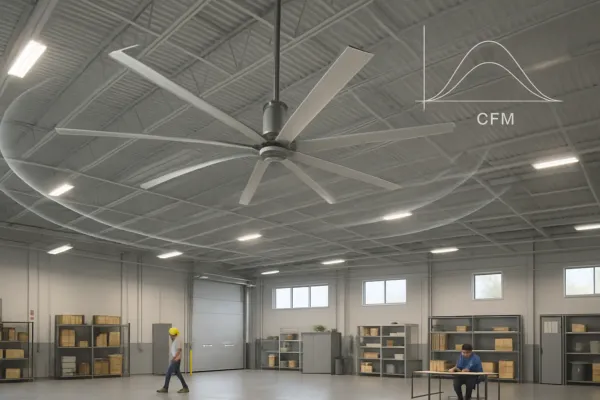
For warehouses, logistics centers, factories, gyms, malls, and livestock buildings, airflow must be stable and gentle. Strong wind in one spot and dead air in another spot is not good design. A proper industrial ceiling fan layout spreads air across a large ceiling area and keeps people more comfortable.
3 Speed vs 6 Speed: Which Ceiling Fan Is Better?
The question of 3 speed vs 6 speed is common. A 3-speed fan usually offers low, medium, and high settings. It is simple and easy to use. A 6-speed ceiling fan gives finer control, so users can adjust the fan more carefully for comfort, noise, and energy use.
A 6 speed fan gives better comfort control when people adjust the fan often. For example, a gym may need high airflow during training hours and low speed during cleaning. A restaurant may need quiet airflow during dining. A warehouse may need stronger circulation in summer and low speed destratification in winter.
Here is a simple comparison:
| Type de ventilateur |
Idéal pour |
Main Advantage |
Buyer Note |
| 3 speed ceiling fan |
Small rooms and basic use |
Simple control |
Good for low-budget applications |
| 6 speed ceiling fan |
Homes, offices, shops, and comfort spaces |
Better speed choice |
More flexible for daily use |
| Variable-speed HVLS fan |
Warehouses, factories, farms, gyms, malls |
Intelligent airflow control |
Best for large ceiling spaces |
A speed ceiling fan is worth more when it gives real usable settings. The lowest speed may be perfect for quiet night airflow. The highest speed may help during peak heat. Speed levels give comfort options, but the fan must still be properly sized.
How Do Room Size and Fan Sizes Affect Ceiling Fan Speed?
Room size matters. A fan that’s too small may spin fast but fail to move enough air. A fan that’s too large may create uncomfortable wind and look out of place. The right ceiling fan size helps the fan run at a lower, quieter, and more efficient speed.
For small rooms, smaller fan sizes can work well. For large rooms, open warehouses, sports centers, agricultural greenhouses, and logistics buildings, large-diameter ceiling fans or HVLS systems are more practical. These fans move a large amount of air at low speed, which creates a gentle and wide airflow pattern.
A simple ceiling fan size guide looks like this:
| Type d'espace |
Common Fan Choice |
Speed Advice |
| Small room |
Small residential ceiling fan |
Low to medium speed |
| Medium room |
Standard ceiling fan |
Medium speed for daily use |
| Large open room |
Larger modern ceiling fans |
Variable speed or medium-high |
| Warehouse / factory |
Ventilateur de plafond HVLS |
Low-speed, high-volume airflow |
| Gym / mall / public hall |
Commercial ceiling fan |
Adjustable speed by occupancy |
The size of your ceiling fan should match the ceiling space, not just the price. In large B2B projects, we review floor area, racking height, workers’ zone, doors, heat source, HVAC location, and target airflow before recommending fan sizes.
How Does Ceiling Height Change the Right Ceiling Fan Choice?
Ceiling height affects how the airflow reaches people. If the ceiling is high, the fan may need a larger diameter, proper downrod, and stronger motor. If the ceiling is low, a low profile ceiling fan or flush mount design may be safer and more comfortable.
A low ceiling needs careful fan selection. The fan must stay near the ceiling but still leave enough safe clearance below the blades. A low profile ceiling fan is often used in rooms where standard downrod installation is not practical. In factories and sports centers, professional ceiling fan installation should follow local electrical and safety rules.
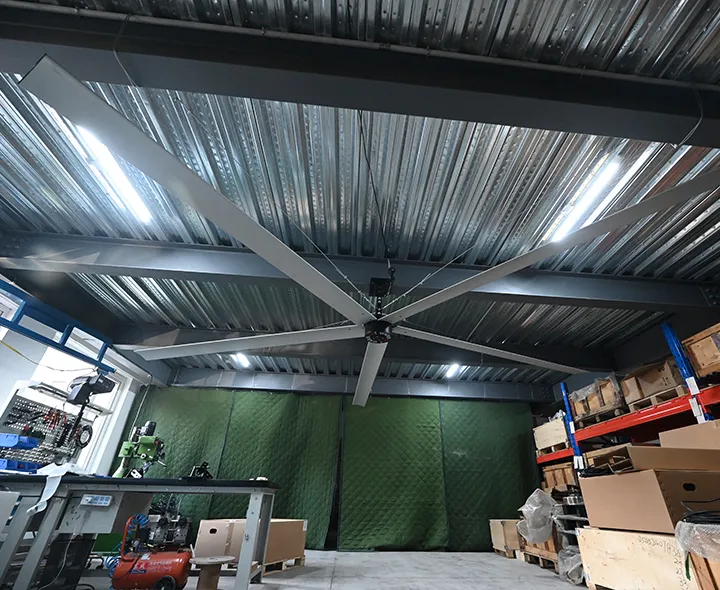
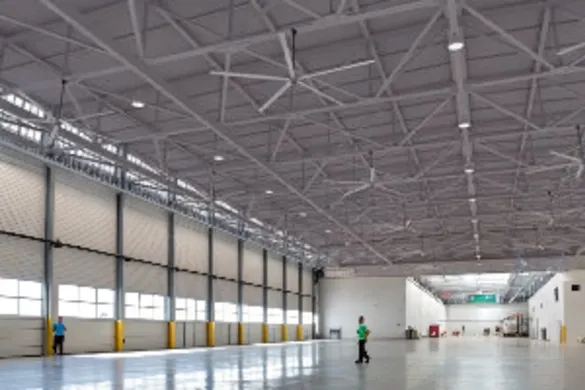
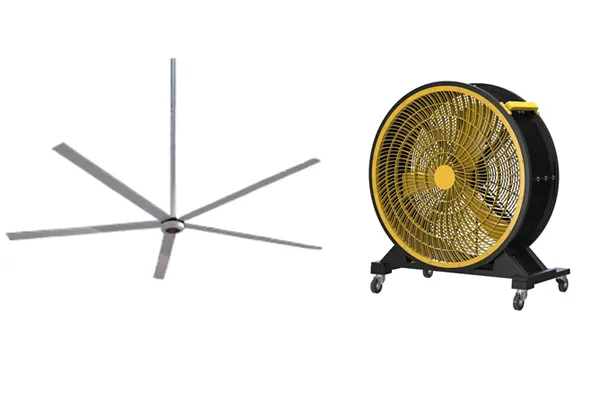
For high ceiling buildings, such as logistics warehouses, manufacturing plants, aircraft hangars, shopping malls, and livestock farms, large industrial fans can move air across wide spaces. These fans do not need to spin very fast. Their large fan blade span creates wide airflow at low speed.
How to Choose the Right Ceiling Fan Speed: Ceiling Fan Buying Guide for Better Airflow
What Speed Should You Use in Summer and Winter?
In summer, most users run the ceiling fan forward to create a cooling breeze. Low speed works for mild heat. Medium speed is good for daily comfort. High speed is useful when the room feels hot, humid, or crowded. If the fan can run at variable speed, start lower and increase only when needed.
In winter, many ceiling fans still help. Warm air gathers near the ceiling. Running your fan at the lowest speed in reverse can push warm air down gently. This is called destratification. It can improve comfort and reduce heating waste in tall buildings.
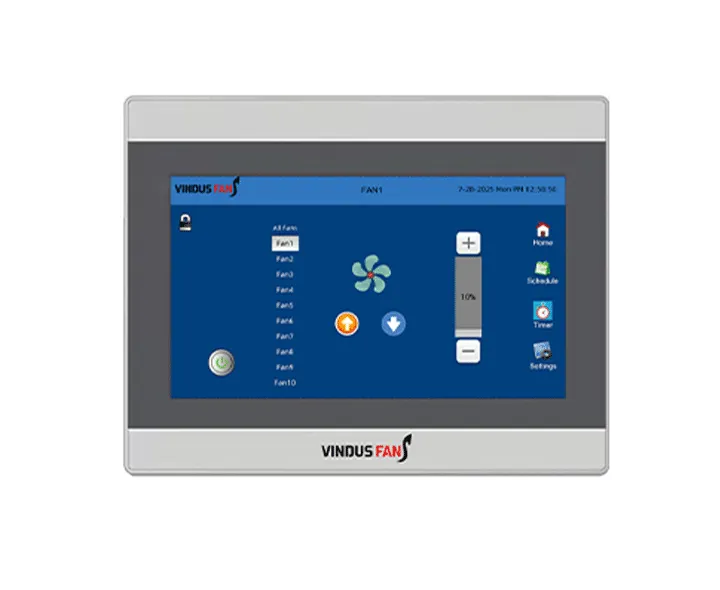
For large industrial spaces, intelligent airflow control makes this easier. Sensors, frequency control, and smart panels can control your fan based on temperature, season, work schedule, and building zone. Our intelligent airflow control systems help project contractors design airflow that supports cooling, ventilation, and destratification.
How Should Warehouses and Factories Control Ceiling Fan Speed?
Warehouses and factories need more than comfort. They need worker safety, stable production, lower HVAC cost, and better indoor air circulation. A ceiling fan in these spaces should not create strong wind that blows dust, paper, packing film, or light materials around.
For most large industrial buildings, low-speed high-volume airflow works best. A large ceiling fan moves air gently over a wide area. It can improve comfort for workers, reduce heat stress, support ventilation, and reduce air stratification under a high ceiling.
A practical speed plan may look like this:
| Operating Condition |
Recommended Speed Style |
Raison |
| Mild weather |
Basse vitesse |
Gentle air movement |
| Hot working hours |
Medium to high speed |
Better cooling comfort |
| Humidité élevée |
Medium speed with ventilation |
Helps air circulation |
| Winter heating |
Lowest speed reverse mode |
Helps reduce temperature layers |
| Empty building |
Low speed or scheduled off |
Saves energy |
| Crowded shift |
Variable speed by zone |
Matches real demand |
For warehouse owners, logistics companies, HVAC engineering contractors, and manufacturing plant managers, the best ceiling fan is the one that fits the building layout. A fan can move air, but a full solution moves air intelligently.
What Ceiling Fan Features Help You Control Your Fan?
Modern ceiling fans come with more useful features than older models. A fan includes motor type, controller, blade design, lighting options, remote control, wall control, smart control, and sometimes building management system integration.
Important ceiling fan features include:
- Contrôle de la vitesse variable
- Quiet motor design
- Reversible direction
- Timer function
- Remote or wall control
- Smart building integration
- Energy-saving motor
- Safe blade structure
- Optional ceiling fan lighting
- Weather-resistant parts for outdoor use
A ceiling fan with lights can be useful in homes, offices, shops, and hospitality spaces. A fan with a light may save ceiling space and simplify design. But in warehouses, farms, and large industrial spaces, airflow performance matters more than decorative lighting.
For outdoor spaces, choose an outdoor ceiling fan designed for humidity, dust, and weather exposure. For agricultural greenhouses and livestock farms, corrosion resistance and easy cleaning matter. For commercial spaces, ceiling fan styles and noise level also matter.
How Do Ceiling Fan Installation and Safety Affect Performance?
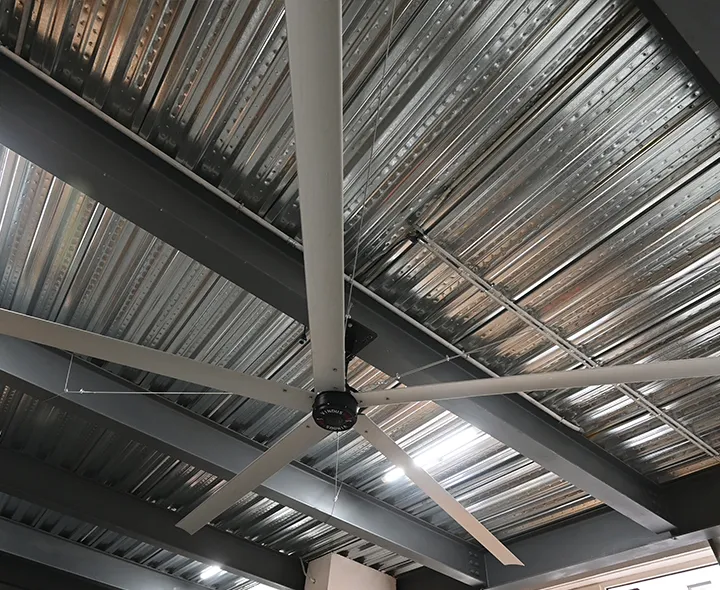
Good ceiling fan installation is not optional. It affects safety, airflow, noise, vibration, and service life. A fan must be mounted to a ceiling fan rated electrical box or proper steel structure support. Do not install a ceiling fan on a weak support point.
The ceiling fan downrod length must match ceiling height. A fan installed too close to the ceiling may not move air well. A fan installed too low may create safety risk. In large buildings, the installation plan should also consider lights, sprinkler systems, racks, cranes, doors, and HVAC ducts.
Before installing a ceiling fan, check:
- Ceiling structure strength
- Electrical supply and control method
- Blade clearance
- Fan height and downrod length
- Building use and occupancy
- Fire safety and local code requirements
- Maintenance access
- Vibration control
- Controller location
- Emergency shutdown needs
As a B2B airflow solution provider, we support project buyers with fan selection, layout design, installation guidance, control system planning, and after-sales support. A new fan should work safely from day one.
How to Choose the Right Ceiling Fan Speed: Ceiling Fan Buying Guide for Better Airflow
How Do You Choose the Right Ceiling Fan for Your Space?
To choose the right ceiling fan, start with the space. Measure room size, ceiling height, heat source, door location, HVAC layout, and daily activity. Then choose the right fan size, airflow level, motor type, control system, and ceiling fan styles.
For homes, an appropriate ceiling fan may be a standard model with simple control. For shops and restaurants, modern ceiling fans with quiet motors and clean design may work better. For warehouses, factories, sports centers, farms, and commercial buildings, HVLS fans usually provide better large-area airflow.
Use this simple ceiling fan buying guide:
| Buyer Type |
Best Fan Focus |
Suggested Solution |
| Home user |
Comfort and style |
Ceiling fan for your home |
| Office or shop |
Quiet airflow and design |
Commercial ceiling fan |
| Warehouse owner |
Wide air movement |
Ventilateur de plafond HVLS |
| Factory manager |
Heat and humidity control |
Ventilateur de plafond industriel |
| HVAC contractor |
Energy-saving airflow plan |
Integrated fan control |
| Farm operator |
Animal comfort and moisture control |
Large low-speed fan |
| Sports center manager |
Big-space comfort |
Commercial HVLS fan |
The best ceiling fan for your space is not always the fastest one. It is the fan that gives stable airflow, safe operation, low noise, and energy-saving comfort.
Why HVLS Fans Are Different From Ordinary Ceiling Fans
Many ceiling fans are built for homes or small commercial spaces. HVLS fans are different. They are designed for high-volume, low-speed air movement in large areas. A single HVLS ceiling fan can often cover a much wider floor area than many small fans.
HVLS fans are useful in warehouses, logistics centers, factories, workshops, shopping malls, gyms, airports, farms, and large public spaces. They help solve heat, humidity, stagnant air, and temperature layers. When combined with HVAC systems, they can support energy-saving comfort strategies.
As a Sino-US joint venture manufacturer, we provide commercial ceiling fans, industrial ceiling fans, large industrial fans, and customized airflow solutions. Our goal is simple: help global B2B buyers choose the right equipment for real buildings, not just catalog pictures.
Common Mistakes When Selecting a Ceiling Fan Speed
The first mistake is choosing speed before choosing size. A fan that is too small will not solve a large ceiling airflow problem, even if it spins fast. The second mistake is using high speed all the time. High speed may create noise, discomfort, and wasted energy.
The third mistake is ignoring the building purpose. A restaurant, warehouse, greenhouse, gym, and food processing facility do not need the same airflow plan. Many ceiling fans look similar, but their performance can be very different.
The fourth mistake is treating a ceiling fan as a complete ventilation system. A ceiling fan moves air inside the space. It does not always bring in fresh outdoor air. For industrial ventilation, you may still need exhaust fans, louvers, air handling units, or HVAC integration.
Étude de cas : Choosing Fan Speed for a Logistics Warehouse
A logistics warehouse had heat buildup under a high ceiling. Workers felt hot in summer, but high-speed wall fans created strong air jets and paper movement. The manager needed better comfort without disturbing packing work.
After checking ceiling height, floor area, rack layout, door position, and worker zones, the project team selected large HVLS ceiling fans with variable speed control. During busy shifts, the fans ran at medium speed. During mild hours, they ran at low speed. In winter, the fans used low-speed destratification mode.
The result was better air circulation, fewer hot spots, and a more comfortable working area. The key lesson was clear: the right ceiling fan speed is not a fixed number. It is a control strategy.
FAQs About Ceiling Fan Speed
How do I choose a ceiling fan speed?
Choose low speed for gentle air movement, medium speed for daily comfort, and high speed for stronger cooling. For large spaces, choose variable speed control so you can adjust the fan based on temperature, occupancy, and season.
Is a 3 speed or 6 speed ceiling fan better?
A 6-speed fan gives more precise control, while a 3-speed fan is simpler. For small rooms, 3 speeds can be enough. For comfort spaces, commercial buildings, and large rooms, 6-speed or variable-speed control is often better.
Does a ceiling fan cool the room?
A ceiling fan does not lower room temperature by itself. It moves air across people and helps them feel cooler. With HVAC, good airflow may allow a higher thermostat setting while keeping comfort.
What is the best ceiling fan speed for sleeping?
Low speed is usually best for sleeping because it gives gentle airflow with less noise. If the room is hot, start with medium speed and lower it once the room feels comfortable.
Should I run my ceiling fan all day?
Only run the fan when airflow is useful. In occupied spaces, running your fan can improve comfort. In empty rooms, turning it off saves energy unless the fan supports a planned ventilation or destratification strategy.
What ceiling fan size should I choose?
Choose the right ceiling fan size based on room size and ceiling height. Small rooms need smaller fans. Large rooms and industrial spaces may need large-diameter ceiling fans or HVLS fans.
Is an outdoor ceiling fan different from an indoor fan?
Yes. An outdoor ceiling fan should be designed for moisture, humidity, dust, and weather exposure. Indoor fans may not be safe or durable in outdoor or agricultural spaces.
What speed should an HVLS fan run?
An HVLS fan usually runs at low to medium speed. It is designed to move large air volume slowly, not create a harsh wind. The correct speed depends on building size, heat, humidity, occupancy, and airflow target.
Principaux points à retenir
- The right ceiling fan speed depends on room size, ceiling height, season, activity, and comfort target.
- Airflow matters more than speed count alone.
- A 3 speed ceiling fan can still work well in small rooms.
- A 6 speed ceiling fan gives better control for changing comfort needs.
- Large warehouses, factories, gyms, malls, farms, and logistics buildings often need HVLS fan solutions.
- A fan that is too small may fail to move enough air, even at high speed.
- A fan that is too large may create uncomfortable airflow in small spaces.
- Low speed is good for gentle circulation and winter destratification.
- Medium speed is good for daily comfort.
- High speed is useful for hot, humid, or crowded conditions.
- Proper ceiling fan installation is critical for safety and performance.
- For B2B projects, choose a fan supplier that can support sizing, layout, airflow control, installation guidance, and long-term service.