Michael Danielsson | Vindus Fans 首席执行官 | 发布于 2026 年 8 月 7 日
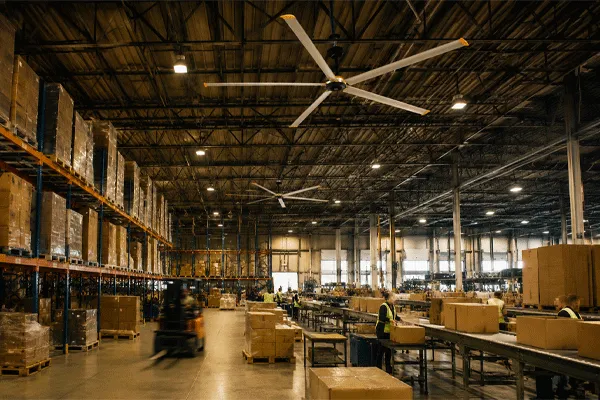
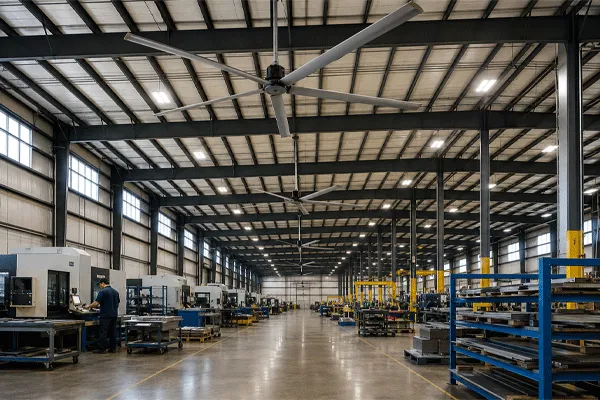
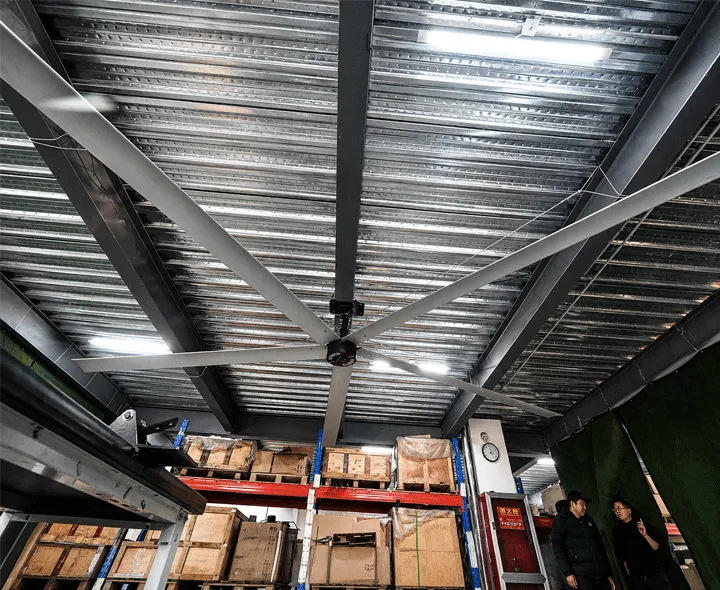
一台以低速推动大风量的大直径风扇,可覆盖 15,000–20,000 平方英尺的仓库地面,取代数十台落地扇或箱式风扇,同时将分层聚集在天花板附近的热空气向下带动,而不只是让热空气在原地打转。
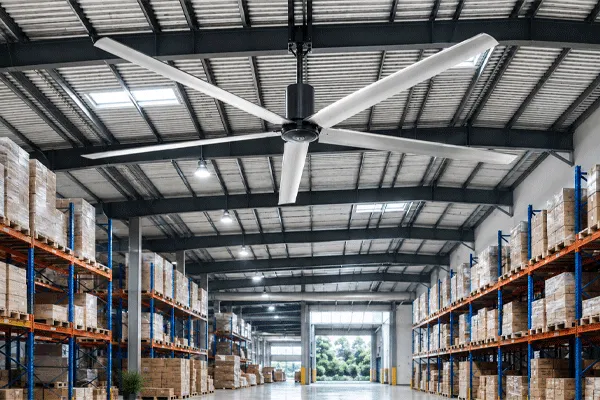
用于仓库降温和通风的HVLS风扇
The Warehouse Cooling Problem HVLS Fans Actually Solve
Most warehouses don’t have a cooling problem so much as a distribution problem. Heat rises and pools near the roof deck — sometimes 15–20°F warmer than floor level in a tall building — while workers, forklifts, and inventory sit in the cooler air below without benefiting from it. Traditional pedestal or floor fans move air laterally in a small radius; they don’t touch that stratified heat layer at all.
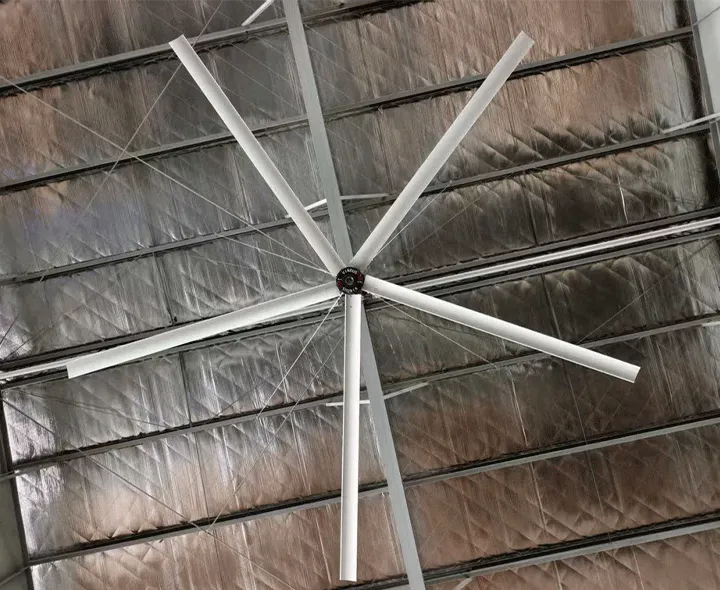
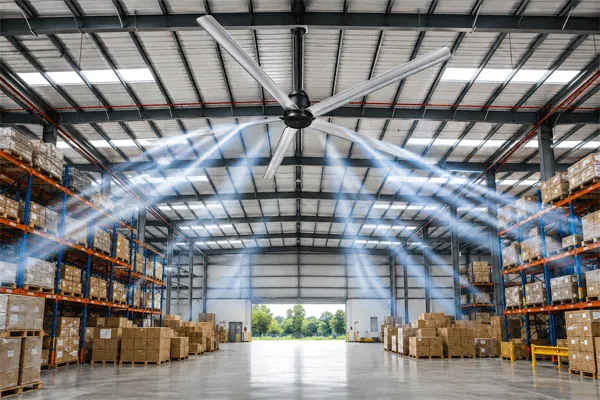
HVLS 风扇 的运作机制因规格尺寸和转速而有所不同。大直径风扇在低速运转时会将大量空气向下推动形成气柱,随后在地面上呈宽幅、低风速的气流层向四周扩散。该气柱能够触及靠近屋顶的温度分层区域并将其向下拉引,这一机制——即消除空气分层——正是大多数被归功于“HVLS 降温”的均温效果背后的根本原理。
消除空气分层在不同季节的作用方式
消除温度分层并非只有一种模式。风扇转向和转速都会根据目标而变化:
- 夏季/降温模式— blades run in the standard direction, pushing air down and out at higher speed to create the direct wind-chill effect that makes occupants feel cooler even though the ambient air temperature hasn’t dropped.
- Winter / heat-recovery mode— blades reverse and run at low speed, drawing the warm air pooled near the ceiling back down without generating a noticeable draft. This is where a 仓库 运行顶部供暖系统能够真正实现热量回收利用,而不是任由其向上散失。
- 过渡模式——许多设施全年以低速正向运转风扇,仅仅是为了保持空气流动,防止局部冷热气团滞留在装卸货月台、夹层或自然通风有限的区域。
The mistake worth flagging here: buying and sizing a fan purely for summer cooling performance, then discovering in the first winter that low-speed reverse mode doesn’t cover the space as evenly, because the effective coverage radius differs between modes. Direction and speed control need to be part of the sizing conversation, not an afterthought.
这对暖通空调负荷意味着什么,而不仅仅是舒适度
HVLS fans don’t replace HVAC systems, and any claim that they do should be treated with skepticism. What they can do is reduce how hard an HVAC system has to work to hit the same comfort target, because moving air makes occupants feel several degrees cooler than the thermostat reading — the same principle behind a ceiling fan raising the recommended AC setpoint in a house. In a warehouse with high-bay HVAC or evaporative cooling already installed, HVLS fans distribute that conditioned air more evenly instead of letting it settle near the units and leave the far end of the building undercooled.
与仅依靠落地式或壁挂式循环风扇覆盖相同面积相比,使用数量更少的大直径风扇意味着耗电的电机更少,货架或布局变化时需要搬动的设备也更少。此外,由于气流形成连续的气柱,而非数十股相互重叠的窄气流,因此两股风在地面相互抵消而形成的气流死角也更少。
For teams sizing this specifically around warehouse floor plans, the parameters that matter are:
- 直径:20 ft and 24 ft options
- Ceiling height range:20–33 英尺——适合大多数无柱大跨度仓库和配送中心建筑
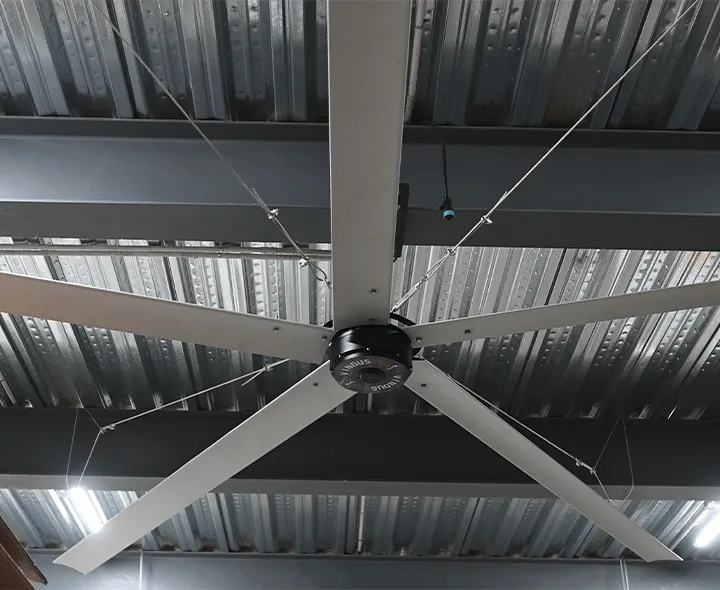
- 电机:PMSM(永磁同步电机),直驱,无齿轮箱
- 功耗:最高转速时低于 1,000 W
- 控制方式:地面集成式 HMI 面板——调节风速、转向和定时均无需使用升降车或登上屋顶,这对于升降设备常常在库区其他区域占用的仓库来说至关重要
- 布线:从吊顶安装座到地面控制点的单根线缆敷设
Vindus Fans 未在公开资料中公布 P780 的确切风量(CFM)或分贝等级。如果设施需要依据严格的风量要求获得工程审批,应直接索取相关数据,而不是依赖第三方对比中的估算值。
用于仓库降温和通风的HVLS风扇
仓储场景下 HVLS 风扇选型容易出错的关键所在
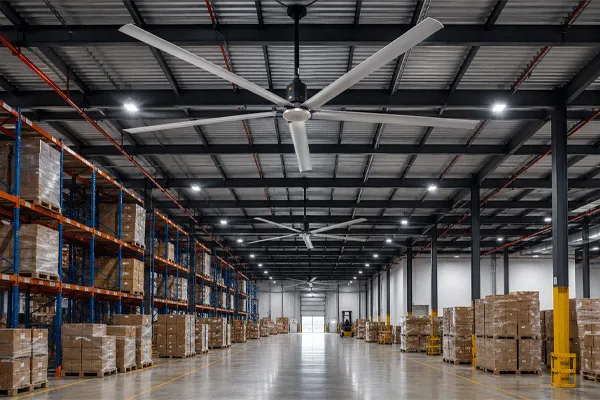
相比大多数其他类型的设施,仓库安装中最容易让人“踩坑”的特殊情况就是:货架高度。即使风扇尺寸与建筑物吊顶高度完全匹配,如果高位货架距离安装点过近,在气流柱向外扩散之前就将其阻断,风扇的性能依然会大打折扣。这与开阔型生产车间的障碍物排查不同——货架通常更密集、更高,且调整更频繁,因此安装时行之有效的布局,可能在六个月后重调货架布局时效果变差。对于采用动态仓储布局的设施,风扇的布设不应是一次性决策,而应随着重大的货架变动定期重新评估。
直驱与齿轮箱:为什么这一选择在仓库中比看起来更重要
| 因素 |
齿轮箱驱动 |
PMSM 直驱 |
| 维护通道 |
Typically roof-level or lift-required |
Floor-level HMI, no lift |
| 仓库运营班次期间的停机时间 |
更高——使用升降机通常意味着需要清空设备下方的叉车交通 |
更低——地面控制面板无需清理下方通道 |
| 电机与扇叶之间的活动部件 |
齿轮箱、传动轴 |
无 |
| 最高转速下的功耗 |
因型号/齿轮比而异 |
1,000 W 以下 (P780) |
在运转繁忙的仓库中,维护通道与登高条件的差异比在空旷的生产车间更为显著,因为在工作时间内安排升降车到风扇下方,就意味着需要引导叉车绕行。话虽如此,这并非对所有设施而言都是决定性因素——如果一个仓库的风扇常年持续运行且很少需要维修,那么相比那些维护周期频繁的设施,就很难明显体现出这一优势。
用于仓库降温和通风的HVLS风扇
常问问题
问:仓库需要多少台 HVLS 风扇?
A: It depends on ceiling height, floor obstructions like racking, and diameter — not square footage alone. A single P780 unit can cover roughly 15,000–20,000 sq ft of open floor, but that figure drops in zones with tall racking or partial mezzanines.
问:HVLS 大型风扇可以替代仓库中的空调吗?
答:不能。它们通过更均匀地输送经过空调处理的空气,并产生风寒效应,让人员在相同环境温度下感觉更凉爽,从而减轻现有暖通空调或蒸发冷却系统的负荷,但风扇本身并不会降低实际空气温度。
问:HVLS 风扇在冬季有用吗,还是仅用于夏季降温?
答:两者都适用,但冬季需要让风扇低速反转,将天花板附近的暖空气带回下方,消除温度分层,而不是形成令人感到寒冷的气流。选型和布置应兼顾这两种模式。
Q: What does a P780 Series installation cost for a typical warehouse?
答:Vindus Fans 未公开发布价格区间。定价基于具体报价,取决于设备数量、吊顶高度以及现场特定的安装要求——请直接联系 Vindus Fans 获取报价。