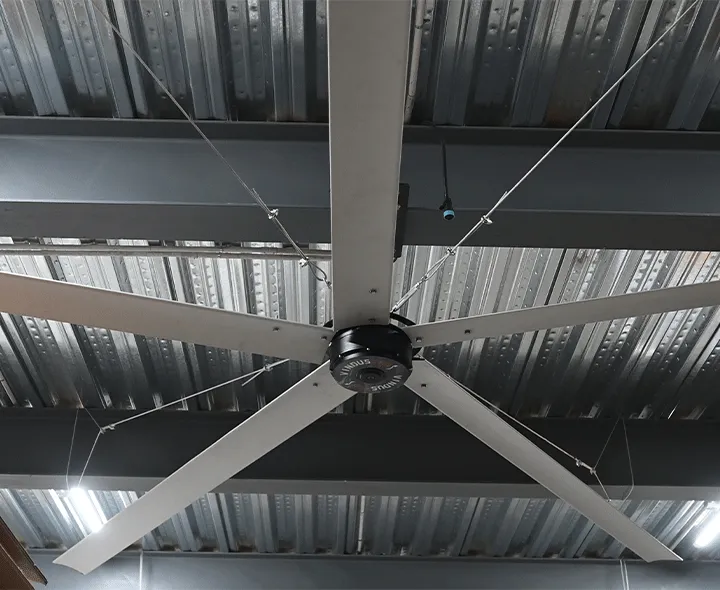
Choosing an HVLS 风扇 is no longer just about buying a large ceiling fan for a warehouse. In 2026, buyers compare airflow, energy efficiency, smart controls, safety design, installation support, and long-term service before making a decision. This article is worth reading because it explains how to evaluate fan manufacturers, compare leading HVLS fan brands, and choose the best hvls solution for industrial and commercial spaces without relying only on price.
文章提纲
1. What Is an HVLS Fan and Why Is It Important in 2026?
2. How Do High-Volume Low-Speed Fans Improve Airflow?
3. What Technology for 2026 Is Changing HVLS Fan Models?
4. How Can an HVLS Fan Reduce Energy Consumption?
5. How Do You Choose the Best HVLS Fan for Industrial and Commercial Spaces?
6. What Role Does Ceiling Height Play When Installing HVLS Fans?
7. Why Are Fan Designs and Fan Systems Important for Large Spaces?
8. What Are the Main Trends in HVLS Fan Design and the Fan Market?
9. How Should Buyers Compare the Best Big HVLS Options Before Ordering?
1. What Is an HVLS Fan and Why Is It Important in 2026?
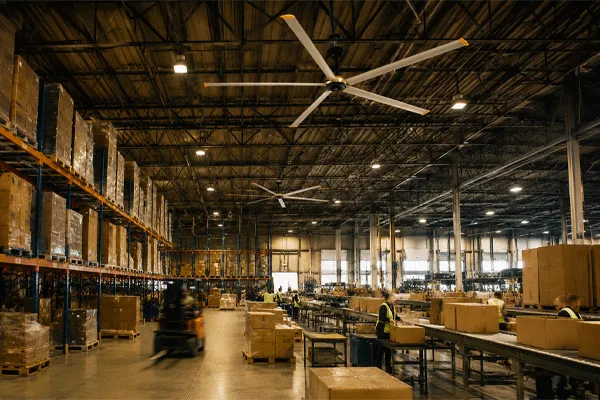
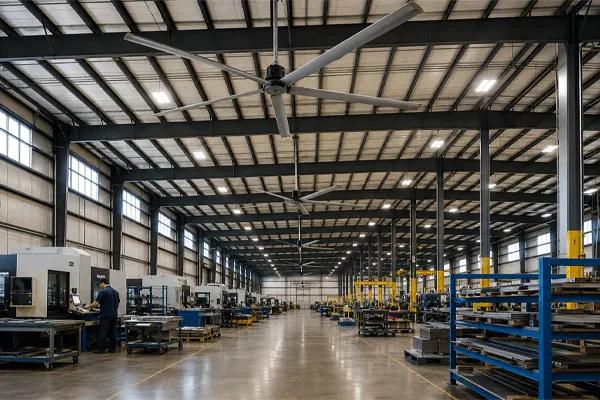
一个 HVLS 风扇 is a high volume low speed air movement solution designed to move large volumes of air at low rotational speed. Unlike traditional fans that rely on high speed and short-range air movement, high volume low speed fans create a wide, slow-moving air column that spreads across large spaces. This makes them especially useful in warehouses, factories, logistics centers, gyms, barns, workshops, and large commercial buildings.
The reason the HVLS 风扇 has become more important in 2026 is simple: facility owners want better comfort with lower energy consumption. A well-designed 工业吊扇 can improve air circulation in large spaces, reduce hot and cold zones, and support HVAC systems instead of replacing them. For commercial and industrial buyers, the goal is not only comfort but also operational stability, worker productivity, and long-term energy savings.
In many large industrial buildings, air tends to stratify. Warm air rises and collects near the roof, while cooler air stays near the floor. Using an HVLS 风扇 helps mix these layers and create a more even indoor environment. That is why industrial facilities are paying more attention to airflow performance, motor quality, blade structure, controls, and safety features when choosing a right fan.
2. How Do High-Volume Low-Speed Fans Improve Airflow?
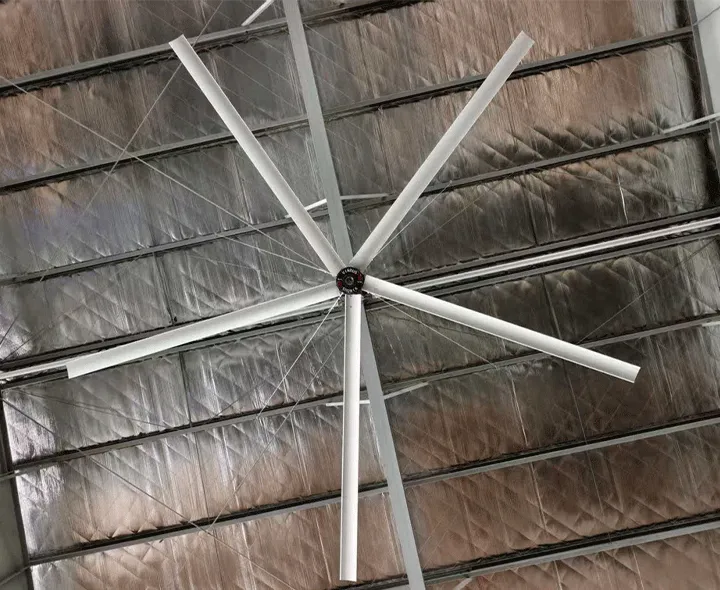
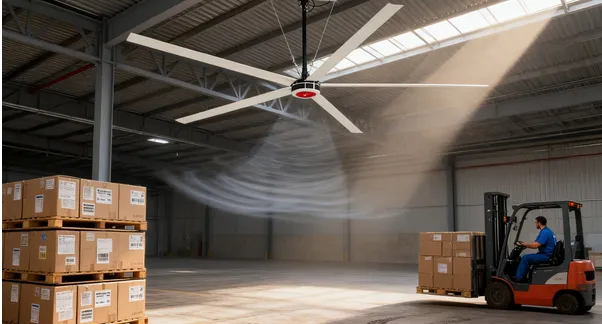
High-volume low-speed fans work by using large-diameter blades to create broad, gentle airflow. Instead of pushing air aggressively in one small direction, the fan moves air downward and outward across the floor area. This airflow pattern helps cover large spaces more evenly than traditional high-speed fans, which often create strong wind near the unit but poor circulation farther away.
一个 HVLS 风扇 is useful because fans are designed to move large amounts of air slowly and consistently. This matters in industrial environments where workers, machines, materials, forklifts, storage racks, and production lines all influence air movement. With the right fan placement, airflow can reach work zones, loading areas, and storage aisles more effectively.
For large commercial buildings, this type of airflow can make the environment feel cooler without necessarily lowering the thermostat. In winter, the same system can help push warm air down from the ceiling, improving temperature balance. In this way, HVLS 风扇 systems support year-round comfort rather than serving as simple summer cooling equipment.
How Do High-Volume Low-Speed Fans Improve Airflow?
3. What Technology for 2026 Is Changing HVLS Fan Models?
现代的 HVLS 风扇 models are becoming smarter, quieter, and easier to control. Technology for 2026 focuses on efficient motors, variable speed control, improved blade aerodynamics, sensor-based operation, and integration with building management systems. This shift is especially important for buyers who manage multiple sites and need reliable performance across warehouses, factories, retail buildings, and logistics hubs.
Fan technology now includes features such as direct-drive motors, smart controllers, fault monitoring, soft start operation, and programmable fan settings. These upgrades help reduce mechanical stress, improve safety, and make it easier for facility managers to adjust airflow based on season, occupancy, or production schedule. Smart fans can also be connected with HVAC systems for more coordinated energy management.
这 HVLS 风扇 industry is also seeing more attention to noise control and blade efficiency. Better blade profiles can increase air movement while reducing resistance. For buyers comparing fan systems, advanced fan designs should not be treated as decoration; they directly affect airflow, durability, installation flexibility, and overall return on investment.
4. How Can an HVLS Fan Reduce Energy Consumption?
One of the biggest reasons companies invest in an HVLS 风扇 is energy efficiency. These fans use slow-moving large blades to circulate air over wide areas, which can reduce dependence on air conditioning in warm months and improve heat distribution in colder months. When used correctly, hvls fans can reduce the workload on HVAC equipment and help reduce energy costs.
The key is not that the fan “creates cold air.” Instead, it improves perceived comfort by increasing air movement over people and work areas. In many industrial spaces, employees feel more comfortable even when the thermostat is set slightly higher. That small change can produce energy savings because HVAC equipment does not need to work as hard.
In heating seasons, an HVLS 风扇 can support destratification by bringing warm air down from the ceiling. This is especially useful in buildings with high ceiling height, such as warehouses, sports facilities, manufacturing plants, and distribution centers. For commercial and industrial settings, reducing temperature imbalance is often one of the fastest ways to improve comfort and control energy consumption.
5. How Do You Choose the Best HVLS Fan for Industrial and Commercial Spaces?
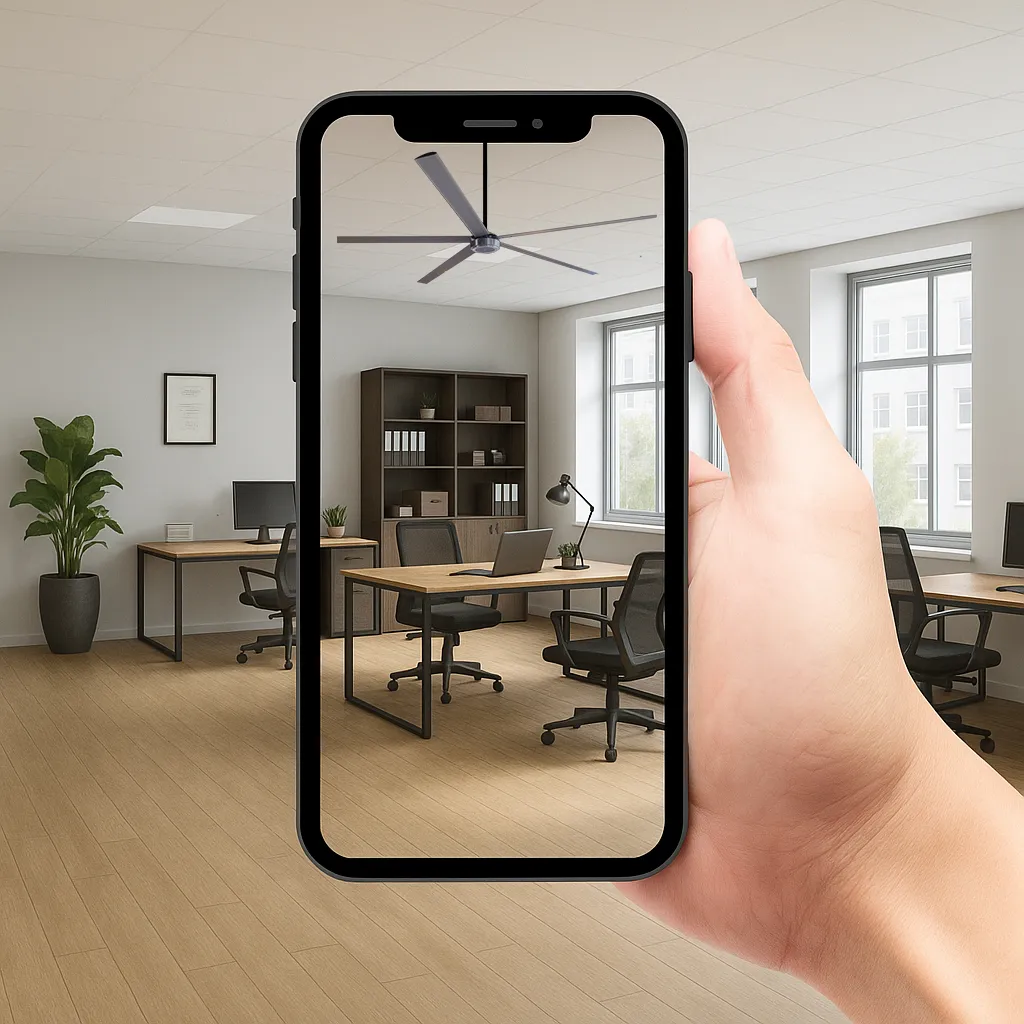
To choose the best hvls fan, start by defining your space. Measure floor area, ceiling height, roof structure, heat sources, door openings, rack layout, worker zones, and existing HVAC equipment. These details determine the right fan size, mounting method, control system, and quantity of units required.
A common mistake is buying the biggest fan available without checking whether it is the right hvls fan for the building. Bigger is not always better. A big hvls fan may be suitable for open warehouses, aircraft hangars, large production halls, or distribution centers, but smaller units may work better in separated zones or areas with obstacles.
The best hvls solution should improve comfort without creating safety problems, noise issues, or uneven air distribution. When choosing an hvls fan, ask for layout suggestions, airflow simulation if available, electrical requirements, warranty terms, and installation guidance. A professional supplier should help you find the right hvls fan rather than simply quote the cheapest model.
How Do You Choose the Best HVLS Fan for Industrial and Commercial Spaces?
6. What Role Does Ceiling Height Play When Installing HVLS Fans?
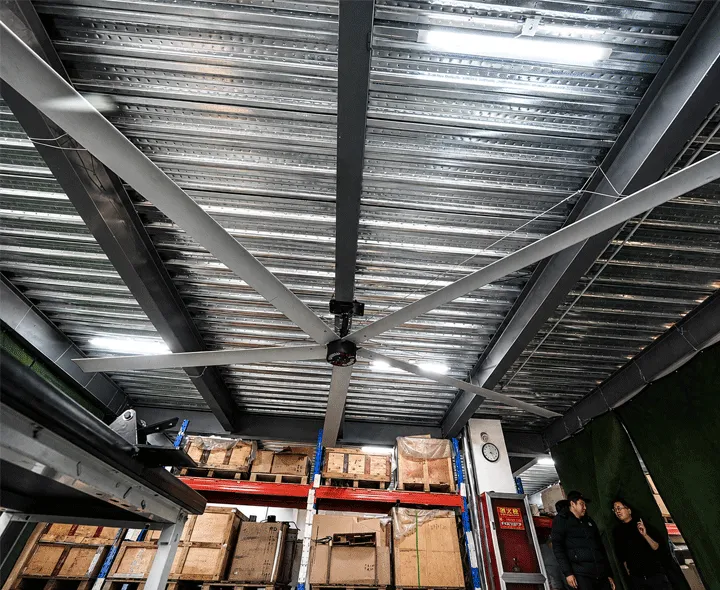
Ceiling height is one of the most important factors when installing hvls fans. If the fan is mounted too low, it may interfere with equipment, lighting, cranes, sprinklers, or safe clearance requirements. If it is mounted too high without enough blade diameter or power, the airflow may not reach occupied zones effectively.
一个 HVLS 风扇 works best when its size and mounting height match the space. In a large industrial building, the system must move air across a wide area while avoiding dead zones. The right fan size depends on roof height, building layout, and whether the goal is cooling comfort, destratification, moisture control, or general ventilation support.
Buyers should also consider structural conditions before installation. The mounting point must support the fan load and vibration requirements. Electrical routing, control access, maintenance space, and safety cables should all be reviewed before ordering. Proper installing hvls fans is part of the purchasing decision, not a separate afterthought.
7. Why Are Fan Designs and Fan Systems Important for Large Spaces?
Good fan designs affect airflow, noise, efficiency, and safety. Blade shape, blade angle, hub structure, motor type, and control logic all influence how the fan performs. In harsh industrial environments, buyers should also check corrosion resistance, dust protection, motor enclosure, fasteners, and maintenance requirements.
一个 HVLS 风扇 is part of a broader air movement strategy. In some facilities, one large unit can improve a central area. In other spaces, multiple fans must work together with doors, vents, air curtains, evaporative cooling, or HVAC systems. This is why fan systems should be planned according to actual building use, not only square footage.
For industrial applications, the best system may need zoning. Production areas, storage areas, packing zones, loading docks, and office-connected spaces may require different airflow levels. Using hvls fans in industrial spaces can improve comfort, reduce stagnant air, and support safer working conditions when the system is correctly designed.
8. What Are the Main Trends in HVLS Fan Design and the Fan Market?
The fan market in 2026 is moving toward energy-efficient fans, smart controls, lower maintenance, and better integration with building operations. Demand for hvls products is growing because companies are looking for practical ways to improve comfort without depending only on expensive HVAC upgrades.
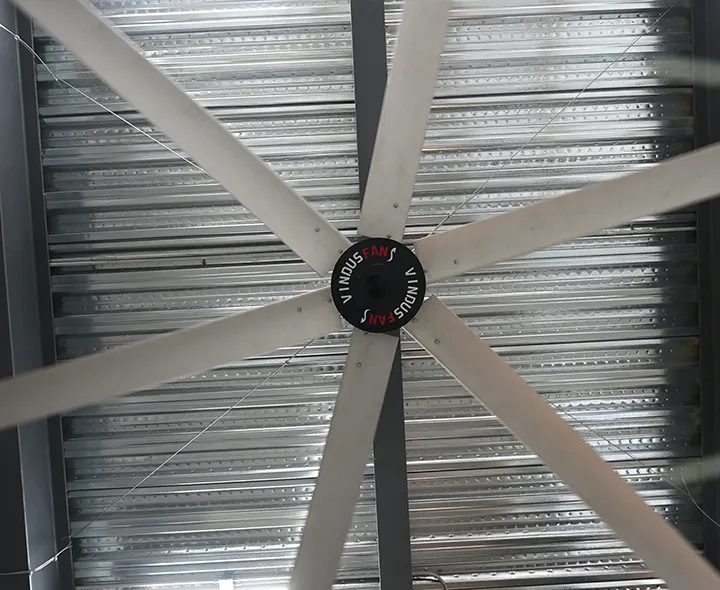
One major trend in hvls fan design is the shift toward direct-drive motors and intelligent control systems. These features can reduce mechanical wear, simplify maintenance, and provide smoother speed adjustment. Another trend is application-specific design, where fans are selected differently for warehouses, livestock buildings, manufacturing sites, sports centers, and large commercial facilities.
Trends in hvls fan selection also show that buyers care more about lifecycle value. The lowest purchase price may not deliver the lowest operating cost. A better HVLS 风扇 may offer stronger durability, lower noise, better safety features, and improved energy efficiency over many years of operation.
What Are the Main Trends in HVLS Fan Design and the Fan Market?
9. How Should Buyers Compare the Best Big HVLS Options Before Ordering?
When comparing the best big hvls options, buyers should review technical data, not only sales claims. Important details include diameter, motor power, maximum speed, coverage area, airflow performance, noise level, control options, safety features, installation method, warranty, and service availability. The top hvls fan for one warehouse may not be the right fan for your space.
It is also useful to compare case studies from similar buildings. A fan used in a large commercial gym may not perform the same way in a dusty manufacturing plant. A model designed for clean retail spaces may not be suitable for harsh industrial environments. For this reason, commercial and industrial buyers should ask manufacturers to recommend models based on building drawings and operating conditions.
Before ordering, ask whether the supplier can help choose the right fan, confirm right fan size, and support commissioning. The best hvls fan is not just a product; it is a matched solution. When using hvls fans correctly, facilities can improve comfort, support air circulation, reduce energy costs, and create a better working environment.
关键要点
- 一个 HVLS 风扇 is designed to move large volumes of air slowly and efficiently across large spaces.
- The best hvls choice depends on airflow needs, ceiling height, building layout, safety requirements, and operating conditions.
- Energy efficiency is one of the main reasons commercial and industrial buyers invest in high-volume low-speed fans.
- 风扇制造商 should be compared by engineering support, product quality, installation guidance, warranty, and long-term service.
- A big hvls fan is ideal for many large industrial and commercial buildings, but correct sizing matters more than simply choosing the largest model.
- Modern fan technology includes smart fans, efficient motors, better blade profiles, and improved control systems.
- Choosing the best hvls fan requires checking technical data, application fit, total cost of ownership, and manufacturer reliability.