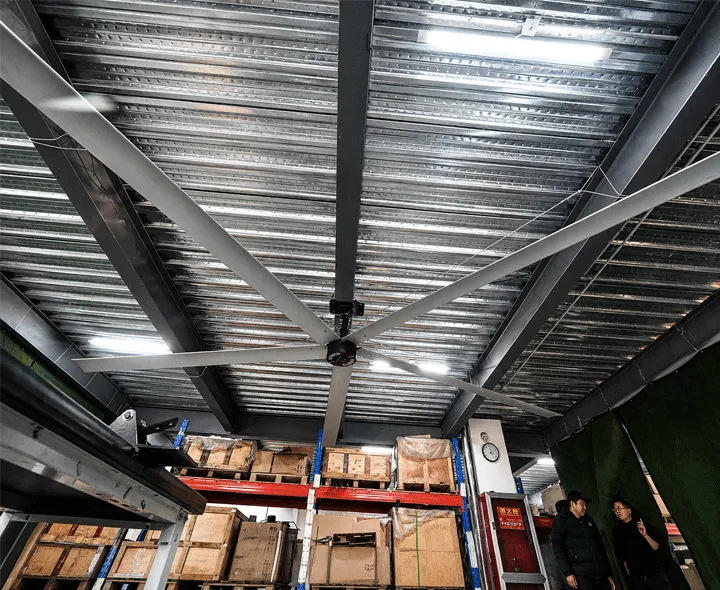
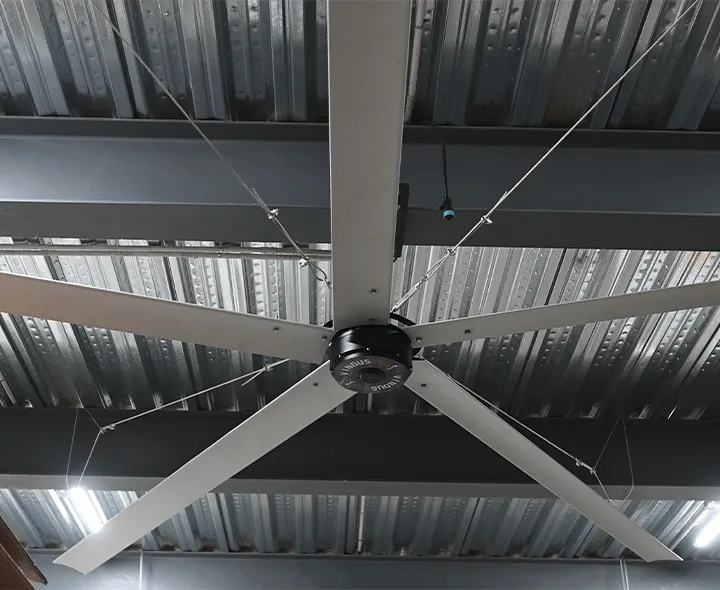
En las grandes naves, los rincones calurosos, el cansancio de las personas y el aumento de las facturas eléctricas suelen ir de la mano. Se añaden más ventiladores pequeños, se ajusta el aire acondicionado e incluso se cambian de sitio los puestos de trabajo, pero algunas zonas siguen cargadas, mientras que otras parecen un túnel de viento.
Una de las formas más sencillas de resolverlo es mover el aire suavemente por toda la zona, para que cada rincón disfrute de las mismas condiciones de confort. Eso es precisamente lo que hacen los ventiladores de alto volumen y baja velocidad.
Un ventilador de alto volumen y baja velocidad es un ventilador de techo de gran tamaño que gira lentamente, pero mueve una enorme cantidad de aire. Gracias a sus largas aspas, un motor cuidadosamente seleccionado y controles inteligentes, puede ayudar a las personas a mantenerse frescas, complementar el sistema de climatización y reducir los costes energéticos a largo plazo en grandes espacios como fábricas, gimnasios y centros logísticos.
Esquema del artículo
- ¿Qué es un ventilador HVLS?
- Por qué la «baja velocidad» funciona en grandes naves
- Cómo mueve realmente el aire un ventilador de techo de gran tamaño
- Lugares habituales de uso de los ventiladores
- Cómo los ventiladores HVLS complementan la climatización y la ventilación
- Términos técnicos clave que encontrará en las especificaciones
- Cómo elegir el ventilador adecuado para su edificio
- Ejemplo de proyecto: de zonas calurosas a un confort estable
- Colaboración con un fabricante asociado (Vindus Fan)
- Preguntas frecuentes sobre los ventiladores HVLS y los ventiladores de techo de gran tamaño
- Puntos clave para recordar
1. ¿Qué es un ventilador HVLS?
Un ventilador HVLS (de alto volumen y baja velocidad) es un aparato de gran diámetro diseñado para mover el aire en edificios altos. En lugar de dirigir un chorro ruidoso hacia una sola persona, impulsa un flujo amplio y suave sobre una extensa superficie.
Piense en él como un miembro de la misma familia que otros ventiladores industriales, pero diseñado específicamente para techos altos y espacios diáfanos.
Hoy en día, muchos fabricantes de todo el mundo ofrecen tecnología similar. En Vindus Fan, por ejemplo, nos centramos en el diseño de Soluciones HVLS para grandes edificios industriales, pabellones deportivos y almacenes, en lugar de vender pequeñas unidades domésticas. Para los compradores B2B, el valor no radica solo en el producto en sí, sino en la forma en que se planifica, se instala y se le brinda soporte a lo largo del tiempo.
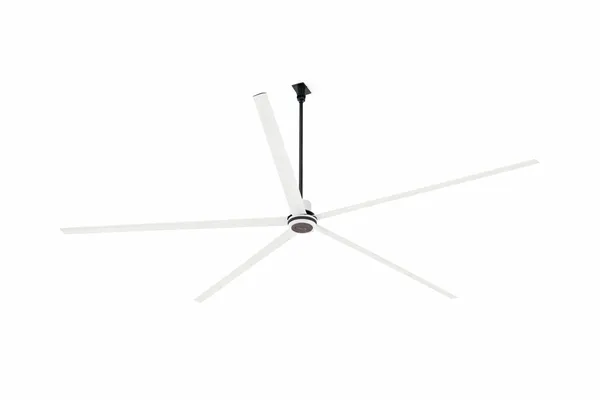
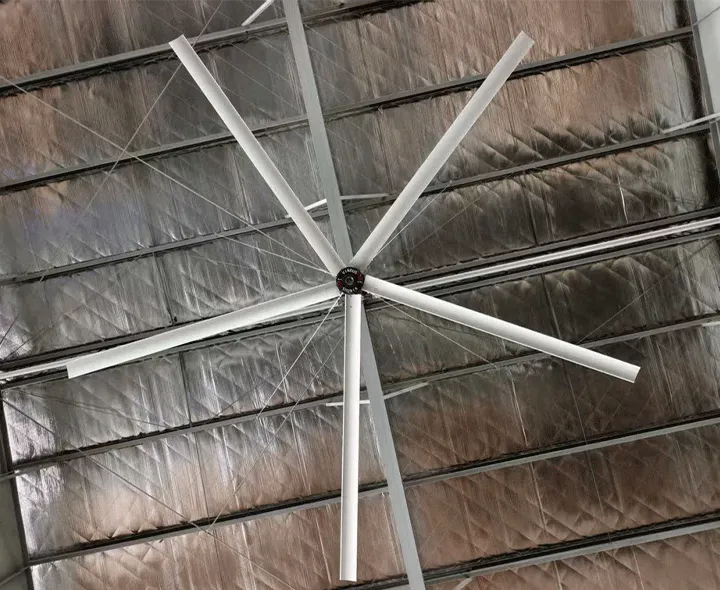
Qué es un ventilador HVLS
2. Por qué la «baja velocidad» funciona en grandes naves
Es natural pensar que «más velocidad = más refrigeración». Si se coloca delante de un pequeño ventilador de alta velocidad en un dormitorio, sentirá una fuerte ráfaga de aire. Pero basta con alejarse dos metros para que desaparezca el efecto. Ese es el problema de los aparatos pequeños: solo funcionan en espacios muy limitados.
En un almacén o una nave de producción, se necesita movimiento de aire en todas partes, no solo en un puesto de trabajo. Un solo aparato de gran diámetro que gira a baja velocidad puede mover mucho aire de forma suave y controlada. En lugar de intentar girar más deprisa como un ventilador pequeño, el gran disco mueve grandes volúmenes de aire a un número moderado de revoluciones por minuto.
Las personas que se encuentran en la nave sienten una suave brisa sobre la piel. Los papeles permanecen sobre las mesas, el polvo no se levanta en nubes y el espacio es más silencioso que cuando decenas de aparatos pequeños hacen ruido a la vez. Los trabajadores suelen describir el efecto como bastante silencioso y muy natural: simplemente notan que se sienten más frescos y menos cansados al final del turno.
En resumen:
- Los aparatos de alta velocidad son buenos para refrigerar una zona concreta cerca de una persona.
- Los ventiladores de baja velocidad y otros ventiladores de baja velocidad son más adecuados para zonas amplias y diáfanas donde muchas personas comparten el mismo aire.
3. Cómo mueve realmente el aire un ventilador de techo de gran tamaño
Estos grandes aparatos funcionan como paletas gigantes. Al girar, el ventilador impulsa el aire desde arriba hacia el suelo. Cuando esa columna de aire llega al suelo, se extiende en todas direcciones. Después asciende lentamente por las paredes y estanterías antes de volver a ser impulsada hacia abajo.
That looping pattern creates steady airflow and helps air circulate through the entire building. Warm air near the roof mixes with cooler layers closer to the floor. Instead of pockets of stagnant air, you get even, gentle air movement.
From a physical point of view:
- The large diameter and long blades define how much area one unit can cover in square feet or square meters.
- The rpm (revolutions per minute) sets how quickly the blades go around.
- The cfm value (cubic feet per minute) tells you how much air the unit can move at a given setting.
When these numbers are matched correctly, fans can create airflow that feels very comfortable even at lower speed settings.
4. Typical places where fans are used
High-volume units are now common in many types of buildings. Typical examples include:
- Fabrication lines and assembly halls in metalworking or food processing
- A busy warehouse and order-picking zones in logistics centers
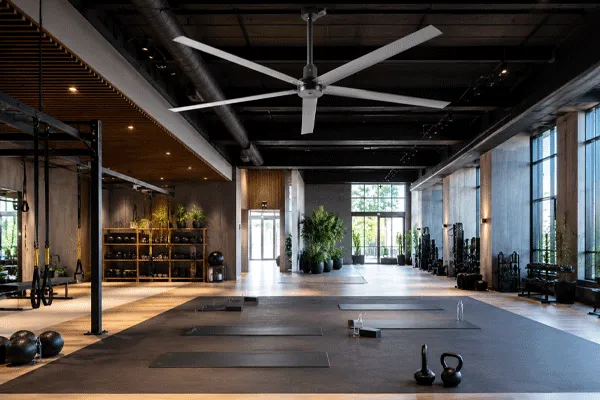
- Indoor sports courts, gyms and fitness clubs
- School halls, canteens and multipurpose rooms
- Exhibition centers and large retail showrooms
In all of these, people are spread out under a tall roof, heat sources such as ovens or machines are running, and doors open frequently. Conventional desk fans and wall units simply cannot keep up.
In our own projects at Vindus Fan, we usually begin by marking work islands, walkways and waiting areas on a drawing. Then we identify mounting points where a few high-volume units can cover the largest possible area without conflicting with cranes, lights or sprinklers.
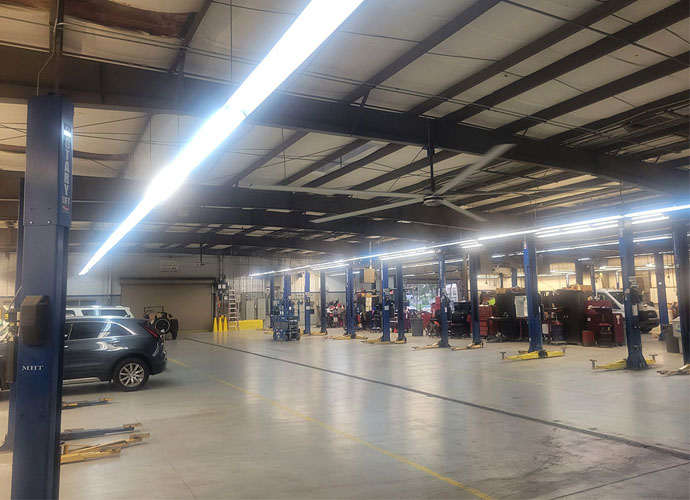
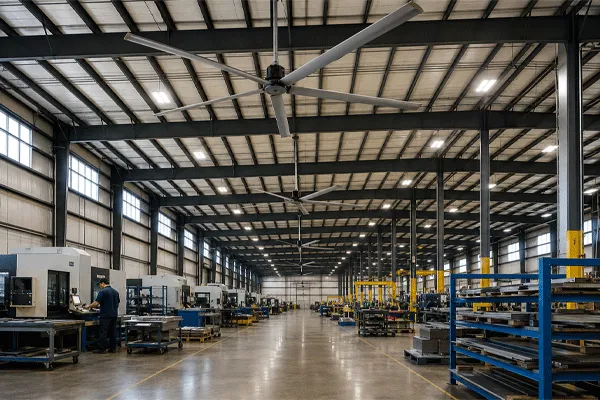
Ventilador HVLS en el sector AUTOMOTRIZ
5.How HVLS supports HVAC and ventilation
HVLS equipment does not replace heating or cooling. Instead, fans help your existing systems work better. The building’s hvac system adds or removes heat; the fan’s job is to redistribute it.
By moving air at low speed through the whole volume, the equipment improves air circulation and ventilation, reduces hot and cold zones and stabilizes the perceived temperature for people on the floor. Workers often feel just as cool at a slightly higher set point, which means the ac and chillers do not need to work as hard.
Over a full season, this can significantly lower energy costs. In many real projects, clients report that a small change in thermostat settings – made possible by better mixing – pays back part of the investment faster than expected.
6. Key technical terms you will see in specifications
When you open a datasheet or talk to an engineer, you will see certain terms again and again. Understanding them helps you choose the right fan and compare offers from different suppliers.
6.1 Names and families
- High volume low speed describes the overall concept: move a lot of air gently instead of blasting a small zone.
- A single hvls fan is one of many high volume low speed fans specially designed for tall roofs and wide floor areas.
- Catalogues talk about low speed fans or simply write low-speed equipment; they may also group several low-speed fans into one system for big halls.
- These units sit inside the broader universe of industrial fans, where different designs serve different tasks in large industrial buildings and other large spaces.
- Well-known marketing names like big ass fans and big ass fans® helped make the concept popular, even though many other manufacturers now offer similar technology.
6.2 How it feels compared with small fans
- In a small office, desk fans or a compact speed fan might be enough, but they only treat a tiny corner of the room.
- Even very high speed devices or a smaller fan can only help a few people at once, although such fans can create airflow that feels intense nearby.
- People often say that large HVLS units move a lot of air but feel gentler and quieter, with a soft breeze rather than a harsh jet.
- Many users describe a hall with a good layout as pretty quiet, even when several units are running above the floor.
6.3 Components and construction
- A large unit is technically a kind of ceiling fan, mounted on structure above the work area and tied into the ceiling beams or trusses.
- Inside the hub, an electric motor drives the hub and blades; the quality of the motor and each bearing strongly affects long-term reliability.
- Each blade is shaped to move much air smoothly, reducing turbulence and noise level as the fan spins.
- Manufacturers talk a lot about high-quality materials and safety margins, especially when customers ask for custom modification of mounts or finish.
6.4 Performance numbers
- Diameter is the distance from one side of the circle to the other; larger diameters generally mean wider coverage.
- Rpm (revolutions per minute) tells you how fast the hub turns; HVLS equipment uses low rpm but very long blades.
- Cfm expresses how much air is moved; datasheets also describe total volumes of air moved per hour or at specific settings.
- Coverage is often shown in square feet or square meters so you can estimate how many units are needed for each zone.
- When datasheets explain comfort, they often mention how stabilizing the air can change the perceived temperature for people on the floor.
6.5 Power and control
- Larger models usually connect to a 3 phase power supply for smooth, reliable operation.
- An electronic drive called a vfd (variable frequency drive) adjusts motor output, making the system more energy efficient.
- A wall controller may take the form of a speed controller with a 6 speed keypad or dial so supervisors can adjust fan speed easily.
- Smarter buildings send a pwm signal from a central brain – much like a cpu cooler in a computer – to tell the fan when to run faster or slower.
- A room thermostat or the central hvac controller in a modern hvac system can also be connected, so fans help the rest of the plant automatically.
6.6 Comfort, safety and air quality
- Data sheets describe air movement, airflow and air circulation patterns, showing where the air will circulate under each unit.
- Designers work hard to avoid stagnant corners and pockets of stagnant air around racks or equipment.
- Good layouts improve ventilation, help remove odours or fumes and make it easier to keep the entire hall within comfort limits.
- Many manufacturers note that their systems move air at low speed so people feel cool without drafts, especially in process lines and other fans are used heavily.
7. Choosing the right fan for your building
Once you understand the terminology, it becomes easier to choose models for real projects:
- Define your zones – mark where people work, queue or walk.
- Check the roof – note height, beams, lights, cranes and sprinkler lines.
- Plan power and control – decide where drives and wall panels can be mounted.
- Match coverage – combine diameter, rpm and cfm data to decide how many units you need in each area.
Even with this knowledge, most B2B buyers prefer to work with an experienced manufacturer. At Vindus Fan, for example, we normally review drawings, suggest a layout, and then help local installers select anchor hardware and controls. That support reduces risk and ensures that the final system behaves as designed, not just on paper.
8. Example project: from hot patches to stable comfort
Imagine an older logistics center. Over time, staff have added small wall units, portable units and a few leftover units from other buildings. Some workers sit in strong drafts, others stand in still, heavy air between racks.
During a walkthrough, the team marks the worst hot and cold spots. They also note that packaging tables near the dock doors are uncomfortable on hot days; boxes sometimes get damp in storage lanes; and the air quality near a mezzanine office feels poor.
After a basic study, they install a handful of HVLS units along the main aisles. The equipment runs at lower speed in the morning, then slightly higher later in the day. The result:
- Conditions at every station feel similar.
- Equipment near the roof no longer sits in overheated layers.
- The building’s cooling system cycles less often.
On paper, it looks like a simple change – but for the people who work there, the difference is clear. They feel more comfortable, less tired and more focused.
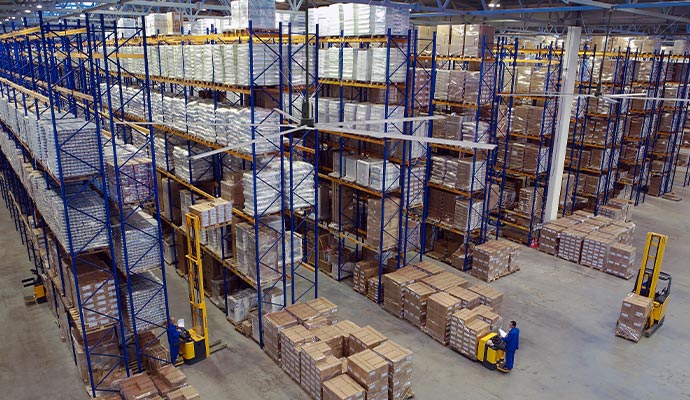
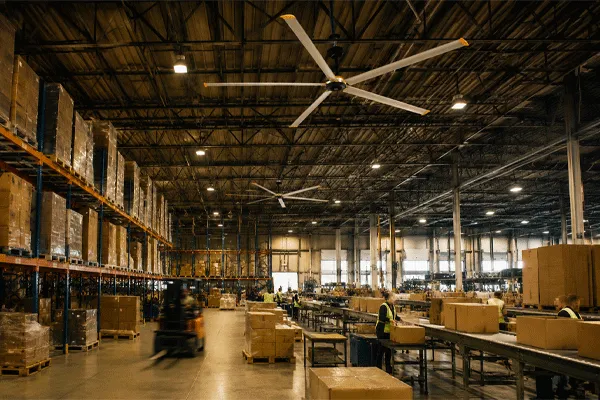
hvls fan in a busy warehouse
9. Working with Vindus Fan
From a distance, one HVLS product can look very similar to another. But for B2B buyers, the details matter: layout support, structural guidance, documentation, warranty, and how well the supplier listens to project constraints.
Porque Abanico de Vindus operates as a factory rather than a trading company, we are able to:
- Customize sizes, finishes and mounts for different building types.
- Provide drawings that integrate with structural and safety layouts.
- Help local installers with basic start-up and control setup.
In other words, you are not just buying a box. You are working with a team that has already solved similar problems in many other buildings. That experience lowers risk and helps ensure that your new system truly supports comfort, safety and efficiency in day-to-day use.
10. FAQs about HVLS and large ceiling fans
Q1. Do these systems replace air-conditioning or heating?
No. The goal is not to replace the ac or boiler, but to help them work more effectively. HVLS equipment redistributes the air the system has already heated or cooled, reducing layers and local hotspots.
Q2. Are HVLS units noisy?
When properly sized and installed, large units usually sound gentler than multiple small units. You mainly hear a low “whoosh,” not harsh fan noise. That is why many people say the hall feels pretty quiet even when several units are running.
Q3. How much maintenance is needed?
These systems are designed for long life. Basic checks typically include cleaning dust, inspecting fixings, checking any bearing noise and verifying controls during regular safety walks.
Q4. Will HVLS fans disturb sprinklers or cranes?
Not when they are planned correctly. Engineers check clearances, flows and code provisions in advance. A good supplier will offer guidance and confirm that the layout respects local requirements.
11. Key points to remember
- HVLS equipment uses a large disc and low speed to move big volumes of air gently across wide floor areas.
- Compared with rows of small units, a good layout can deliver more even conditions with fewer devices and lower overall energy costs.
- These systems support ventilation and air circulation, making workers feel cool without strong drafts.
- Understanding terms like rpm, cfm, 3 phase, vfd and basic control concepts makes it much easier to talk with suppliers and engineers.
- For B2B buyers, working directly with a manufacturing partner such as Vindus Fan helps turn technical ideas into a safe, reliable system that fits your own building.
If you are planning a new plant or upgrading an existing hall, HVLS technology is worth a closer look. With the right fan in the right place, you can make your building feel better to work in – and keep your comfort and energy goals aligned for many years.