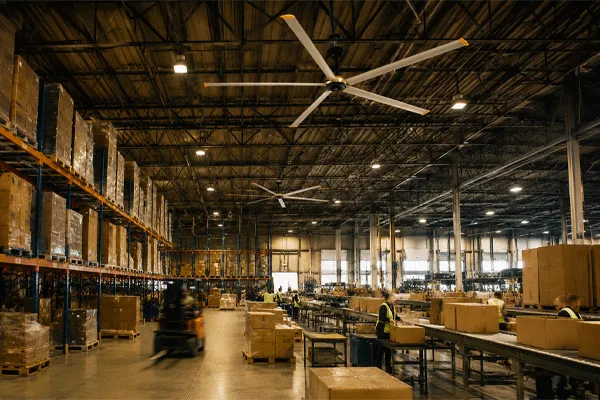
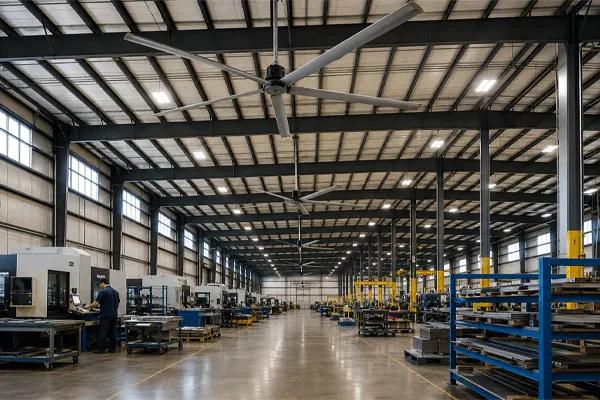
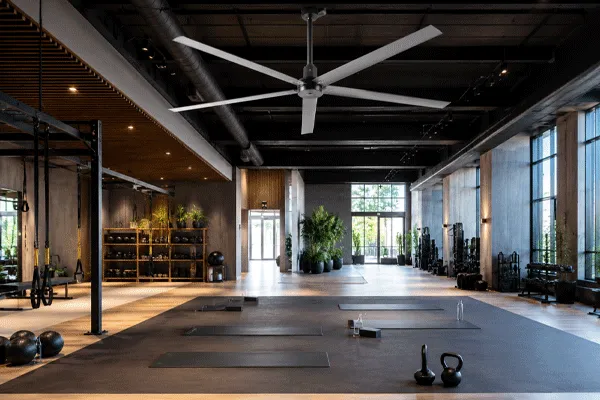
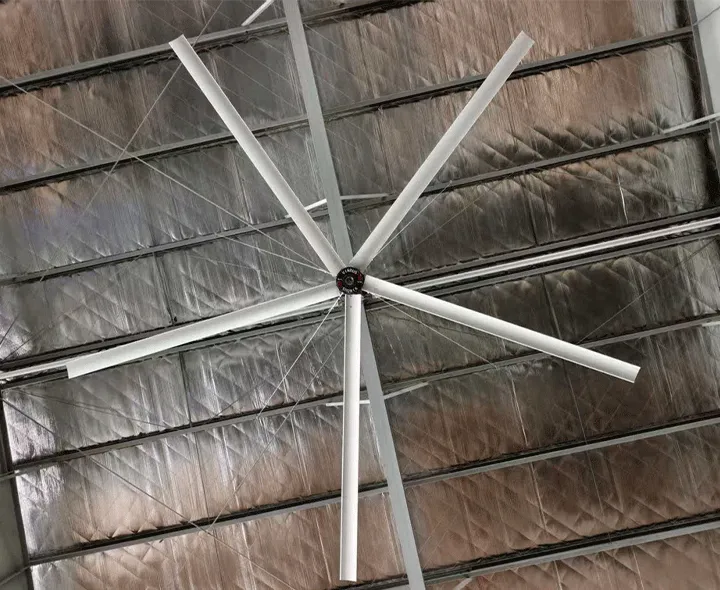
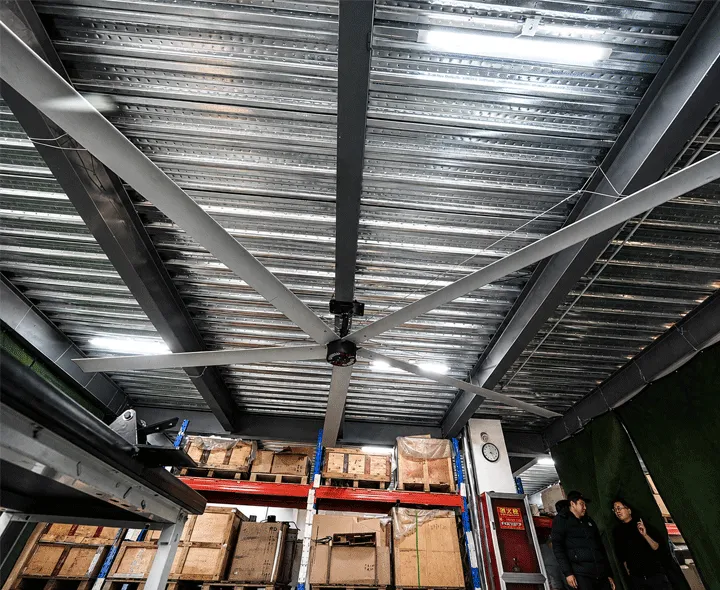
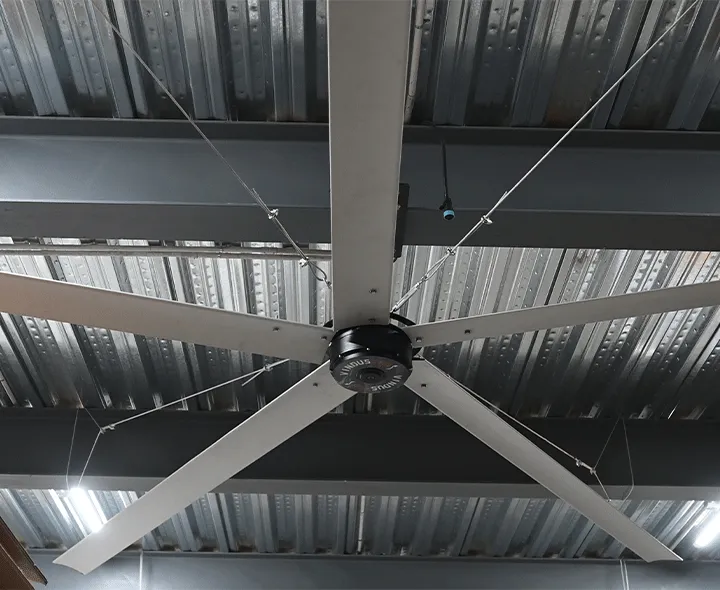
Poor airflow in large warehouses can create uncomfortable working conditions, uneven temperatures, and higher HVAC costs. Stale air, heat buildup, and inefficient ventilation reduce productivity and increase energy consumption. The solution? A properly designed industrial fan system that delivers powerful air circulation with lower operating costs.
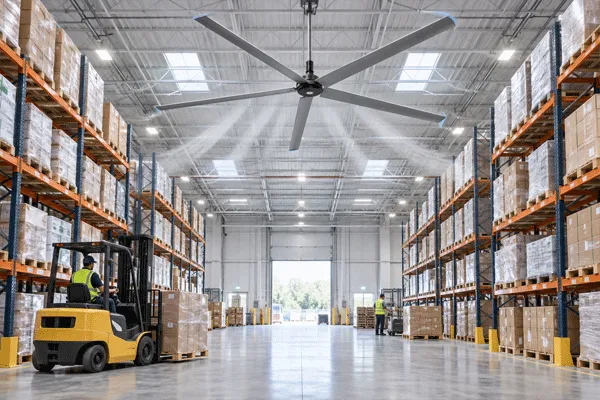
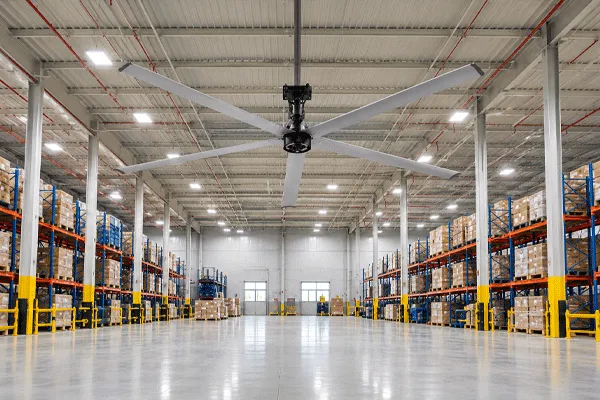
A giant industrial fan, especially an HVLS fan, is designed to move large volumes of air across large spaces. These high-volume, low-speed systems improve warehouse ventilation, enhance industrial air circulation, reduce heat accumulation, and provide energy-efficient cooling for industrial and commercial buildings.
文章提纲
-
What Is an Industrial Fan and Why Is It Important for Large Warehouses?
-
How Does an HVLS Fan Improve Industrial Air Circulation?
-
Why Are HVLS Ceiling Fans Ideal for Large Spaces?
-
What Are the Advantages of Giant Fans in Industrial Environments?
-
How Do Industrial Ceiling Fans Improve Warehouse Ventilation?
-
What Types of Industrial Fans Are Available for Different Applications?
-
How to Choose the Right Industrial Fan for Your Warehouse?
-
Why Are HVLS Fans More Energy Efficient Than Traditional Fans?
-
What Should You Know About Industrial Fan Installation?
-
Frequently Asked Questions About Industrial Air Circulator Fans
What Is an Industrial Fan and Why Is It Important for Large Warehouses?
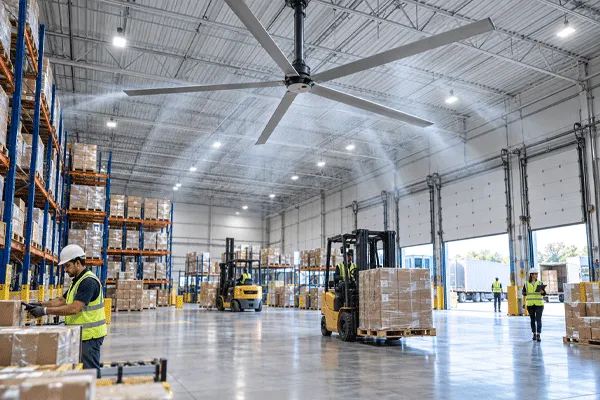
Modern warehouses are becoming larger, taller, and more automated. From logistics centers to manufacturing plants, these facilities often contain thousands of square meters of working space. Maintaining comfortable temperatures and proper air movement becomes a major challenge.
A traditional fan may cool only a small area. However, large warehouses require equipment that can move air across the entire building. This is where an industrial fan becomes essential.
Industrial fans are engineered for demanding environments where continuous operation, durability, and strong airflow are required. Unlike household fans, industrial systems are designed to handle large volumes of air and operate reliably for long periods.
Our Sino-US joint venture company specializes in HVLS fans, industrial ceiling fans, commercial ceiling fans, and intelligent airflow control systems. We provide customized solutions for warehouses, factories, logistics centers, agricultural buildings, sports facilities, and other large industrial spaces.
Why Warehouse Air Circulation Matters
Poor airflow can cause:
- Heat accumulation near the ceiling
- Uneven temperature distribution
- High humidity levels
- Reduced employee comfort
- Increased HVAC workload
A properly selected warehouse fan creates continuous air movement, helping businesses maintain better working conditions while improving energy efficiency.
For large facilities, the goal is not simply to cool the air. The goal is to circulate air efficiently throughout the entire building.
How Does an HVLS Fan Improve Industrial Air Circulation?
An HVLS fan means High Volume Low Speed fan. Unlike small high-speed fans, an HVLS system uses large fan blades rotating at a low speed to move large amounts of air.
The operating principle is simple:
- The fan motor rotates large blades slowly.
- The blade pushes air downward.
- Air reaches the floor and spreads outward.
- The airflow pattern creates continuous circulation.
- Warm and stagnant air becomes evenly distributed.
This process creates comfortable air movement without the strong drafts produced by traditional high-speed fans.
HVLS vs Traditional Industrial Fans
| 特征 |
传统风扇 |
HVLS 风扇 |
| Air coverage |
Limited areas |
大空间 |
| 速度 |
High-speed rotation |
Low-speed rotation |
| 空气流动 |
方向性 |
Wide circulation |
| 能源消耗 |
更高 |
Better energy efficiency |
| 噪音 |
更高 |
降低 |
| 应用 |
Small areas |
Warehouses, factories, industrial facilities |
For facilities such as warehouses, distribution centers, and manufacturing plants, an HVLS fan can often replace multiple smaller fans.
Creating Better Industrial Airflow
The biggest advantage of HVLS technology is its ability to move large volumes of air with fewer devices.
A single large fan can create a wide airflow pattern that covers thousands of square feet depending on the installation conditions.
This makes HVLS especially suitable for:
- Logistics warehouses
- 制造工厂
- Aircraft hangars
- Sports centers
- 农业建筑
- Large commercial spaces
Why Are HVLS Ceiling Fans Ideal for Large Spaces?
Large buildings often have high ceilings, making traditional cooling methods less effective. Warm air naturally rises and collects near the ceiling, creating temperature differences between upper and lower areas.
An HVLS ceiling fan helps solve this problem through destratification.
The fan gently pushes warm air downward and mixes air layers throughout the building.
This creates:
- More balanced temperatures
- Improved employee comfort
- Better HVAC performance
- Reduced heating and cooling costs
The Role of Ceiling Height in Fan Selection
The ceiling height directly affects airflow performance.
A warehouse with a high ceiling requires a fan designed for vertical air movement. If the fan is too small, it cannot effectively move air from the ceiling area to the working zone.
Professional engineers evaluate:
- 天花板高度
- 建筑布局
- Occupancy
- 暖通空调系统
- Desired airflow level
before selecting the correct fan size.
HVLS Fans for Heating and Cooling Efficiency
Many warehouses experience temperature differences between seasons.
During summer:
- HVLS fans improve cooling airflow.
- Employees feel more comfortable.
- HVAC systems operate more efficiently.
During winter:
- Fans help redistribute warm air trapped near the ceiling.
- Heating systems work more effectively.
This makes HVLS technology useful for year-round climate management.
What Are the Advantages of Giant Fans in Industrial Environments?
The popularity of giant fans continues to grow because businesses need efficient ways to manage airflow in large buildings.
The main advantages of giant fans include:
1. Move Large Volumes of Air Efficiently
A giant fan can move large volumes of air while using relatively low power.
Compared with multiple small fans, one properly designed HVLS system can provide more consistent airflow with fewer motors.
2. Improve Employee Comfort and Productivity
Comfortable working conditions directly affect productivity.
In warehouses and factories, excessive heat can cause:
- Fatigue
- Reduced concentration
- Lower work efficiency
Better air movement helps create a more comfortable industrial environment.
3. Reduce Energy Costs
Energy efficiency is becoming a key concern for warehouse owners and factory managers.
HVLS systems support energy savings by:
- Reducing HVAC workload
- Improving air distribution
- Operating with efficient motors
- Covering large areas with fewer units
A logistics company operating a large distribution center faced uneven temperatures during summer. Workers near loading areas experienced uncomfortable heat, while HVAC systems struggled to maintain consistent conditions.
After installing HVLS fans:
- Airflow became more balanced.
- Hot areas were reduced.
- Employee comfort improved.
- HVAC efficiency increased.
The project demonstrated how proper air circulation can improve both operational efficiency and workplace comfort.
What Types of Industrial Fans Are Available for Different Applications?
Choosing the correct fan type is important because every industrial environment has different airflow requirements. A small workshop, a logistics warehouse, and a large manufacturing plant may all need different solutions.
There are several common types of industrial fans, including HVLS fans, axial fans, centrifugal fans, drum fans, wall mount fans, and floor fans. Each design has different advantages depending on the required airflow, installation space, and application.
| 风扇类型 |
Main Feature |
Typical Application |
| HVLS 风扇 |
High volume low speed airflow |
Warehouses, factories, sports halls, barns |
| 轴流风机 |
Move air in a straight direction |
Ventilation systems, workshops |
| 离心风机 |
High pressure airflow |
Industrial ventilation systems |
| 鼓风机 |
Portable strong airflow |
Temporary cooling areas |
| 壁挂式风扇 |
Space-saving installation |
Small industrial areas |
| 落地扇 |
Direct airflow cooling |
Workstations and local cooling |
Among these options, HVLS fans are becoming increasingly popular for large facilities because they can move large amounts of air while maintaining low energy consumption.
Why Are HVLS Fans Different From Other Industrial Fans?
The main difference between HVLS and traditional industrial fans is the airflow method.
A standard fan usually focuses on pushing air in one direction. It creates a strong airflow but covers a limited area.
An HVLS fan uses large fan blades to create a wide air column. The fan moves air downward from the ceiling and then spreads it horizontally across the floor.
This creates a more natural airflow pattern.
For example:
- A drum fan may cool one worker area.
- A wall fan may provide directional airflow.
- An HVLS fan can improve air circulation across an entire warehouse.
This makes HVLS systems ideal for facilities with large open spaces and high ceiling structures.
How Do Industrial Ceiling Fans Improve Warehouse Ventilation?
Warehouse ventilation is not only about removing hot air. It is about maintaining balanced airflow throughout the building.
Many warehouses experience temperature differences because warm air rises and stays near the ceiling. Meanwhile, workers and equipment operate at lower levels where airflow may be insufficient.
Industrial ceiling fans solve this problem by creating continuous air movement between different zones.
A properly installed ceiling fan helps:
- Mix warm and cool air layers
- Reduce stagnant air areas
- Improve air quality
- Support HVAC performance
- Create a more comfortable workplace
Improving Industrial Air Quality
Poor ventilation can cause stale air, humidity buildup, and uncomfortable working conditions.
In industrial environments, good air circulation helps reduce problems caused by:
- Heat accumulation
- Dust concentration
- Moisture
- Uneven temperature
An HVLS fan does not replace a complete ventilation system, but it improves how air moves inside the building.
Combined with HVAC systems, ventilation fans, and exhaust fan solutions, HVLS technology creates a more complete airflow strategy.
Large warehouses often have:
- High ceilings
- Wide floor areas
- Long operating hours
- High worker activity
Traditional cooling equipment may require significant energy consumption.
Industrial ceiling fans provide an efficient alternative by creating airflow across large areas with fewer units.
For spaces like warehouses, distribution centers, and production facilities, the right airflow solution can improve both comfort and operational efficiency.
How to Choose the Right Industrial Fan for Your Warehouse?
Choosing the right industrial fan requires more than selecting the largest model available.
A professional selection process considers building conditions, airflow requirements, and operational goals.
Important factors include:
1. Warehouse Size and Layout
The size of the warehouse directly affects fan selection.
Engineers evaluate:
- Floor area
- 天花板高度
- Storage layout
- Equipment locations
- Worker zones
A large open warehouse may require several strategically positioned HVLS fans to create consistent airflow throughout the building.
2. Ceiling Height
Ceiling height plays an important role in HVLS performance.
Buildings with higher ceilings benefit from large-diameter fans because the fan can create a stronger vertical air column.
The correct installation height allows the airflow to reach the working area instead of remaining only near the ceiling.
3. Required Airflow Performance
Different industries require different airflow levels.
For example:
| 应用 |
Main Airflow Goal |
| Logistics warehouse |
Employee comfort and temperature balance |
| Manufacturing plant |
Heat control and workplace improvement |
| Food processing facility |
Humidity management and air quality |
| 体育中心 |
Comfortable public environment |
| Agricultural building |
Livestock or crop ventilation |
Selecting a fan with the correct airflow capacity ensures better performance.
What Are the Best Industrial Fans for Large Warehouses?
Many warehouse owners search for the best industrial fans for large facilities because large buildings have unique cooling challenges.
The best solution usually combines:
- Large airflow coverage
- 节能运行
- Reliable motor technology
- Intelligent controls
- Durable construction
HVLS fans are often selected because they provide a balance between performance and operating cost.
Why Are HVLS Fans More Energy Efficient Than Traditional Fans?
Energy consumption is a major concern for warehouses and industrial facilities.
Cooling large buildings using only HVAC systems can be expensive, especially during hot seasons.
HVLS technology improves energy efficiency by increasing air movement without requiring extremely high motor speeds.
The main energy-saving principles include:
Lower Operating Speed
HVLS fans rotate slowly but use large blades to move air efficiently.
The fan motor does not need to operate at extremely high speed to create effective airflow.
Wide Air Coverage
Because one large fan can replace multiple small fans, businesses may reduce:
- Equipment quantity
- Maintenance requirements
- Electrical consumption
Supporting HVAC Systems
HVLS fans work together with heating and cooling systems.
During summer, they help distribute conditioned air.
During winter, they help push warm air downward from the ceiling.
This process improves overall HVAC efficiency.
What Should You Know About Industrial Fan Installation?
Correct fan installation directly affects airflow performance and safety.
Professional fan installation should consider:
- 结构支持
- Mounting position
- 电气要求
- 天花板高度
- Airflow coverage
- Operating environment
Our engineers analyze each project before recommending the best configuration.
Key Steps During Fan Installation
Step 1: Site Evaluation
The installation team checks:
- Warehouse dimensions
- Existing ventilation equipment
- Ceiling structure
- Working areas
Step 2: Fan Position Planning
The fan location determines airflow distribution.
Incorrect placement may create areas with too much or too little air movement.
Step 3: System Testing
After installation, engineers check:
- Motor operation
- 风扇转速
- Airflow direction
- Control system performance
Direct Drive Technology and Motor Reliability
Modern HVLS fans often use advanced direct drive systems.
Compared with traditional gear-driven designs, direct drive motors can provide:
- Lower maintenance requirements
- Reduced noise
- Higher durability
- Stable operation
For industrial facilities operating many hours per day, motor reliability is critical.
How Do HVLS Fans Compare With Big Ass Fans and Other Large Fans?
Many buyers compare HVLS systems with brands such as Big Ass Fans when researching large airflow solutions.
The core technology behind these systems is similar: using large blades and low-speed rotation to create high-volume airflow.
The important factors when selecting a solution include:
- 风扇性能
- Building requirements
- Service support
- Customization options
- Total ownership cost
A professional manufacturer can provide customized solutions based on actual site conditions rather than offering only standard products.
Frequently Asked Questions About Industrial Air Circulator Fans
What is the difference between an HVLS fan and a traditional industrial fan?
An HVLS fan is designed to move large volumes of air at low speed, while traditional industrial fans usually create stronger airflow in a smaller area.
The large blade diameter of an HVLS fan allows it to circulate air across large warehouses, factories, and commercial buildings with fewer units. This makes it a practical choice for facilities that need consistent air movement instead of only localized cooling.
Traditional fans such as drum fans, floor fans, and directional fans can still be useful for specific areas, but they usually cannot provide the same coverage as a properly designed HVLS system.
How much area can an HVLS fan cover in a warehouse?
The coverage area depends on several factors, including:
- 风扇直径
- 天花板高度
- Installation position
- 建筑布局
- Required airflow level
A larger HVLS fan can typically cover a much wider area than smaller fans. For large warehouses and industrial facilities, engineers usually calculate airflow patterns before recommending the number and size of fans.
A professional design ensures that the fan creates consistent airflow throughout the entire space instead of leaving hot or stagnant areas.
Are HVLS fans suitable for manufacturing plants and industrial facilities?
Yes. HVLS fans are widely used in manufacturing plants, warehouses, logistics centers, and other industrial spaces.
They are especially useful where businesses need:
- Better temperature balance
- Improved employee comfort
- Reduced heat buildup
- More efficient HVAC operation
- Continuous air circulation
Our company provides industrial airflow solutions for different applications, including factories, warehouses, sports centers, agricultural buildings, and commercial facilities.
Can HVLS fans reduce warehouse cooling costs?
HVLS fans can help reduce cooling costs by improving air distribution and supporting HVAC systems.
Instead of allowing cool air to remain in limited areas, HVLS fans help circulate conditioned air throughout the building.
During hot seasons, improved air movement creates a cooling effect that helps workers feel more comfortable.
During colder months, HVLS fans can push warm air from the ceiling back toward occupied areas, helping improve heating efficiency.
Actual savings depend on building conditions, climate, HVAC design, and operating schedules.
How do I choose the right industrial fan for my warehouse?
Choosing the right industrial fan requires evaluating:
- Warehouse dimensions
- 天花板高度
- Temperature conditions
- Existing ventilation system
- Required airflow
- Operating environment
For large warehouses, HVLS fans are often preferred because they can move large amounts of air efficiently.
A professional engineer can analyze the facility and recommend the correct fan size, quantity, and installation method.
Do industrial ceiling fans require regular maintenance?
Yes. Regular maintenance helps maintain performance and extend service life.
Recommended maintenance includes:
- Checking fan blades
- Inspecting the motor
- Cleaning dust accumulation
- Checking electrical connections
- Testing control systems
High-quality HVLS fans are designed for industrial environments and long-term operation, but regular inspections ensure safe and reliable performance.
Conclusion: Choosing the Right Giant Industrial Fan for Better Air Circulation
Large warehouses, factories, and commercial buildings need more than simple cooling equipment. They require a complete airflow strategy that improves comfort, supports productivity, and reduces energy consumption.
A properly selected industrial fan can transform how air moves inside a building.
Among different solutions, HVLS fans provide an effective option for large spaces because they combine high-volume airflow with energy-efficient operation.
For warehouses, manufacturing plants, logistics centers, and industrial facilities, giant airflow systems help solve common challenges:
- Uneven temperatures
- Poor ventilation
- Stagnant air
- High HVAC costs
- Uncomfortable working environments
As a Sino-US joint venture manufacturer and solution provider, we specialize in designing customized HVLS fans, industrial ceiling fans, commercial ceiling fans, large industrial fans, and intelligent airflow control systems.
Our goal is not only to supply fans but also to provide complete airflow solutions based on each customer’s building structure, application requirements, and energy-saving targets.
The key points to remember:
- HVLS fans are designed to move large volumes of air across large spaces.
- Industrial ceiling fans improve warehouse ventilation and air circulation.
- Large warehouses benefit from high-volume low-speed airflow technology.
- Choosing the right industrial fan depends on building size, ceiling height, and airflow requirements.
- HVLS systems can support HVAC efficiency and reduce energy consumption.
- Different applications require different fan types, including HVLS fans, drum fans, axial fans, and ventilation fans.
- Professional fan installation ensures better performance, safety, and durability.
- Intelligent airflow control helps businesses manage changing environmental conditions.