Michael Danielsson | CEO, Vindus Fans | Published July 27, 2026
Routine HVLS fan maintenance means checking blade mounts, motor housing, and control diagnostics on a set schedule — typically every 3 to 6 months. On direct-drive PMSM models, most of this can be done from floor level using the built-in HMI, without renting a scissor lift.
HVLS Fan Maintenance: Keeping Industrial Ceiling Fans Safe and Efficient
What Maintenance Actually Covers on an HVLS Fan
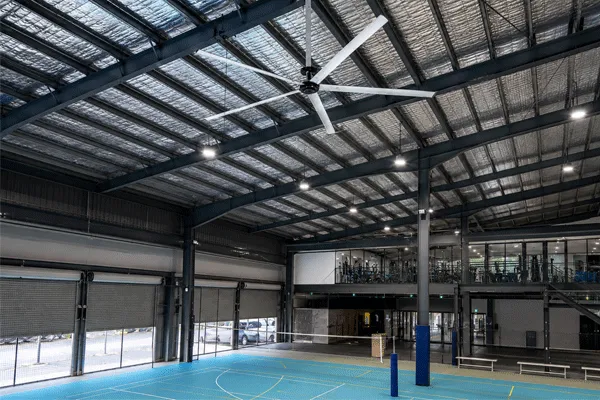
An HVLS (High Volume, Low Speed) fan has fewer moving parts than a small commercial ceiling fan, but the parts it does have carry more mechanical load — a 20-foot blade set turning at low RPM still puts real stress on its mounting hardware and motor bearings over years of continuous operation. Maintenance for these units splits into three categories: visual/mechanical inspection, electrical and control checks, and cleaning. None of them require specialized fan-industry training, but skipping any one of them for an extended period is how small issues (a loose blade bolt, a dust-clogged airflow path) turn into unplanned downtime.
Before You Start: The Misconception About Roof Access
Facility teams often assume HVLS maintenance means shutting down for a day and bringing in a lift to reach a fan mounted 20+ feet up. That assumption comes from older gearbox-driven designs, where the motor, gearbox, and control components all sit at the hub — so any diagnostic check happens at ceiling height.
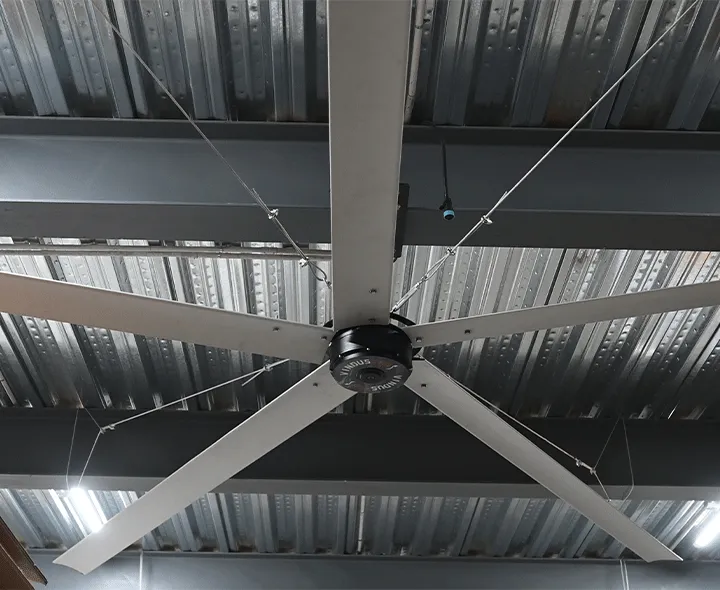
Gearless PMSM (permanent magnet synchronous motor) fans change that. On Vindus P780, P730, and P680 series units, the motor drives the blades directly with no gearbox, and the operating controls sit in a floor-level HMI panel connected by a single ceiling-to-floor cable. That means status checks, speed diagnostics, and error codes are readable from the ground. Physical hub inspection — checking bolts, blade attachment points, motor housing — still requires reaching the fan itself; only the diagnostic and control layer moves to floor level.
Step-by-Step Maintenance Procedure
- Pull the diagnostic log from the floor-level HMI.Check for stored error codes, runtime hours, and current draw. On PMSM units, sustained draw near or above the rated maximum (under 1,000 W at max speed for the P780 and P730) can flag a bearing or airflow obstruction issue before it becomes audible.
- Do a visual sweep from the floor.Look for dust buildup on the blades, visible sag in the mounting bracket, or slack in the ceiling-to-floor cable. Uneven dust distribution across blades often means one blade is angled differently than the others.
- Power down and lock out before any hands-on hub work.This step is not optional — do not proceed to steps 4–6 with the fan energized.
- Inspect blade attachment bolts for torque.Manufacturer torque specs vary by model; use the value listed in the installation manual for your specific series, not a generic estimate.
- Check the motor housing seal and mounting bracket.Look for corrosion at the bracket, especially in fans installed near loading dock doors or in agricultural settings with higher humidity or particulate exposure.
- Log the inspection date, findings, and any parts replaced.This record matters later — warranty claims require a documented issue history, not just a description of the current symptom.
Where P780, P730, and P680 Differ for Maintenance Planning
The three series share the same maintenance approach but differ enough in size and installed height that inspection logistics change between them.
| Series |
व्यास |
Ceiling Height Range |
Motor Type |
Access Point |
| P780 |
20 ft / 24 ft |
20–33 ft |
PMSM, <1,000 W at max speed |
Floor-level HMI, single cable |
| P730 |
16 ft / 18 ft |
20–33 ft |
PMSM, <1,000 W at max speed |
Floor-level HMI, single cable |
| P680 |
8–14 ft |
10–25 ft |
— |
Sized for workshops, logistics, retail, restaurants, outdoor patios |
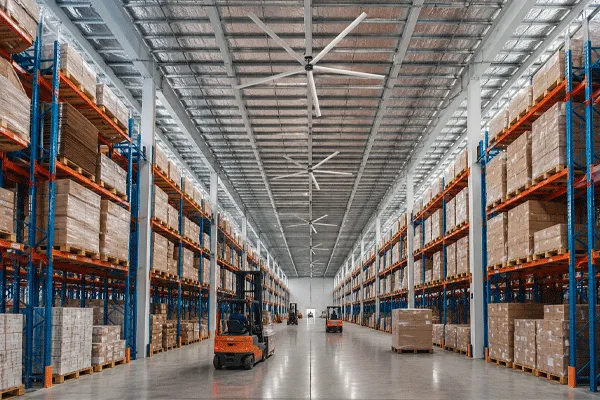
The P780’s larger blade span means bolt inspection at the hub covers more attachment points per unit, so step 4 above takes proportionally longer than on a P680. Facilities running P680 units in outdoor patio settings should also shorten the cleaning interval — outdoor dust and pollen accumulate on blades faster than in a sealed warehouse.
HVLS Fan Maintenance: Keeping Industrial Ceiling Fans Safe and Efficient
A Common Mistake: One Schedule for Every Installation
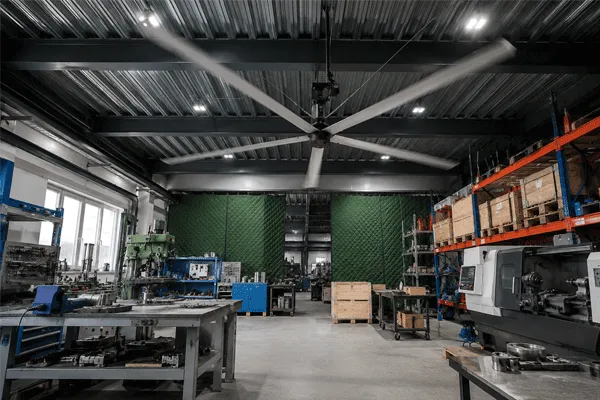
Treating every HVLS fan on a site the same way is the most frequent maintenance error. A fan running continuously in a foundry or manufacturing floor accumulates runtime hours — and airborne particulate — far faster than one running seasonally in a retail space. Basing the inspection interval on calendar months alone, rather than logged runtime hours plus the environment the fan sits in, means high-use units go longer between checks than they should.
Warranty and Cost Considerations
Vindus covers defective components and premature failure for 3 years from installation. That coverage does not extend to damage from using or installing the fan outside its intended application — for example, running a fan rated for indoor commercial use in an unenclosed outdoor environment without the appropriate model. If an inspection turns up a defect that looks covered, the required next step is to turn the fan off immediately and contact Vindus or the dealer of purchase before continuing to run it; continued operation on a fan with a known issue can itself become grounds for a denied claim.
Replacement part costs aren’t published as fixed pricing — Vindus uses a request-quote model, so budgeting for parts outside the warranty period means contacting Vindus or an authorized dealer directly rather than estimating from a published price list.
Where routine maintenance still needs a professional:
- Motor housing disassembly or bearing replacement
- Any electrical work inside the HMI enclosure beyond reading diagnostics
- Height access itself, if your facility doesn’t have in-house lift equipment or fall-protection procedures
What facility staff can typically handle in-house:
- HMI diagnostic review
- Visual/dust inspection from the floor
- Bolt torque checks (with proper lockout/tagout and fall protection)
- Maintenance logging
HVLS Fan Maintenance: Keeping Industrial Ceiling Fans Safe and Efficient
The Trade-Off Worth Knowing
Removing the gearbox cuts out gearbox oil changes and gear wear entirely, which is the main maintenance-cost advantage of PMSM direct-drive over older gear-driven HVLS designs — fewer scheduled services, less lift rental. The trade-off is that PMSM motor diagnostics and repairs require a technician familiar with permanent-magnet motor systems specifically; a general electrician comfortable with a gearbox-driven fan motor may not have the same familiarity with PMSM fault codes, so sourcing that specific expertise can take longer in regions with fewer HVLS installers.
Airflow performance itself is tested against AMCA 230-15 and ANSI/ASHRAE 216P, the two industry standards used to measure and rate HVLS fan output — worth checking that any replacement part or repair keeps the fan within its original tested performance range rather than just restoring basic function.
सामान्य प्रश्न
Q: How often should an HVLS fan be inspected?
A: Every 3 to 6 months is a reasonable starting point, adjusted down for continuous-use industrial environments and up for lighter seasonal use — base the actual interval on logged runtime hours, not the calendar alone.
Q: Can HVLS fan maintenance void the warranty?
A: Installing or operating the fan outside its intended use isn’t covered. Standard inspection and manufacturer-approved part replacement, documented properly, doesn’t affect coverage during the 3-year window.
Q: Do I need a lift to maintain a Vindus HVLS fan?
A: Diagnostic and control checks are done from the floor-level HMI. Physical hub inspection (bolts, blade mounts, motor housing) still requires reaching the fan itself.